
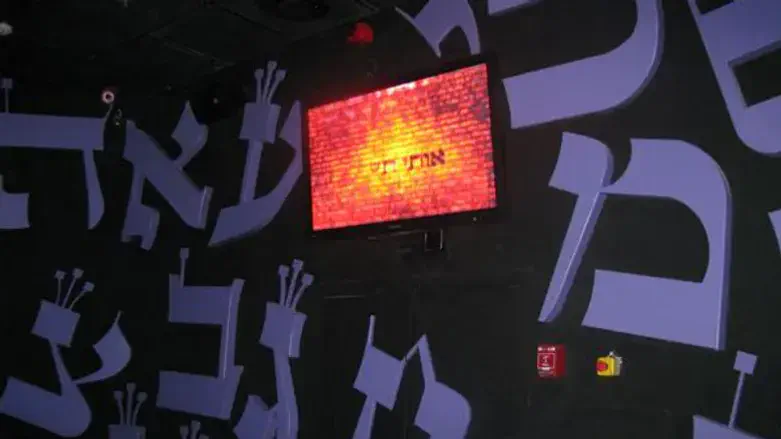
On display at the Historic Blue Moon Hotel, Oil on Canvas by Settenbrino
This article is a personal and philosophical meditation on holiness—exploring whether it is intrinsic or defined by G-d—through the lens of Jewish tradition, mysticism, and family legacy. Drawing on Plato, Kant, and Hassidic thought, it weaves together reflections on prayer, community, marriage, and children as expressions of the sacred.
In one of Plato’s dialogues, Socrates engages in a discourse of what is holy. Are things intrinsically holy, or are they holy because G-d deems them so? When examining the Torah, we see G-D deems certain things unholy for us to be on the right wavelength to live a meaningful life with less regrets; He deems other things holy to provide a means for us to connect, such as Music and Prayer.
Music offers us a means of unification with people and the Divine. When Levi was born to Leah she said “Now, I will be connected to my husband.” Perhaps this was a metaphor for the spiritual intimacy shared by the daily service of Song the Levites performed in the Holy Temple.
Prayer is a primary means for us to commune with the Divine and approach the heavenly realm from our earthly position. When we assemble, we duplicate the Angels pronouncements, Holy, Holy, Holy, the whole world is filled with his glory.
Mystically speaking, we would answer Socrates saying this world is holy and so all things are intrinsically holy because all that we see is animated by G-D. As William Blake says so poignantly: If the doors of perception were cleansed, everything would appear to man as it is, Infinite.
Consequently, Holy, Holy, must be the heavenly cosmos. It has often been observed — echoing Kant’s awe at the starry heavens above and many thinkers’ amazement at the endurance of the Jewish people — that the beauty of the cosmos and the survival of the Jews together affirm the reality of the Divine.
Blaise Pascal, in his masterwork Pensées, writes:
“The existence of the Jews, a people visibly preserved by G-D for over 1,600 years, is a proof that Christianity is true.”
Leo Tolstoy similarly reflects:
“The Jew is the emblem of eternity... He is the one who for so long had guarded the prophetic message and transmitted it to all mankind. A people such as this can never disappear. The Jew is eternal. He is the embodiment of eternity.”
Holy, Holy, Holy, is Ein Sof (“Without End”) beyond time and space - G-D's concealed supernal abode. At which point the angels cry out “Where is Your place of glory”: According to a dictum by the Alter Rebbe of Lubavitch, G-d answers: My place of glory is amongst my children.
So, Since G-D is amongst us as we are positioned the physical realm, this begs the question: how can we make His holiness tangible to us? Assuredly, when observing nature, a sensitive heart can see G-D’s signature and ponder his majesty, but there are amongst us some who crave more, who want to grasp and embrace holiness from wherever we are. We are his children, and we want an emotional connection, and that kind of relationship requires seeing G-D through human interaction.
The First Holy - Community offers a means for us to make our sacrifices, by extending ourselves for others in a way that differs from our bypassing people, during our preoccupied commutes and harried errands. We join with others to learn, pray, visit the sick, help the poor, orphan and widow and to grow to become something larger than our individual selves…. Community is the first Holy.
Holy, Holy is Marriage - just like electric current flows between a negative and positive pole, so does G-D reside in a consecration of marriage. It is a union that has the power to produce life, the first commandment and it can only be sustained by the presence of G-D and total devotion. The common denominator between the first Holy and Holy, Holy, is sacrifice. The Sages say in divorce the Altar cries over a couple who could not sacrifice enough for one another. In marriage we transcend our communal commitments by our devotion to our spouse and our capacity to sacrifice increases.
Holy, Holy, Holy, is the child, who is loved unconditionally, who is the fruit of the marriage and for whom no sacrifice is too big. The child is the recipient of our most fervent prayers. Our hopes and wishes for their spiritual and physical success far outweigh any aspirations of our own. The child is the culmination of all our ancestors and proceeds forward with our highest hopes to transmit the highest ancestral values. Therefore, we name our children after our most cherished ancestors.
Our Ida was born during the weekly Torah reading of Kedoshim, literally (Holy) she received two cherished names Chaya and Et-El. Chaya, AKA Ida, was my grandmother, she raised 8 children, fed neighbors' children during the depression, buried a 5-year-old son and nursed an infirmed mother-in-law and an incapacitated daughter in law, she was - Holy, Holy. Ida’s mother Et-El died for the sanctification of G-Ds name - she is Holy, Holy, Holy.
My Grandma Ida’s presence set my life in motion, and in her passing she would become the Icon of my spirituality. Ida was tiny and slight woman, with a refined and noble face accented by legendary sapphire eyes. Once I informed a boy I knew in high school, who lived at the same address as my grandmother, when I told him who she was, he said “you mean the old woman with those incredible blue eyes?” While she was hospitalized, I entered her room to find a middle-aged couple standing by her bed, and not recognizing them I asked, how do you know her, they responded that as they were walking down the hall, they spotted her eyes and just had to see them up close.
Despite the weight of life, which bowed her back and misshaped her feet, she moved like a young girl through her one-bedroom pre-chic Williamsburg apartment, keeping it warm and immaculate. Her spirit radiated throughout her domain, everything she baked or cooked was heavenly, all she possessed was supported by her spirit and the work of her hands: flourishing plants, clothing, draperies, even her butter, herring, and bread were homemade.
Grandma Ida Oil on Canvas by Settenbrino
At 5-years-old I had my first kairotic experience, as I was scouring my grandmother’s living room candy dish, I became distracted by an intense animated conversation in a foreign language. Hypnotically I walked toward the kitchen where I had my first exposure to Yiddish, affectionally called ‘mamaloshon.’ Thereafter, I plagued my mom to teach me her mamaloshon. She made her efforts, and I received a gift which afforded me a passport into another era and people beyond my grasp and ultimately motivated, me a child of a mixed marriage to ask to attend Hebrew school at the age nine years old.
At 17 Ida was the impetus for my second kairotic experience. I sat alongside her hospital bed and listened as she wept with a quiet dignity as she revealed “No one would believe my origins”. Her father Rabbi Pesach Turkenich Hakohen was a writer of religious works and skilled artisan who held a vast library. Due to a pogrom, he decided to send his daughters away to save their honor. Later it became known he and Et-el and their 4 sons were buried alive in a Czarist pogrom. This revelation left me numb, until the day of her parting.
While alive, Ida’s familial essence had been encapsulated with in her. On that day, a link had been broken and the last trace of a family that lived more like angels than people had once again been obliterated. As I stood by her graveside, something inside me gave way. It was as if a dam had broken, and a flood of uncontrollable tears poured out. The grief was so overwhelming that I knew it was beyond my body’s natural capacity—as if the tears were not mine alone. Later as an adult in my 20’s I inquired by The Nikolsberger Rebbe about the family, his response was surreal, he said, I feel the earth moving and that those people were more like angels than people.
Overtime, I have come to understand that the disturbing harshness of Grandma Ida’s narrative as bewildering as it is, the tragedy can only be deciphered through contemplative soul work. It is the means by which we can clear our painful obscurities and summon clarity and meaning even from some of life’s most dark experiences. Often, I’ve reflected on how the Tablets of the Ten Commandments and the Throne of G-D are both composed of sapphire, and I envision how the otherworldly spark of Ida’s eyes guided me to my wife Shain and the miracle of us building an eternal house composed similarly to the Turkeniches, two daughters and four sons.
Even till now Rabbi Pesach and Et-El, pervade my religious life and penetrate my prayers, at a circumcision, when I hear by your blood you shalllive- I shiver, when I come to the passage in my daily prayers My words I placed in your mouth, will not cease from your offspring nor their off spring from now and forever I have an emotional response.
Fortunately, I have found peace with the realization their sacrifice is crowned in Eden, and they are the spirit guides setting the direction of their progeny to continue on the path of a meaningful life. Consequently, I am greatly comforted to watch as Ida follows in the footsteps of her Holiest predecessors in name and deed. May her heavenly ancestors continue to petition for supernal guidance in her awesome undertaking to live as an example of a Chaya Et-El a life with G-D.
Randy Settenbrino is a writer, artist, and public intellectual whose work bridges theology, philosophy, and psychology. He is a passionate advocate for Israel and Jewish-Christian solidarity, and the founder of the Historic Blue Moon Hotel—recognized by National Geographic as one of the 150 most unique projects in the Western Hemisphere. info@bluemoon-nyc.com