

“Yeshurun became fat and kicked…and it deserted G-d, its Maker, and was contemptuous (vayenabel) of the Rock of its salvation” (Deuteronomy 32:15).
Vayenabel comes from the word naval (wither), which we encounter in the Yom Kippur davening (“[man] is likened to…a withered flower, a passing shadow”) and in the phrase nivul peh (profanity, by means of which man debases his mouth, or causes it to “wither”).
Thus, according to Rav Samson Raphael Hirsch, vayenabel in Deuteronomy 32:15 really means that the Jewish people will one day consider G-d to be “‘worn out,’ used up.” They will say that G-d was “necessary” in former eras of oppression. Today, however, when the Jews enjoy equal rights and freedom, “having to keep loyal to Him [is] an old-fashioned, antiquated point of view which one [has] to get over.”
In other words, now that “the ‘out-of-date belief’ has done its part, the ‘out-of-date belief’ can go.”
Needless to say, this contention is erroneous. Not only does it rest on a false premise and evince profound ingratitude (“In trouble they seek Me and My help and as soon as they have been helped, forget all about Me”), it misunderstands the nature of Judaism. Of course, G-d is a refuge in bad times, but He’s also - more importantly - a springboard for greatness in good times.
In other words, G-d isn’t a hindrance to a happy and successful life. He’s the key to it.
For almost 100 years now, the majority of intelligent young men in the West have smugly assumed that vayenabel, that G-d has outgrown His “usefulness.” Thankfully, some of them are beginning to reconsider. They look around, see the fruits of this century-long war on G-d, and say to themselves: Perhaps He isn’t irrelevant after all.
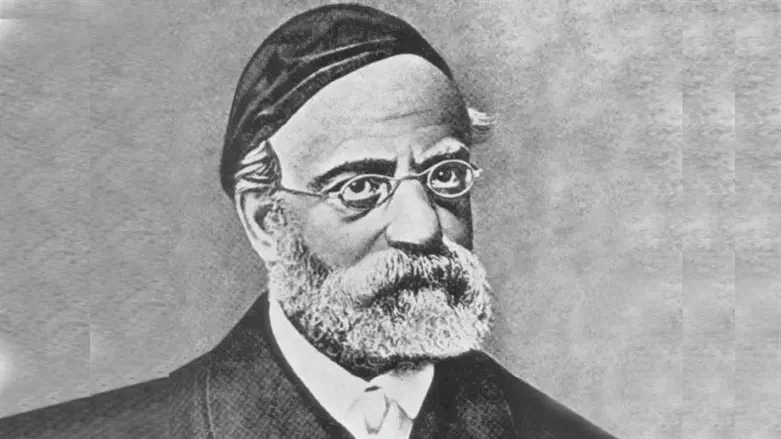
Rav Samson Raphael Hirsch (1808-1888) - head of the Jewish community in Frankfurt, Germany for over 35 years - was a prolific writer whose ideas, passion, and brilliance helped save German Jewry from the onslaught of modernity.
Elliot Resnick, PhD, is the author/editor of 10 books, including “The Rav Samson Raphael Hirsch Dictionary.”