

Walk down a street in a European capital on a day of protest. You see a crowd of demonstrators waving flags, chanting slogans. If the crowd is Muslim, the air feels different: angry chants, faces twisted in rage, threats against Israel, sometimes against the very society that hosts them. For the passerby who is not Jewish, not Muslim—just a neutral citizen of Paris, London, or Berlin—the heart beats faster. There is fear in the air. Suspicion.
A quiet question in the mind: What if this rage spills over? Am I safe here?
(For Jews in Manchester, that question is not theoretical anymore.)
Now picture another crowd, a Jewish demonstration. Signs pleading for the release of hostages. Flags of Israel and candles of remembrance. The chants are quieter, the slogans not threatening. The passerby feels no fear, only empathy. These people may be stubborn, proud, even loud sometimes—but they are not threatening the bystander. The “fear scale” here barely flickers.
The Nobel Lens: Numbers That Tell a Story
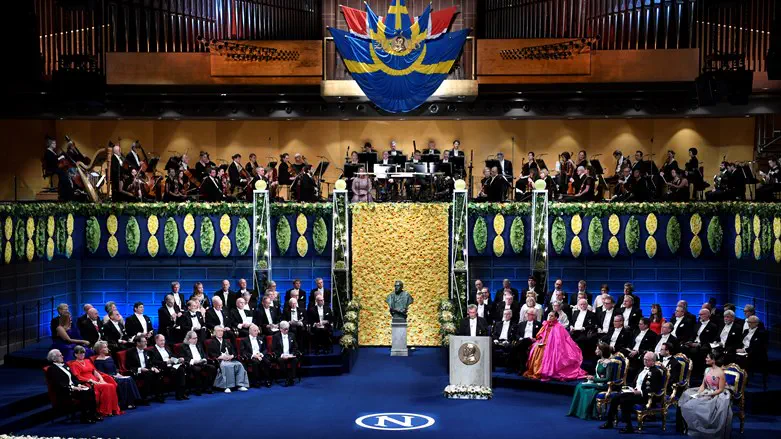
That contrast in street emotions mirrors a deeper truth. Since 1901, Jews—barely 0.2% of the world’s population—have won more than 216 Nobel Prizes, shaping science, medicine, literature, and economics. Muslims—25% of humanity—have won only 15 Nobels, most in Peace, fewer in Literature, and almost none in the hard sciences.
Per capita, Jews have been recognized nearly 18,000 times more often than Muslims. This is not just a number. It is a story of two civilizational mindsets: one turned to discovery and healing, the other trapped, too often, in conflict and stagnation.
Medicine and Science: Who Heals and Who Stagnates
Think of the medicines that saved your child or parent: chemotherapy, antibiotics, polio vaccines, treatments born from Jewish minds. Jewish scientists “punched above their weight” again and again, giving tools that lengthened life and eased pain across the globe.
Now think of the Muslim world in the modern age. Yes, there was once a Golden Age—astronomy, mathematics, great physicians. But for centuries, the spirit of inquiry has dimmed. Today, the Muslim contribution to modern science and medicine is faint, a shadow compared to what it could have been.
Streets and Statistics: Creation vs. Destruction
The contrast is not only in laboratories or universities. It is written in blood on the streets of Israel. Arabs are 21% of Israel’s population but account for over 80% of homicide victims and perpetrators, almost all Arab against Arab. Their young men die, not because of Israeli police or Jewish neighbors, but because of bullets fired by their own. The Jewish homicide rate is a fraction, their energy directed elsewhere.
A neutral European can see this difference not through statistics, but through feeling. When Jewish crowds gather, they create; when Muslim crowds gather, the air too often thickens with destruction.
Islamophobia vs. Antisemitism: Not the Same Disease
Both words—Islamophobia and Antisemitism—are thrown around as if they mirror each other. But they don’t.
- Islamophobia is rooted in fear and suspicion. A person in Europe sees Muslim demonstrators shouting death to Israel, sees violent crime rates higher among Muslim immigrants, sees terror attacks—and feels afraid. That fear may not always be fair, but it is understandable.
- Antisemitism is different. It is born of jealousy, envy, and resentment of success. Jews win Nobels, build companies, heal diseases—and for this, they are hated. It is not fear of harm, but hatred of brilliance. A mental disorder, punishing productivity itself.
A neutral person on the street knows the difference in their gut. One group triggers fear; the other, irrational envy.
A Civilization’s Balance Sheet
If we put civilizations on a balance sheet, the Jewish line is heavy with credit: discoveries, cures, Nobel prizes, music, literature, human progress. The Muslim line, at least in modern times, is weighed down by debt: missed opportunities, silence in science, and an overrepresentation in violence.
This is not destiny. It is choice. A people can choose to emulate the Jewish path—investing in education, in inquiry, in building—or continue on the path of destruction.
Conclusion: The Emotional Truth
For the neutral European, the difference is not abstract. It is visible on the street. A Jewish rally and a Muslim rally are not the same experience. One calms, one unsettles. One earns respect through contribution, the other suspicion through anger.
The statistics back this up, but the feelings are more immediate. Antisemitism punishes achievement; Islamophobia recoils from fear. And history, both past and present, makes clear which legacy uplifts humanity—and which drags it down.