
Rabbi Ilan Goldman is a friend of Torah MiTzion, former rabbi and central shaliach of Bnei Akiva UK
One of the most fascinating historic and halakhic issues to come to life in our generation is the attempt to identify the lost ten tribes, descending from the Kingdom of Israel. Unity of the nation did not last for long under the Davidic dynasty. While David’s son, Shlomo HaMelech (King Solomon), presided over a golden age, the kingdom split under his grandson Rechavam into two kingdoms; two tribes forming the Kingdom of Judah (earning its descendants the name ‘Yehudim’) and ten tribes forming the Kingdom of Israel.
The latter is described as a very sinful kingdom and was exiled 133 years prior to the exile of the Kingdom of Judah, an exile from which they may have never returned.
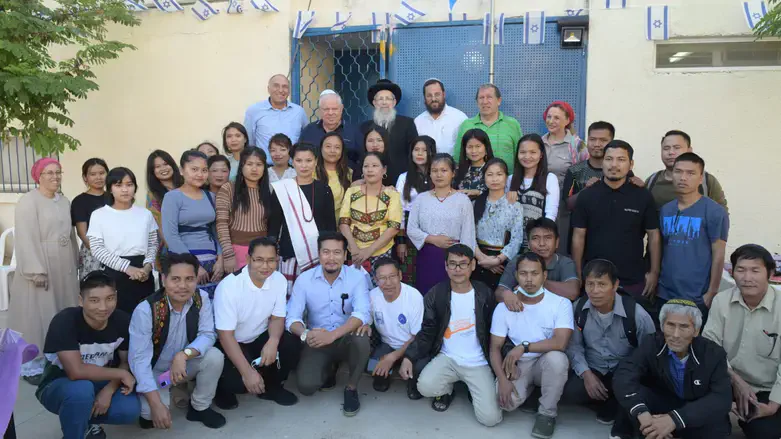
Yet, we find mention of them in rabbinic literature throughout the generations. Today, there is some evidence that we have found descendants of at least two of the tribes, Dan and Menasheh, which many (but not all) have recognised, including the State of Israel and its Rabbanut. The rabbinic tradition however seems less optimistic.
The Mishna in Sanhedrin brings two opposing opinions regarding the ten tribes; whether they have vanished or not: ‘The ten tribes who were exiled will not be returned, as it reads “And he cast them into another land, as this day”. As that day will not return, so they will not return. So says Rabbi Akiva. Rabbi Eliezer said: ‘As this day’ means that as usually a day becomes clouded and thereafter lights up again, so the ten tribes, who are now in darkness, the future will lighten upon them’ .
Rabbi Akiva seems to be claiming that because of their sins they were lost and never to be found whereas Rabbi Eliezer, though claiming that they are yet to return, seems to be admitting that they are currently lost. However, a later source teaches otherwise. Rabbi Yochanan claims that Yirmiyahu had gone to bring them back and they came to live in the Kingdom of Judah. This is one of the theories which suggest that the ten tribes assimilated into the rest of the Jews; hence Am Yisrael of today is made up of all twelve tribes.
If this is the case, then Rabbi Akiva and Rabbi Eliezer’s argument is telling us that while some descendants of all ten tribes did unite with the rest of Am Yisrael, others did not. Rabbi Akiva is of the opinion that those who did not return in the past have assimilated and are lost forever. Rabbi Eliezer claims that their descendants too will return one day. And perhaps, as some have explained their arguments, they were referring to the resurrection of the dead (which makes sense in the context of their discussion). Rabbi Akiva claims that the generation who were exiled is lost forever. And Rabbi Eliezer claims that they too will merit the resurrection.
It is therefore very possible that both stages of the return of the ten tribes are true. Some of them have already emerged into Am Yisrael; others are yet to be found. Indeed the Midrash teaches that the children of Yehuda (and Binyamin) will search for the ten tribes since they are required for the final redemption to take place.
In the footsteps of the Maharal we can view this as the unfolding of the concept of מַעֲשֵׂה אֲבוֹת סִימָן לַבַּנִים, ‘the deeds of the forefathers are a sign for the children’. The relationship between Yehuda and Yosef is a microcosm of the relationship between the Kingdoms of Judah and Israel (which was founded and led by kings descending from Yosef).
The Kingdom of Judah had a share in the exiling of the Kingdom of Israel - Yehuda sold his brother Yosef.
The descendants of the Kingdom of Judah will seek out the descendants of the Kingdom of Israel - Yehuda and the brothers sought Yosef.
When the ten tribes are found, they are not easily recognised. Similarly, Yehuda and the brothers did not recognise Yosef when they saw him.
The return to Zion is not complete until the whole nation comes home. Each tribe has its uniqueness and only together with all our brothers and sisters is the nation complete and only then will the geula be complete.
For comments:Ilanrgoldman@gmail.com