

One can hope that the assassination of Charlie Kirk is a watershed moment for the United States but, sadly, political violence has been ubiquitous in American life for almost two centuries.
Four presidents have been murdered: Abraham Lincoln (1865), James A. Garfield (1881), William McKinley (1901), and John F. Kennedy (1963). Gerald Ford was shot at twice, Ronald Reagan once, Harry Truman was saved by his security team (one of whom was killed), FDR as President-elect was shot at (the mayor of Chicago was killed), and two former presidents running again for office (Teddy Roosevelt and Donald Trump) were both hit and survived. (Roosevelt, in fact, continued to give his speech with a bullet in his chest.)
Yet, Kirk’s murder has especially touched people across the world, and not only because he was a young husband and father in the prime of his life. Charlie Kirk wasn’t a politician. He was what young people today called an “influencer,” a purveyor of ideas and opinions, a spokesman for conservative values, a shaper of young minds, and one of the most powerful countercultural forces to ever appear on American college campuses. His bold, unhostile challenge to those who differed with him - “Prove Me Wrong” - typified his self-confidence as well as his willingness to dialogue with ideological opponents. Quite possibly, he was perceived by his killer as even more dangerous than most politicians.
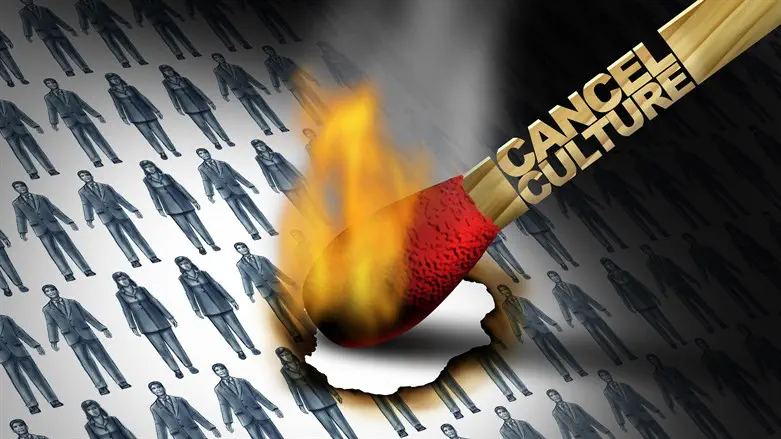
Charlie Kirk was also the victim of cancel culture, taken to its logical though gruesome and hideous extreme. For well over a decade (perhaps even four decades, if one counts the conservative speakers harassed and driven from campuses in the 1980’s), there have been persistent efforts to silence people who hold views disfavored by the liberal elites.
It was started by advocates of a nuclear freeze and appeasement of the Soviet Union, but was accelerated by proponents of one side of the various culture wars that waft through Western society: abortion (both pro and con), issues relating to race, women, same sex relationships, transgenders, etc. As we know, there are many places in the world today - even so-called free societies - where supporters of Israel face harassment, threats, silencing, social distancing, and cancelling.
It happened to me on several occasions, for a variety of ideological positions (all rooted in Torah) I was not supposed to have, even twice including death threats. I never paid much attention to the canceling attempts, which failed because no one I knew who mattered paid any attention to the cancelers either. As I have never been on social media, I was spared the invective directed at me, nevertheless shared with me by good-hearted souls who didn’t want me to miss out. Ignoring social justice warriors was always the best tactic - and never apologize - and they really do go away after a brief period of time.
Canceling takes the form of social pressure, censorship, termination of employment, bullying, assaults on family, and of course, character assassination. The difference between character assassination and actual assassination is a difference in degree, not in kind.
Most of the assaults and homicides of US presidents have been perpetrated by mentally deranged individuals, with Lincoln’s killer, John Wilkes Booth, a Southern zealot, one of the very few exceptions. Kirk’s assassin presents as a kindred spirit - motivated by fierce antagonism to Kirk’s ideas and feeling no need to prove him wrong. The attack on free speech - a bedrock of liberal societies - is considered justified in many circles, as are attacks on people who speak freely.
Not all speech should be supported or consequence-free but reasonable people should be able to distinguish between, say, those who are pro- or anti-abortion, and those who tastelessly celebrate the murder of someone who thinks differently than they do. The former is a clash of values regardless of how passionately one clings to either position, and should be debated. The latter, as happened several times in the US in the past week, are rightfully fired from their employment and denounced publicly. They have the right to speak, but no inherent right to work for any particular company, which most cogently recoils from employing someone whom their clients or customers might find repugnant.
Where can we draw the line? At attempts to enforce a new and fabricated morality that conflicts with traditional morality, with such enforcement a staple of cancel culture.
What exacerbates the problem is the flippancy with which opponents are vilified, and called “Hitler,” “fascists,” “Nazis,” “dangers to democracy,” or “threats to society.” No one should be surprised when an advocate for whatever tries to murder his ideological antagonist whom he deems to be Hitler, or a Nazi. He thinks he is doing the world a service. It should not be lost on anyone that while the right generally believes the left to be misguided but salvageable, the left believes the right to be evil, immoral, and incorrigible. The horrific results of that equation are inevitable.
We have not yet emerged from the morass of cancel culture and its real threats, not in the US nor in Israel. The vituperative descriptions listed above are freely tossed about in Israeli society, especially by haters of the Prime Minister. The breakdown of civil society, the inequitable enforcement of the law, the rights afforded some groups and people but not others, and the outright violations of the law that may result in arrests but never serious prosecutions - including threats to many ministers and attempts on the lives of others - are the real threats to democracy in our time.
Indeed, recent claims by politicians on the left that Netanyahu will cancel the next election or that he is planning to win by cheating, will invariably attract some provocateurs who will take the law into their own hands, rationalize it, and find more support among the leftist elites in Israel than we would like to believe. Those claims are evocative of our sages’ dictum that “he who disqualifies others, disqualifies them with his own flaws” (Kiddushin 70a).
They would love to cancel elections if they are left in power, one reason the elites in Israel have coalesced around the most undemocratic institution - the judiciary - and guards their privileges zealously. It also feeds their narrative that the right can never win because the whole country is against them, and if they do, it means they cheated. That claim is obviously false but also incendiary.
Is there a way forward?
Rav Chaim Yosef David Azulai, the great Chid”a (1724-1806), cited the prophet’s admonition (Hoshea 14:2-3), “Return, Israel, to the Lord, your G-d… Take your words with you and return to Hashem…” and explained that taking our words with us means that “the beginning of repentance is guarding our tongues,” monitoring our speech, being conscious of both the short- and long-term effects of what we say or write. For sure, the crawl spaces of the internet and social media have allowed people to write with such animosity, usually in anonymity but polluting society nonetheless, and finding many like-minded haters to egg them on and reward with likes, checks, subscriptions, etc.
It is not entirely clear that American society can preserve itself from the consequences of cancel culture, given that the politics is so polarized, hate speech proliferates, and few can see any good or even humanity in their ideological foes. Most American women, for example, will not date a man with whom they disagree on political or cultural issues. People live in their own information silos and have little interest - and sometimes an aversion - to stepping outside themselves and interacting with others who profess views contrary to theirs. They would rather go through life lonely and angry than re-think even one position of theirs.
Jews should know better, but our society too has been infiltrated and infected by these foreign notions, and too much attention is lavished on even tiny groups of protesters if the media elites admire the cause for which they are protesting. But we should know better because on the eve of the Days of Awe we again confront the reality of our lives, what is important and less so, what we should prioritize, de-emphasize, or ignore completely, and how G-d’s nation must show the world how disparate groups can live together in harmony when what unites them far exceeds what divides them.
It all begins with “taking our words,” seriously, guarding our tongues, respecting differences of opinion because no two of us think alike, being extremely judicious as to whom we label enemies, and regaining a sense of our mutual destiny. If we accomplish that, we will merit not only the blessings of life, peace, prosperity, and meaning, but we will also hasten the coming redemption.
Shana Tova to all!
Rabbi Steven Pruzansky is a former pulpit rabbi and an attorney who lives in Israel and serves as Senior Research Associate at the Jerusalem Center for Applied Policy and as Israel Region Vice President of the Coalition for Jewish Values. He is the author of six books, including “Repentance for Life” (Kodesh Press).