
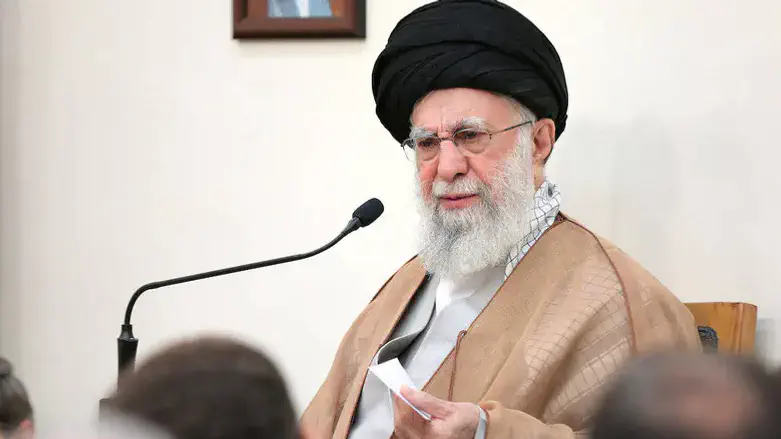
Iran once again finds itself at the epicenter of an international confrontation. Already weighed down by decades of sanctions and other punitive measures, Tehran appears unmoved by new threats from the West over the possible activation of the snapback sanctions. For Iran’s leaders, there is little left to lose.
What the United States and Israel demand is tantamount to total disarmament—dismantling Iran’s nuclear program, restricting its missile capabilities, and rolling back its regional proxy networks. For the Islamic Republic, that price is too high. Tehran calculates that enduring further sanctions is still preferable to giving up the instruments it considers essential for regime survival.
Europe’s Diplomatic Gambit
The European Troika—Britain, France, and Germany—has given Iran 30 days before triggering the snapback clause of the 2015 nuclear deal, which would restore sweeping UN sanctions. Framing the deadline as a test of diplomacy, European leaders hope Tehran might shift course under the threat of deeper isolation. Yet in reality, Europe has few remaining levers of pressure.
Iranian lawmakers have dismissed European threats, arguing that additional sanctions will not significantly alter the trajectory of an economy long accustomed to hardship. Some have even gone further: a member of parliament’s National Security and Foreign Policy Commission warned that, should the snapback mechanism be activated, Iran could withdraw from the Non-Proliferation Treaty (NPT), sever ties with the International Atomic Energy Agency (IAEA), and escalate enrichment toward weapons-grade levels.
The Cairo Agreement with the IAEA
Against this tense backdrop, a new development recently unfolded in Cairo. Rafael Grossi, the IAEA’s director general, announced the signing of a comprehensive agreement with Iranian Foreign Minister Abbas Araghchi to resume full cooperation between Tehran and the agency. The deal reinstates inspections of all nuclear facilities under the safeguards system and reaffirms Iran’s obligations to transparency. Grossi called it a “step in the right direction” and evidence that diplomacy still works.
The agreement is significant because Iran had suspended cooperation with the IAEA following Israeli and American strikes during the Twelve-Day War. Tehran conditioned any resumption of cooperation on guarantees against further attacks and recognition of its right to enrich uranium domestically. By signing in Cairo, Iran signaled willingness to return to inspections—albeit under terms it views as protecting its sovereignty.
At the same time, Europe has pressed forward with snapback preparations at the UN Security Council. France, Germany, and Britain insist that Iran must not only restore cooperation with the IAEA but also clarify the status of its uranium enriched above 60 percent and commit to a broader nuclear settlement with Washington. From their perspective, the Cairo agreement is a positive gesture but insufficient to address core concerns.
Russia and China Weigh In
Not surprisingly, Beijing and Moscow quickly welcomed the Cairo agreement. Both countries have long opposed Western sanctions as tools of coercion. Russia even drafted a Security Council resolution to delay the snapback process, though it has yet to call for a vote. Moscow’s move reflects its desire to shield Iran from punitive measures while also positioning itself as a diplomatic broker.
China, for its part, welcomed the agreement as a victory for multilateralism. With Russia weakened by the war in Ukraine, Beijing has increasingly styled itself as the leader of the Global South. Iran offers China both strategic depth in the Middle East and a partner willing to challenge U.S. dominance. For Tehran, the benefits of Chinese support are obvious: economic relief, political cover, and military support. But they also carry risks, since over-dependence on Beijing would erode Iran’s cherished strategic independence.
Domestic Pushback in Tehran
Inside Iran, the Cairo agreement has not been universally welcomed. Hardline lawmakers accused Grossi and the IAEA of “espionage,” and some threatened Araghchi with impeachment if he bypassed the Supreme National Security Council in granting authority for cooperation. Such backlash illustrates the deep divisions within Iran’s political elite. While the government under President Pezeshkian appears inclined to engage cautiously with international institutions, conservative factions remain deeply suspicious of any concessions.
This domestic tension limits Tehran’s room for maneuver. Even as it signals flexibility abroad, the regime must maintain revolutionary credentials at home and among its regional and global followers. That balancing act explains why Iran paired the Cairo agreement with sharp warnings: Araghchi declared in Cairo that if the United Nations’ Security Council reimposes international sanctions, Tehran will consider its cooperation with the IAEA null and void.
The Israel Factor
Israel looms over all of these dynamics. Its strikes on Iran during the Twelve-Day War demonstrated both reach and resolve. For Israel, Iran’s nuclear progress is an existential concern, and it will act militarily if it perceives an imminent threat. These actions hardened Tehran’s distrust and gave it justification for conditioning cooperation on security guarantees. For the West, however, they also underscored the urgency of constraining Iran before escalation spirals out of control.
Thus, Israel’s shadow intensifies the strategic dilemma: Iran will not voluntarily disarm, yet unchecked progress toward weapons capability risks provoking further military confrontation. Europe’s snapback threat and the Cairo agreement should be seen as parallel efforts to address this dilemma—one coercive, the other cooperative.
Iran’s Balancing Act
President Pezeshkian’s presence at the Shanghai Cooperation Organization (SCO) summit in Tianjin further highlighted Iran’s attempt to balance. There, he secured the backing of Russia and China against Western sanctions, even as Tehran hinted at willingness to reduce enrichment under the right conditions. This dual-track strategy reflects Iran’s broader approach: leveraging ties with non-Western powers to resist pressure while keeping enough distance to avoid becoming entirely beholden to them.
For Iran, autonomy remains central to its identity as an ancient nation and a revolutionary state with global ambitions. It wants the benefits of alignment with China and Russia without accepting total subordination. Similarly, it seeks limited engagement with the West without exposing itself to full disarmament.
The Narrow Path Forward
If a path forward exists at all, it will be found in the narrow space of mutual recognition of interests. After Israel’s strikes, the West has little illusion that Iran will voluntarily disarm. Tehran, meanwhile, is increasingly aware that excessive dependence on China risks eroding its autonomy. Both sides therefore share a potential interest: ensuring that Iran does not become another proxy in Beijing’s long-term strategic game.
The Cairo agreement, though fragile, provides a potential foundation for this narrow opening. If Iran’s coordination with the IAEA resumes and Tehran signals openness to broader cooperation with the West, the possibility of renewed diplomacy remains. But the margin for error is slim: one hostile move at the UN Security Council or another military operation against Iran can push Tehran further toward Beijing and unravel the emerging arrangement with the West.
The Emerging World Order
Ultimately, the stakes go far beyond sanctions or uranium enrichment. At issue is the shape of the evolving global order and Iran’s place within it:
-Will the balance tilt further toward a Chinese-led system with Tehran as a pawn in Beijing’s grand strategy?
-Or can Western diplomacy anchor Iran in a more balanced framework that keeps open the possibility of gradual reintegration into the liberal order led by the United States?
How these questions are answered will not only define Iran’s trajectory but also reveal the contours of the emerging world order.
Dr. Reza Parchizadeh is a political theorist and strategic affairs specialist focusing on Eurasia and the Middle East, great power competition, and international security. He has advised American and Israeli governments on national security issues and spoken at the U.S. Congress on foreign and security policy. Widely published in outlets like Al Arabiya, BESA Center, Middle East Forum, The Jamestown Foundation, and Israel National News, he concentrates on Iran, Israel, Turkey, the Arab world, and how external powers, including Russia and China, shape the regional dynamics in the Middle East.