

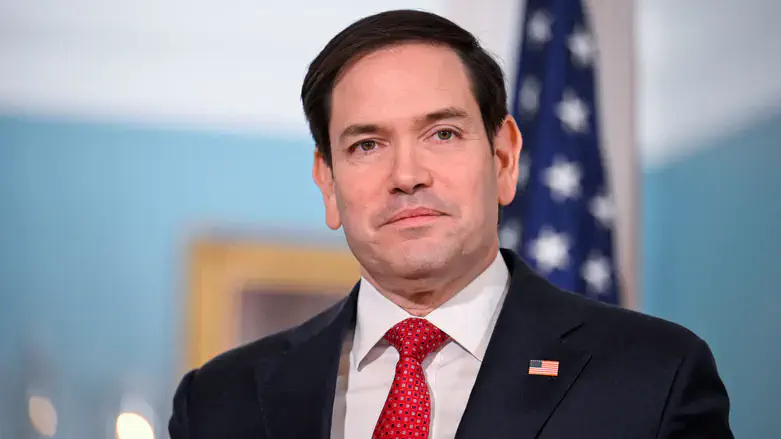
During a joint press conference with Ecuadorian Foreign Minister Gabriela Sommerfeld in Quito, Ecuador, on Thursday, US Secretary of State Marco Rubio was asked about Israeli plans to enact sovereignty over Judea and Samaria as well as the move to suspend the visas of Palestinian Authority officials.
"The Palestinian Authority has its own set of problems: 'pay-for-slay,' they pay people to kill Israelis, we have problems with them too," Rubio said at the beginning of his answer.
Referring to countries planning to unilaterally recognize Palestinian statehood, he stated: "We told all these countries, 'If you guys do this recognition stuff, which isn't even real, you're going to create big problems. There is going to be a response from Israel, you're going to make it harder to reach a ceasefire, and it may even trigger these sorts of actions' (enacting sovereignty over Judea and Samaria)."
He noted that the US is watching the issue closely but that he would not opine on the matter, "Other than to tell you that we predicted that this would happen. We warned everybody that it would happen, but nonetheless, some of these people decided to move forward with something that's illusory."
According to Rubio, "Right now we should focus on how we should end this war in Gaza, how do you eliminate Hamas, how do you disarm Hamas? That end could end tomorrow if Hamas would just disarm, surrender, and release the 20 hostages who shouldn't even be there. It would end, but Hamas refuses to do that."
Circling back to the issue of sovereignty over Judea and Samaria, he stressed that "that's not a final thing, that's something that's being discussed among some elements of Israeli politics, I'm not going to opine on that today. What I will say is that was totally predictable, we told all these countries before they went out and did this, we told them that if they went through with this there wasn't going to be a Palestinian state, becayse that's not how a Palestinian state would happen, becayse they have a press conference somewhere, and we told them that it would lead to these reciprocle actions, and it would make a ceasefire harder."
He added, "The day the French announced that thing, Hamas walked away from the negotiating table. They immediately increased their demands and stopped negotiating. So we also warned that that would happen, and it did. But sometimes these guys don't listen, and they do what they gotta do because of their domestic politics. These are consequences of that."