
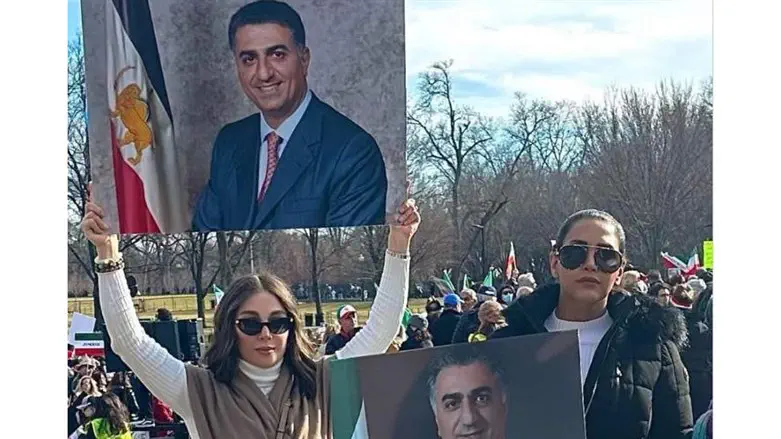
As the anniversary of Mahsa Amini’s death approaches, the world is once again reminded of the courage of the Iranian people, especially the women and youth who ignited the flames of the “Woman, Life, Freedom” movement. Their voices shook the totalitarian regime from within and proved that the demand for dignity, equality, and freedom cannot be silenced. The spirit of this movement remains alive and is tied to the broader struggle for Iran’s liberation.
This nascent revolt troubles Ali Khamenei more than anything else. He does not spend his days only blaming the United States or fantasizing about endless wars with America and Israel. Although his hostility toward these nations has turned into a political theater of delusion and paranoia, and no one truly knows what he seeks from them because he certainly cannot destroy them, he falsely portrays himself as the defender of the Iranian nation. In reality, he is the dictator who represses Iranians; his very existence, his name, and his presence are an insult to Iran and its people.
Khamenei himself is the first enemy of the Iranian nation, not America, not Israel. To preserve his Shia theocracy, he is willing to sacrifice everything. So intoxicated is he with his machinery of repression that he seems ready to massacre the population to secure the survival of the Islamic Republic, imagining that the world will remain silent.
Khamenei’s greatly fears the name “Pahlavi.” For him, the legacy of Iran’s monarchy, and especially Crown Prince Reza Pahlavi, has become a never-ending nightmare. At the mere mention of the Pahlavi name, he spirals into hysterical outbursts.
Accordingly, the discredited architects of the 1979 Revolution have tried to tarnish Pahlavi's image, leading to some of Reza Pahlavi’s loyal supporters to choose silence and seclusion. In addition, a campaign in the U.S. was launched against the only civilian figure in the Shah's secret police and inteligence agency SAVAK, Parviz Sabeti, who is believed to have attempted reforms and fled to the US in 1979. After the publication of his memoirs (“Dar Damgahe Hadeseh”), Iran’s young generation came to regard him as a symbol of resistance, but now there is a lawsuit filed against him alleging he played a role in the tortures to which prisoners were subjected under the Shah.
What truly terrifies Khamenei and his allies is the vision of Iran’s transition into a new era, an era that might be facilitated by Crown Prince Reza Pahlavi who has repeatedly emphasized that the future of Iran’s political system must only be determined by the people, through a free referendum. This vision doubles the regime leader’s fear, for in such a choice the people would undoubtedly move toward freedom and emancipation.
Recently, Khamenei himself mockingly declared: “The enemies were so sure of themselves that they even sat in Europe and appointed a king!” But his very words revealed the truth: his greatest fear is Iran’s return to its natural historical course. The Islamic Republic is a failed experiment; a hollow anti-Iranian mirage sustained only through repression and lies. Khamenei’s delusions cannot save it.
The people of Iran, regardless of belief or political leaning, know one thing: no one wants the Islamic Republic, and its collapse is inevitable. It is precisely at this moment that Mahsa Amini’s memory resurfaces: a young woman whose life became the flame of a nation. Today, her name is not only a symbol of protest but a banner for a free future. Khamenei may fear the name Pahlavi, but what shakes him and his regime even more is the voice of the women and youth who, with the cry “Woman, Life, Freedom,” have shown that Iran will never surrender to tyranny. The future of Iran belongs to its people, and that is a truth no dictatorship can silence.