


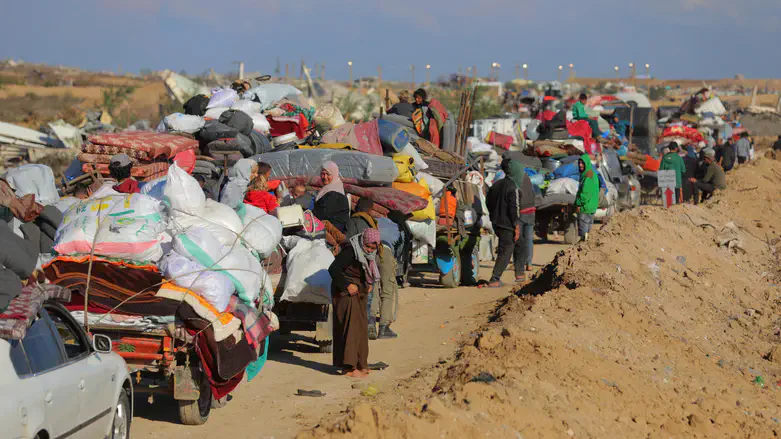
A draft postwar proposal circulating within the Trump administration outlines a sweeping vision for the Gaza Strip, potentially placing the enclave under US trusteeship for at least a decade. The plan, reported by the Washington Post, would relocate Gaza’s population during reconstruction and transform the area into a hub of tourism, high-tech manufacturing, and smart cities.
The 38-page proposal, titled the Gaza Reconstitution, Economic Acceleration and Transformation Trust (GREAT Trust), suggests relocating Gaza’s more than two million residents, either to third countries or into secure zones within the enclave. Palestinians who own land would be issued digital tokens by the Trust, which could be redeemed for future housing or used to support resettlement elsewhere.
Departing residents would receive $5,000 in cash and subsidies covering four years of rent and one year of food. The plan estimates a cost saving of $23,000 per person for those who leave compared to those who stay in secure zones.
According to the Washington Post, the initiative draws from individuals involved in the US- and Israeli-backed Gaza Humanitarian Foundation (GHF), and was financially modeled by a Boston Consulting Group team. BCG later said the work was not officially approved and dismissed two senior partners involved.
The GREAT Trust proposes funding through public-private investment, aiming for a fourfold return on a $100 billion investment within a decade. Unlike the GHF, the Trust would rely on "mega-projects" rather than donations, with planned developments including electric vehicle plants, beach resorts, and smart cities.
According to the report, President Donald Trump convened a White House meeting to discuss Gaza’s future with key officials, including Secretary of State Marco Rubio, special envoy Steve Witkoff, and former UK Prime Minister Tony Blair. While no decisions were announced, Witkoff said the administration had a "very comprehensive plan."
The document reportedly makes no mention of Palestinian statehood but suggests Gaza would eventually be governed by a "reformed and deradicalized Palestinian polity" aligned with the Abraham Accords. Israel would retain security oversight initially, with private contractors and third-country nationals managing internal security.
The plan includes constructing a new port and airport, smart industrial zones, desalination and solar plants in Egypt's Sinai, and six to eight high-rise cities. The beachfront would be redeveloped into the "Gaza Trump Riviera," while residents who return would be offered new apartments.
Saudi Arabia and the UAE, which back the Egyptian proposal calling for Palestinian statehood, have not signaled support for this initiative. A Washington Post source noted that the Trust planners liken the model to US trusteeships of the Pacific islands and post-WWII reconstruction of Japan and Germany.
Despite the severe destruction in Gaza, critics warn that the proposed relocation may violate international law if it prevents displaced Palestinians from returning. One resident from Khan Younis told the Post, "This is my homeland. I refuse to be made to go to another country."
The Trump administration has not confirmed if the GREAT Trust proposal represents its official policy, but sources say it reflects the President's vision of a "Riviera of the Middle East."