

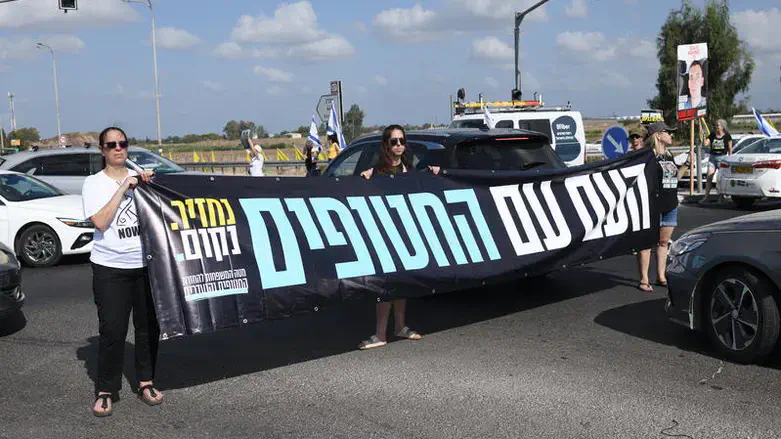
National Security Minister MK Itamar Ben-Gvir published a new policy paper on Thursday, which regulates the police operating procedure at demonstrations and roadblocks.
The document details the essential routes that must remain open at all times, prohibiting their closure.
Among the routes listed in the document: hospital access roads, emergency routes, roads to Ben Gurion International Airport, routes whose closure would isolate communities, as well as national roads, regional roads, and freeways.
The document also emphasizes that no objects should be allowed to be placed or thrown on the road during a demonstration. The policy was drafted and sent to the Attorney General a few months ago, but according to the minister, she has yet to respond.
On Thursday, Ben-Gvir made clear that if the Attorney General does not respond within five days, the policy will be implemented unilaterally. Ben-Gvir noted that the policy represents a necessary balance between freedom of expression and public security, and emphasized that blocking roads endangers lives.
"Freedom of expression and protest is important, but not at the expense of human lives and public security. Main roads, hospital access roads, and emergency routes can't be blocked, causing a real danger to citizens," the minister stated.
According to Ben-Gvir, "This policy balances the right to protest and the police's obligation to protect the freedom of movement, public order, and Israel's security."