

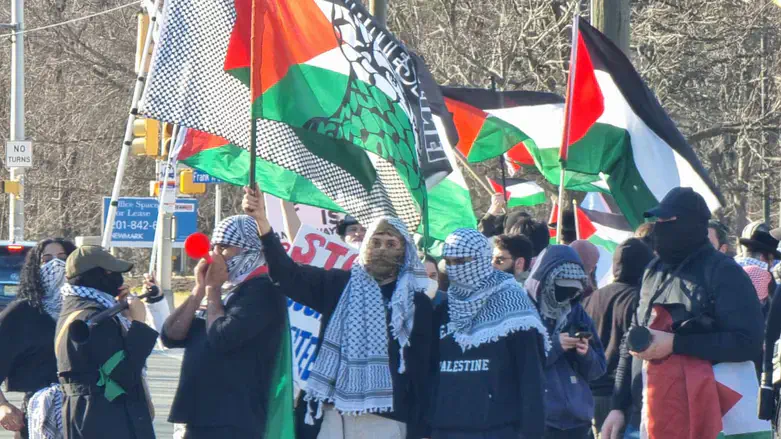
Tens of thousands of demonstrators took to the streets across Australia this month in some of the largest anti-Israel protests the country has seen in years, placing pressure on the Albanese government to respond both to foreign policy demands and growing concerns over public order.
In Brisbane, estimates ranged from 10,000 to 40,000 participants, with the crowd filling central streets and disrupting traffic for hours. Police established rolling roadblocks to manage the march, which featured Palestinian flags, chants accusing Israel of genocide, and calls for Canberra to impose sanctions on Jerusalem.
Melbourne saw another major demonstration, where protesters gathered at the State Library before marching through the CBD. The event drew elected officials and activists who called for boycotts of Israeli-linked businesses. Some participants shouted “long live the intifada,” language condemned by Jewish community groups as incitement to violence.
In Hobart, several thousand marched through the city center, where speakers connected the Palestinian cause with Indigenous struggles, framing the Gaza war as part of a wider fight against colonization.
The protests form part of a coordinated campaign by pro-Palestinian groups, staging actions in more than 40 locations nationwide. Their demands include recognition of a Palestinian state, suspension of defense ties with Israel, and an arms embargo.
The Albanese government has so far resisted calls for sanctions but has signaled growing unease with the conflict. In a recent statement, Foreign Minister Penny Wong said Australia “continues to support a two-state solution” while calling for an immediate ceasefire in Gaza and increased humanitarian access. Government ministers also emphasized the importance of protecting the right to protest while condemning “any expression of antisemitism or hate speech.”
Opposition figures criticized the government for what they described as a weak stance. Shadow ministers called for stronger action against “extremist rhetoric” at rallies, warning that inflammatory chants threatened social cohesion.
Jewish community leaders expressed deep concern at the tone of recent demonstrations, urging police to intervene against hate speech and calling on the government to ensure that support for Palestinians does not translate into intimidation of Australian Jews.
The wave of protests underscores the deepening divide in Australian public opinion over the Israel-Palestinian conflict, with the government caught between competing pressures from activist groups and community leaders.
Israel has monitored the protests with concern, particularly the widespread use of chants endorsing violence. Israeli officials have previously cautioned that legitimizing such demonstrations could embolden extremist groups abroad and contribute to rising antisemitism.
Jewish leaders in Australia echoed those warnings, urging authorities to intervene against hate speech and warning that the protests go beyond political criticism into systematic intimidation of Jews.