
Robert M. Schwartz, Ph.D., is a former assistant professor of psychology and psychiatry at the University of Pittsburgh School of Medicine. He has conducted pioneering research in positive psychology and written political and social commentary in The American Spectator, Christian Science Monitor, American Thinker, The Jerusalem Post, Arutz Sheva, and the Pittsburgh Post-Gazette. Email: robsch77@gmail.com
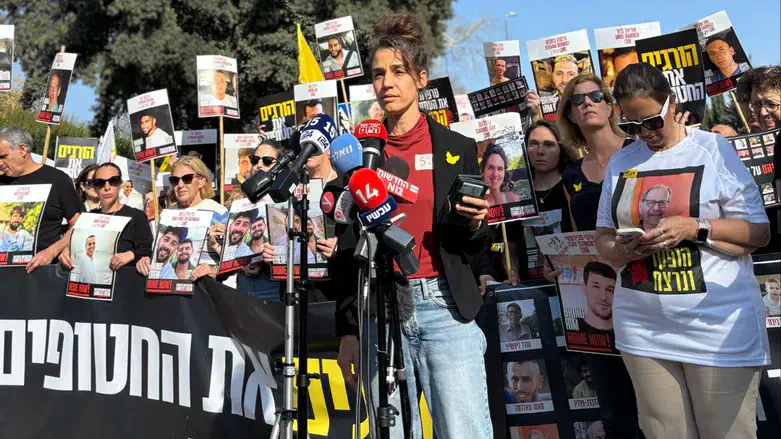
The anguished cries of the hostage families to “Bring them home” are understandable. So too are the concerns of those who fear that surrendering to Hamas will release a disproportionate number of terrorists, leading to more Israeli deaths, future October 7ths, and future abductions. A hostage's mother pleaded for ministers to “think with your hearts, and not only with your heads”. The moral dilemma is more complex than a battle between emotion and reason. With passionately held competing views, is there any sound basis for evaluating the ethical choices?
One way to frame this crisis is through the lens of the famed “Trolley Problem”: Would you pull a lever to divert a runaway trolley from killing five people if it meant it would kill only one person? Most people say yes. If the scenario requires you to physically push one man onto the tracks to stop the train and save five others, most say no. The cost-benefit ratio is the same—one life for five—but the moral response differs.
This thought experiment reveals that moral intuitions are not only about outcomes but about how outcomes are achieved—through less direct action mediated by a lever or more personal agency. The Trolley Problem operates in a world of defined risks and outcomes. In the real world, and especially in war, there is no clean track, no reliable lever, no certain outcome. The tracks are obscured by the fog of war, and the lever may or may not work. Israel’s dilemma—how to act on behalf of hostages held by Hamas—is a version of this problem, complicated by national trauma, uncertainty, and competing moral frameworks.
Decision-Making Under Uncertainty
-Rescue efforts may save some hostages but harm others.
-Halting operations to pursue negotiations could save lives now but increase long-term casualties.
Every option is fraught with risk, ambiguity, and tragic trade-offs.
Israeli leaders must weigh the value of saving current hostages against the strategic cost of encouraging future kidnappings and fracturing national resolve. They face at least three imperfect choices:
- Continue with military operations in the hope of rescuing hostages.
- Pursue a negotiated exchange involving the release of convicted terrorists.
- Delay action while gathering intelligence, possibly increasing the chance of rescue.
Because none of these options offers reliable outcomes, decision-makers must rely on Bayesian reasoning—subjective probabilities about uncertain futures. How likely is a successful rescue? How many Israeli lives might be lost if Hamas remains? Will other abductions occur if terrorists learn that hostage-taking is effective?
These are not only strategic calculations—they are moral judgments. The answers depend on which ethical lens we use.
Competing Moral Lenses
- Utilitarianism weighs overall consequences: Which course of action might save the most lives overall? Military pressure may be justified if more lives are saved than lost, even at the cost of some hostages.
- Deontological Ethics focuses on absolutes: It is morally impermissible to risk innocent lives under any circumstances. Sacrificing hostages violates a categorical imperative.
- Virtue Ethics asks what kind of nation we wish to be?: Is Israel a country that protects each citizen at all costs? Or one that considers overall long-term survival?
- Rule Consequentialism values principles that yield the best long-term outcome: Refusing to negotiate with terrorists may seem cruel, but incentivizing hostage-taking creates precedents that cause future harm.
Because views often conflict, leaders of a democratic society must weigh not only strategic risks but moral pluralism—the legitimate coexistence of ethical commitments within the body politic.
Jewish Ethics and the Legacy of Shalit
Jewish moral tradition adds another layer of complexity. The concept of pikuach nefesh—the obligation to save life—overrides nearly all other commandments. This imperative has driven hostage negotiations in Israel’s history. Yet the same tradition also values communal protection, avoiding actions that endanger future lives.
This tension was evident in the Gilad Shalit case. His release was celebrated as a national moral triumph, but a strategic error: one soldier for over 1,000 prisoners, including Sinwar, Hamas’s leader of the October 7th massacre.
Note that 13th-century Rabbi Meir of Rottenberg refused to let his students pay an exorbitant ransom to free him from captivity because this would encourage future kidnappings. The Mishnah and Torah commentaries state that although redeeming captives is among the highest virtues, it’s not at any cost. Adopting the rule-consequentialist lens, the Mishnah opines: “One does not ransom captives for more than their value, for the sake of tikkun olam” (the good order of the world).
The current debate is haunted by this painful historical parallel. Again, Israel is asked to weigh its sacred commitment to each life against the potential cost to future lives, national security, and moral precedent.
Strained Moral Landscape
These dilemmas divide Israeli society, reflecting its diverse moral foundations. Utilitarian reasoning appeals to those who focus on analytical thinking more than emotion to achieve practical outcomes. Deontological reasoning resonates with harm-averse traditionalists, who emphasize duty, empathy, and the sanctity of life. Virtue ethics, rooted in national identity and honor-based reasoning, is found among Zionist pioneers and religious Zionists. Rule consequentialism aligns with policymakers who prioritize paths that ensure systemic stability and long-term deterrence.
Western democracies often oscillate between utilitarian and deontological thinking. East Asian cultures tend toward virtue ethics. In Israel — a state that is both modern and ancient, democratic and Jewish, secular and religious — all four ethical lenses coexist and clash.
The result is not merely a strategic debate but a moral cacophony, with each camp claiming the ethical high ground. What’s needed is not premature consensus but acknowledging the complexity and validity of competing moral intuitions.
Strategy Is Not Amoral
No nation enjoys the luxury of moral purity. Defending itself sometimes requires morally painful choices. But this does not mean ethics can be ignored. Rather, in trying moments, a nation's moral compass is tested and revealed.
Israel was founded to protect Jewish life. The perception that hostages are expendable strikes at the core of that mission. At the same time, rewarding terrorism may endanger far more lives and degrade Israel’s strategic position. A nation that must trade between short-term mercy and long-term security is operating in a tragic moral landscape, not an evil one.
Clarity Amidst Moral Fog
There is no clean solution—only imperfect options. This analysis offers not the ‘right’ choice, but a philosophical model to temper emotion with reflection. The Trolley Problem reminds us that even with identical outcomes, people reach different conclusions depending on their moral lens and how the outcome is achieved. When outcomes are uncertain, those divergences are exacerbated.
Each person’s judgment about what is right in this crisis reflects their own moral lens—shaped by psychology, culture, theology, and experience. Recognizing this may not yield consensus, but it can foster compassion.
Israel will win this war. But victory should not come at the cost of national cohesion or moral self-respect. Israel must fight with strength and mourn with integrity. Citizens must debate with clarity and remember that no moral stance—however passionate—justifies demonizing those who see through a different lens. If so, the nation will avoid a “Pyrrhic Victory” - where costs outweigh achievements. Israel will not only survive but also preserve the humanity that gives meaning to Jewish survival.