


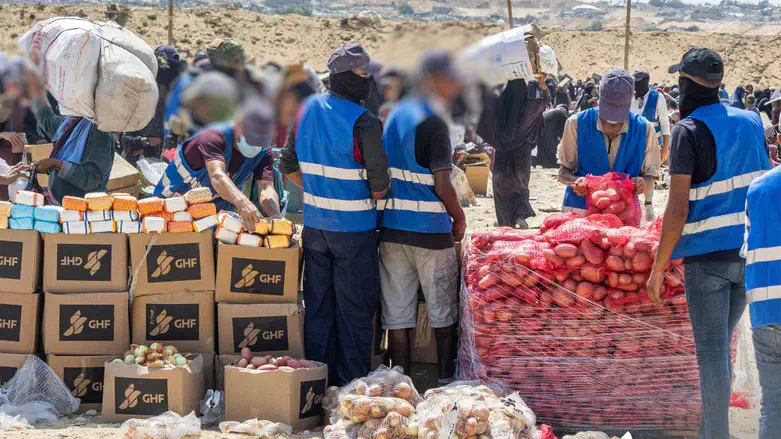
The US and Israel-backed Gaza Humanitarian Foundation (GHF) announced on Monday that it has introduced a pilot program allowing families in Gaza to reserve humanitarian aid parcels in advance. According to the organization, the initiative aims to provide more dignified, orderly, and predictable access to food assistance.
The program, which began on Sunday, August 17, at the SDS2 (Saudi Neighborhood) distribution site, involved 350 initial participants and is expected to expand to other GHF sites in the coming weeks. It follows the delivery of over two million aid boxes containing nearly 127 million meals to families across Gaza.
"It has always been our plan to offer a way for families to reserve aid in advance and guarantee access, just as other aid organizations do," said GHF Executive Director John Acree. "Until now, however, conditions on the ground have made implementation of such a program impossible. But with more aid flowing into Gaza and GHF’s deliveries helping stabilize food availability, conditions are improving. We are proud to take this step to deliver on the requests of the community and make distributions easier and more reliable for the people we serve."
Previously, the first-come, first-served model at distribution sites had created challenges, often disadvantaging women, children, the elderly, and people with disabilities. GHF has addressed these challenges through targeted solutions, such as women-only distribution days and community-based delivery models. The new reservation system builds on these efforts.
The process is entirely voluntary and straightforward. Trained local workers invite beneficiaries to join, take their photos, and issue ID cards with a unique number. Participants may also create an online profile to provide additional household information. A parcel is then reserved for each registered participant on designated distribution days, allowing them to avoid queues and competition for resources.
Aid will remain available on a first-come, first-served basis for those not enrolled in the program. All participant data is stored securely and not shared externally.
The system also enhances GHF’s communication capabilities, enabling direct updates to participating households about distribution schedules and emergency developments.
"This is real progress," Acree said. "It both demonstrates that GHF’s model is working and reflects our commitment to adapting to the needs of those we serve and delivering on President Trump’s call for innovation to get more humanitarian aid into the hands of the people who need it most in Gaza."
GHF plans to continue expanding the program with the goal of full implementation in the coming weeks.