
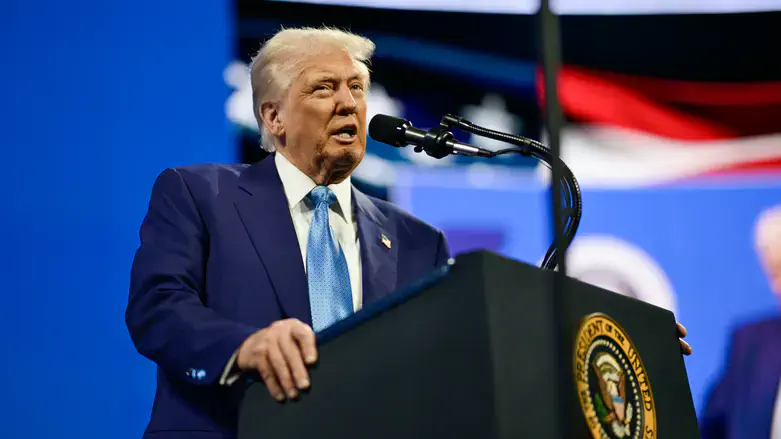
Armenia and Azerbaijan have signed a peace agreement that includes leasing the Zangezur Corridor to the United States for 99 years. According to Politico, Washington plans to sublease it to an international consortium for developing railways, pipelines, fiber-optic cables, and power lines along this 27-mile stretch. The Trump administration has designated it the "Trump Route for International Peace and Prosperity." This infrastructure project carries broader implications: it is the corridor through Armenia could significantly affect trade routes, energy flows, and regional influence across Eurasia.
The Zangezur Corridor would connect Azerbaijan to its isolated Nachshivan region through Armenian territory. Additionally, this route could handle up to $100 billion in cargo annually, creating a direct link between Central Asia and Europe that bypasses both Russia and Iran.
Anastasia Lavrina, an Azerbaijani journalist, puts it this way: "The Zangezur Corridor is more than a transport project—it's a potential pathway to lasting peace and stability in the South Caucasus." She argues it would open new opportunities for trade and tourism while physically reconnecting divided territories.
By securing a 99-year lease, the U.S. gains a strategic foothold in a region where it's historically had limited influence. This isn't just about trade routes—it's about containing both Russian and Iranian ambitions while keeping an eye on China's Belt and Road Initiative.
Beijing faces a complex situation regarding the U.S.-controlled corridor. The project presents several challenges: it creates an alternative route bypassing Chinese infrastructure projects in Central Asia, potentially reduces China's market share in transcontinental logistics, and could redirect investments from the Trans-Caspian route.
However, potential benefits include route diversification for Chinese trade, possible integration with western branches of the Belt and Road Initiative, and opportunities for Chinese companies to participate in construction projects, subject to U.S. approval.
The corridor represents a significant development for China's Eurasian connectivity strategy. After substantial BRI investments, Beijing must now factor in American control over a key transit junction.
The corridor poses significant challenges to Russian interests in the region. It could undermine the International North-South Transport Corridor (INSTC), a major Russian infrastructure investment connecting India to Europe via Iran and Russia. This development occurs alongside Russia's reduced military presence at Armenian border posts and diminished influence in Georgia, indicating a broader shift in regional dynamics.
According to the Dor Moria Think Tank, Russia has historically maintained control over key transportation routes through the South Caucasus. A U.S.-managed Zangezur Corridor would establish an alternative pathway outside Russian influence, altering the existing logistics framework in the region.
For Tehran, the corridor presents substantial strategic challenges. Iran International reported that the Iranian Revolutionary Guards political deputy Yadollah Javani compared Armenia’s Prime Minister Nikol Pashinyan and Azerbaijan’s President Ilham Aliyev to Ukrainian President Volodymyr Zelensky:
“The strategic error by Zelensky has so far imposed heavy and irreversible costs on Ukraine’s sovereignty and territorial integrity,” Javani wrote, “and now Aliyev and Pashinyan risk similar consequences by leasing the Zangezur corridor exclusively to the United States for 99 years, provoking Iran, Russia, China, and India.”
For Iran, the corridor would:
- Redirect East-West trade routes away from Iranian territory
- Disrupt Iran's land connections to Armenia and Russia
- Reduce Tehran's role as a regional transit hub
- Affect existing logistical networks across the region
Intelligence reports indicate Iran's Revolutionary Guards have deployed additional units near the Armenian border, with increased activity observed in Syria and Armenia.
The UAE might see reduced port traffic for East-West trade. Saudi Arabia needs to reconsider how this affects NEOM and Vision 2030's transportation plans. Qatar and Kuwait must reassess their infrastructure investments. These countries participate in both Russian-Iranian and Chinese initiatives, so they'll need to play all sides carefully.
However, not every global power is viewing the project negatively. New Delhi's "Act East" and "Connect Central Asia" policies get a boost. The corridor offers routes to Central Asia that bypass Pakistan, reduce dependence on Iran, and improve access to European markets. But India has invested heavily in the North-South Corridor with Russia and Iran—investments that could lose value if Zangezur succeeds.
Also, Israel stands to gain a lot from this project. Elnur Enveroglu, the deputy editor of Azernews, stressed in an exclusive interview: “The corridor strengthens pan-Turkic economic integration, which aligns with Israel’s desire to build stable regional partnerships beyond the Arab world. Israeli companies may eventually benefit from logistics, energy, and infrastructure projects linked to the corridor.” The benefits are clear:
- New secure trade routes through the Caucasus
- Stronger ties with Azerbaijan, a key ally
- Better energy security through Azerbaijani oil
- Strategic positioning near Iran's northern border
Lavrina notes that Israel's military and economic partnership with Azerbaijan makes this particularly significant: "A functioning Zangezur Corridor would enhance Baku's connectivity and influence—strengthening a reliable ally in the Caucasus."
The Dor Moria Think Tank frames it strategically: "For Israel, Zangezur is not just a Turkic corridor. It's a geopolitical lever—a tool that influences Iran's regional reach, Turkey's ambitions, Russia's containment strategy, and our own logistics eastward."
The Zangezur Corridor represents more than infrastructure development. It has emerged as a focal point for competing strategic visions regarding Eurasian connectivity. American management of the corridor affects existing arrangements including the Russian-Iranian partnership and China's Belt and Road Initiative, while strengthening Turkey's position and potentially limiting Iran's regional connectivity.
Lavrina suggests the corridor could function "as both an engine of economic growth and a foundation for long-term peace." The Dor Moria Think Tank observes: "It's easy to measure roads in kilometers. But the real value of Zangezur lies not in asphalt—it lies in who controls it, and what that control enables."
The 27-mile corridor will likely influence Eurasian dynamics for the coming decades. For the United States, it provides a strategic position in a significant region. Regional powers must assess whether the corridor represents an opportunity or a challenge to their interests. Global trade patterns may experience substantial adjustments in Asia-Europe commerce.
Infrastructure has become an arena for geopolitical competition, where control over transit routes correlates with strategic influence. The Zangezur Corridor illustrates that contemporary geopolitics increasingly revolves around the placement and control of roads, pipelines, and communication networks rather than traditional territorial boundaries.
The corridor's development under American management may signal a shift in Eurasian connectivity patterns. The coming years will determine whether this project contributes to regional stability and economic development or becomes another point of contention in great power competition. Regardless of the outcome, developments in this Caucasus corridor will have implications for trade routes, energy security, and strategic alignments from Shanghai to London.
Rachel Avrahamis the CEO of the Dona Gracia Center for Diplomacy and an Israel-based journalist. She is the author of "Women and Jihad: Debating Palestinian Female Suicide Bombings in the American, Israeli and Arab Media."