

“We’re not anti-Semites. We’re just anti-Israel.”
So say many Israel bashers online. How do you know they’re lying?
In some cases, you don’t. But the vast majority of the time, their tone of voice is a dead giveaway. Hostile and snarky, they can’t help but tip their hand.
Twice in the opening chapters of Sefer Devarim, Moshe recounts episodes in which Hashem responded, not so much to the words of the Jewish people, but to their tone. “And Hashem heard the voice of your words (kol divreichem),” Moshe declares (Deuteronomy 1:34 and 5:25). Not “your words” but “the voice of your words.”
When the Jews reacted to the spies’ report by declaring they wouldn’t be able to conquer the Land of Canaan, “what was reprehensible [to G-d] was not only in what [they] said, but principally in the tone in which they said it, in which the whole of their doubting and despairing faintheartedness and discontented attitude towards G-d made itself evident,” writes Rav Samson Raphael Hirsch.
But just as one’s tone can reveal faithless thoughts, it can also reveal noble thoughts. In Parshas Va’eschanan, Moshe recalls the Jewish people asking him to serve as an intermediary between them and G-d at Mount Sinai. Listening to G-d Himself utter the Ten Commandments is too much for us to handle, they said. “Why should we die? For this great fire will consume us. If we go on hearing the voice of Hashem, our G-d, we will die” (ibid., 5:22).
Were the Jewish people complaining? It sounds like they might have been. But Hashem didn’t just listen to the Jewish people’s words. He listened to their tone. And this tone told Him that their request for Moshe to serve as an intermediary stemmed from a “feeling of being penetrated with the whole of G-d’s overwhelming greatness and the certainty of the conviction of His personal revelation.”
They weren’t accusing Hashem of killing them or belittling the glorious opportunity of hearing G-d speak. On the contrary. They appreciated the awesome power of G-d’s voice to such an extent that they feared they would expire if they continued hearing it (as in fact they already had - twice - according to the Midrash). And so Hashem told Moshe, “I have heard the voice of the words of this people which they have spoken to you; they have meant well [in] everything that they have spoken” (ibid., 5:25). Moshe wasn’t completely sure what to make of the Jewish people’s request. Hashem was.
A person’s words matter a great deal, but so does his tone. In fact, it sometimes reveals even more than his words.
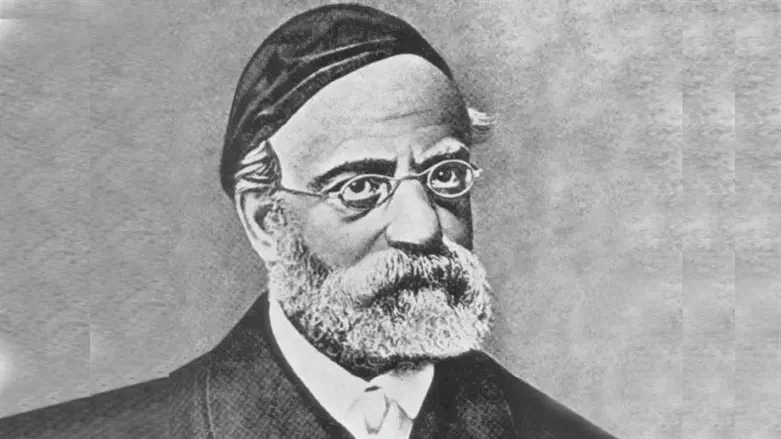
Rav Samson Raphael Hirsch(1808-1888) - head of the Jewish community in Frankfurt, Germany for over 35 years - was a prolific writer whose ideas, passion, and brilliance helped save German Jewry from the onslaught of modernity.
Elliot Resnick, PhD, is the host of “The Elliot Resnick Show” and the editor of “The Rav Samson Raphael Hirsch Dictionary.”
...