

Herzog College’s international branch, Herzog Global, joined by UnitEd, held a day-long seminar on Teacher Standing, important in itself, but crucial in light of the acute shortage of teachers.
Speakers elucidated problems, suggested solutions and shared tips for our classrooms, schools and communities. Arutz Sheva summarized most of them, for both parents and teachers to ponder.
Our Sages said that knowing your problem is shared by others is half the solution. And in this generation where bucking conventions is the norm, and facts can be gained in seconds using AI (or Google for the old-timers), educators the world over find that their standing is suffering from erosion and that misconceptions about their goals (imparting facts without analysis is emphatically not one of them) need clarification. Add to this the Western propensity for judging status by income, and you can see why it is hard to convince the best and the brightest to choose the field of education, although that is who society needs in the classroom.
And as for those who do see a calling in education, keeping them there is just as hard. We have to ask ourselves hard questions about why that happens. For example, what classes do we give new teachers? The worst, of course, because the good classes go to the experienced teachers.
So how do we get people to go into education, stay there, and feel good about it? Are these issues prominent in Jewish education as well as general education? Does Israeli education find common ground with American Jewish education? Can the two systems synergize and help one another?
These issues and others were addressed at this year’s Herzog Global Educators Day, held on Monday, July 28, parallel to one of the famous, traditional and packed Tanach Study Days at Herzog College. It is the third of its kind, and judging by the program and the responses of participants to the chairman of the event, Rabbi Reuven Spolter, it is slated to become just as much of a tradition.
The shortage of teachers is an acute problem shared in both the US and Israel, but CEO of Herzog Global, Amihai Bannett tells about a rise in student interest which led to the Master’s program in Tanach for English and Spanish speakers, and Herzog’s academic programs in Hebrew and Spanish, as well as this day in English, another in Russian, and a conference planned for Strasbourg. Perhaps a solution is in sight.
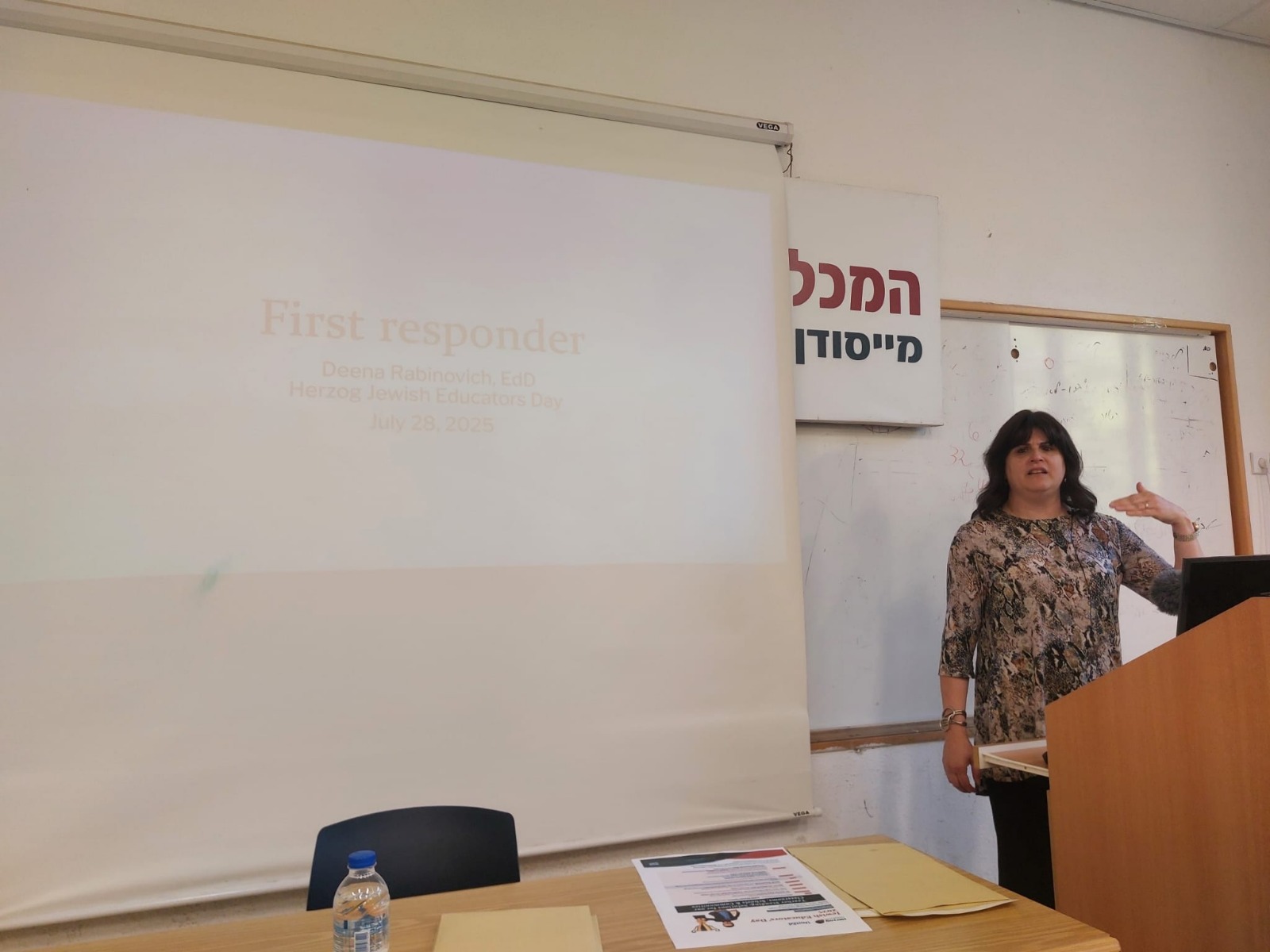
The day began with Dr. Dena Rabinovitch, new Associate Dean of Azrieli Graduate School for Jewish Studies, who told Arutz Sheva that she came “lilmod ulelamed” - to study and to teach - attending Tanach lectures as well as lecturing at the Educators’ Day. Dr. Rabinovitch spoke about the teacher’s role as a “first responder”, purposely emphasizing the word “first” just as much as the word “responder.”
“As a teacher, you must remember that you are not a psychologist or doctor, you have to recognize things and pass them on,” she said. “Consult on how to deal with children who lost a parent, help those who cannot handle distractions during exams, be carefully sensitive to different issues, note who does not seem to fit in."
“What is the most important part of being a Jewish educator besides idealistic goals? Making sure your students get home safely at the end of the day - physically, socially, emotionally and free of bullying.
“100 years ago, if the rebbe hit a child, his mother did too because 'the rebbe must be right.' 50 years ago, we had the same teachers for years and we saw them in their regular lives out of school. There was more connection, teachers sometimes knew children better than parents did.
“Today, one role of the teacher is creating a relationship with the child, trying to understand instead of trying to be understood. Today, teachers must be prepared to learn some things from their students (cyber stuff, for example) and must realize they are competing with lots of distractions.”
She ended her talk by showing a section of Rita Pearson’s video Every Child Deserves a Champion, that is, an adult who never gives up on them, who understands the power of connection and insists that they become the best that they can possibly be. Effecting change for the better in a youngster’s life is what gives the teacher self-esteem and standing by definition.
Dr. Tzachi Lev Ran, an Israeli lecturer at Herzog College, presented a new model for teacher authority, one of every educator's major challenges, using the theory of non-violent resistance (NVR) developed by Israeli Professor Chaim Omer, and based on the fact that authority, once typified by distance, power and forcefulness - is gone. The old authority has to be brought back, but with different tools, and he proceeded to define them so that distance becomes meaningful presence (but not trying to be a friend), power is used as an adult safety net, and forcefulness means sticking to clear rules in all places and at all times, because prevention is much easier than cure.
He emphasized that a parent must have his child’s phone password. His golden prevention tips for teacher standing include walking around the room while teaching, restraining in real time, and telling a rambunctious student quietly that you will deal with the issues thoroughly after class.
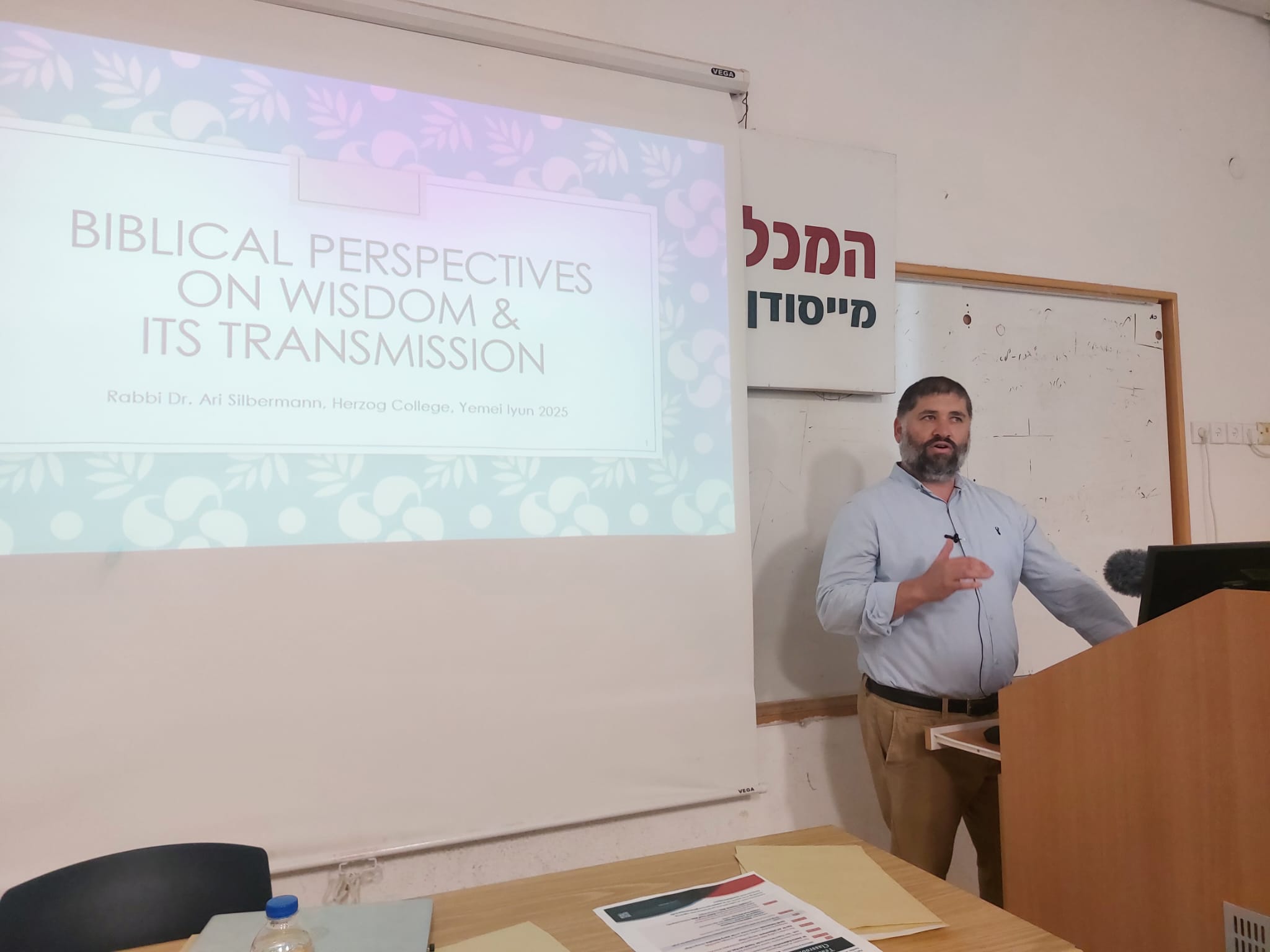
A seminar in Herzog cannot be held without being connected to Tanach, and the next lecture, by Rabbi Dr Ari Silbermann, a lecturer in Tanach, dealt with Biblical perspectives on wisdom and its transmission, bearing in mind that in 1970 Eliezer Berkowitz wrote in Tradition on the need for Jewish education to teach values. Education per se is not found in the Tanach, but we do have the clearly stated mitzva to teach our children and tell them our tradition and history, thus tying education to family. There is transmission in Devarim, we have kohanim learning the Temple service, views on wisdom in Mishlei based on awe of G-d, there is praise for Solomon’s wisdom. The Hebrew alphabet meant everyone could have access to knowledge, and texts were an insurance that the people would know Torah.
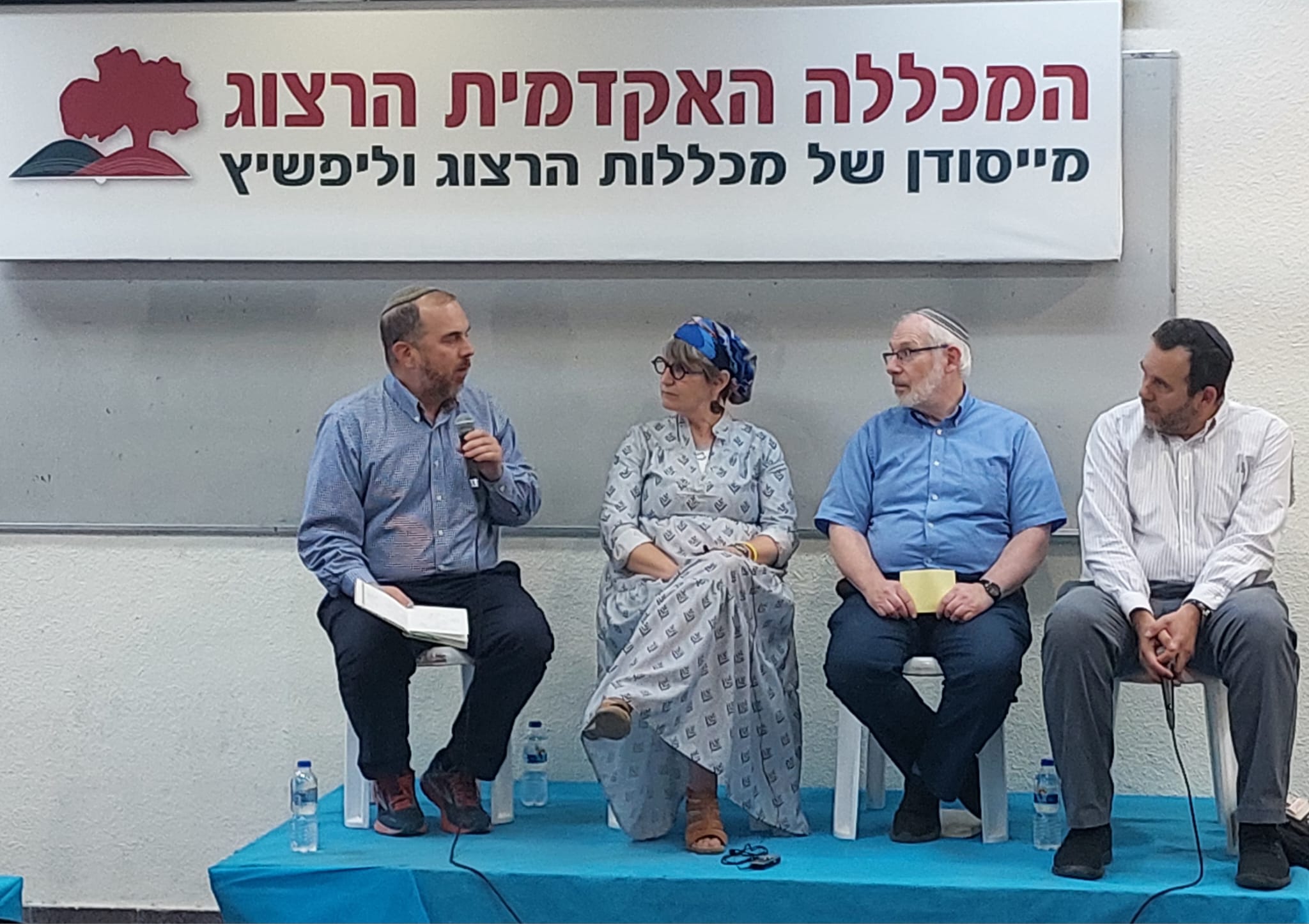
After a workshop on strategies for teacher confidence by Sarah Golubtchik of Herzog Global and Dr. Barry Kislowicz of Herzog College, a panel discussion took place on the teacher’s standing in the community. Participating were Rabbi Scott Berman of UnitED, Rachel Levitt Dratch of Anu Museum, moderator Rabbi Reuven Spolter and Prof. Adam Ferziger of Bar Ilan. Rabbi Berman posited that Hebrew school teachers are held in high esteem because parents see them as idealists, working under difficult conditions for little pay, unless the teacher doesn’t perform well, but that’s the same for every career.
Teachers’ self-perception can be a problem and Ms.Dratch stressed the importance of feedback, of enhancing a youngster’s perception of teachers by not disparaging them at home around the table. The teacher can be a gamechanger but not every community values that.
Prof. Ferstiger turned to the audience and said: "Ask yourself, how many of you encourage your children to be teachers? Let’s face it, parents try to discourage going into chinuch, and that, of course, affects the way the students regard their teachers."
Limudei Kodesh (Judaic studies) teachers (those teaching Talmud are called Ra”mim in Israel) are in a different category as far as standing is concerned The year of study many high school graduates spend in Israel causes their respect for Torah scholars and Daat Torah to increase exponentially, said Rabbi Yosef Blau, former mashgiach at YU in a one on one conversation with his son Rabbi Yitzchak Blau of Yeshivat Orayta on changes in teacher standing.
"We were all in absolute awe of the Rav (Rabbi Soloveitchik zts"l, ed.)," said Rabbi Yosef, but opined that major changes in teacher standing occurred as a result of the change from Talmudic giants who were European and whose knowledge inspired students, although they weren’t really able to appreciate what gedolim they were, to Rabbeyim who are YU graduates, most of them Americans, from the same backgrounds as their students.
How did the switch to American-born Rabbeyim affect standing? Rabbi Blau explained that many parents of YU students went to yeshiva with the new Rabbeyim and tell their children they could also have been a Rav but chose medicine or law - or finance. The standard of living has jumped, and American society is money-centered, in contrast to the message conveyed during the year spent in Israeli yeshivas. US Jewish schools now have lots of haredi teachers and Israeli schools may be going the same way. There has to be a systematic analysis of the problem, he maintained.
Natan Zaboulani from Brooklyn went to YU and teaches in the Barkai High School, a very traditional school which has a varied student population He says: "There are many resources for teachers and administrators but Herzog has become the front line as a resource for Jewish educators, the content they provide has enhanced much of what we do. And I and my colleagues appreciate it. I am going to deliver today’s content to them."
Rabbi Bryan Kinzbrunner, RPRY (Rabbi Pesach Raymon Yeshiva) Highland Park/Edison NJ said: "I am entering my second year as a full time teacher. The educators’ day has given me an opportunity to learn and reflect on my role in the classroom. Our goals are to inspire, foster growth and help our students feel empowered to become the best selves they can. This day helped provide me tools to use in fostering a welcoming classroom environment."