
Meir Indor is head of the Victims of Terror Association.
In light of the recent horrible photos of our starving and maltreated hostages and the pausing of the latest round of the Israel-Hamas ceasefire negotiations, the Victims of Terror Association, along with IDF reserve officers, are appealing to Minsters of the Government and members of the Knesset Foreign Affairs and Defense Committee to rethink the dangerous policy of releasing imprisoned terrorists for hostages, despite the temptation to do anything to free them.
Normalization of Terrorist Releases Increases Abductions and Undermines Israel’s Security
The State of Israel faces a complex moral and strategic dilemma regarding its policy of releasing terrorists - a phenomenon that has shifted from being exceptional to becoming a “norm” through repeated deals. This normalization, supported by various elements in the political, legal, and media systems, raises difficult questions about Israel’s effectiveness in combating terrorism and provokes serious concerns about the future of national security.
A Model That Encourages Terrorism: Success Breeds Abductions
Unfortunately, the release of terrorists is no longer seen as an unusual step, but rather as a tool for “crisis management.” This situation grants legitimacy, and even incentive, to terrorist organizations. As the number of terrorists released grows geometrically from one deal to the next, Hamas and other terror groups see it as a particularly successful strategy. This “success” encourages a broader circle of supporters of murderers, both among the Palestinian Arab population and in Muslim countries that provide significant support.
This support for terrorism manifests itself on multiple levels: some countries provide funding and weapons, while neighboring states serve as routes for smuggling arms. Captured terrorists receive legal assistance to reduce their sentences and improve their prison conditions, allowing them to maintain high morale and to continue influencing from behind bars.
Moreover, diplomatic and media support, along with involvement of mediators, creates an expectation of future prisoner exchanges. The prevailing model, as illustrated in the Shalit deal, is “one Israeli captive equals hundreds of released terrorists,” assuring terrorists that Israel will pay a steep price to conclude a deal.
Terror Victims and Their Families
One of the most painful aspects of this policy concerns the families of terror victims. Those who lost loved ones have long since lost faith in the judicial system. Previously, families were informed of government decisions to release terrorists and given 48 hours to appeal. Today, this procedure has been eliminated on the grounds that such decisions are "political" - thus denying families any legal standing to oppose the release of their relatives' murderers.
Supreme Court sessions held in the middle of the night to approve such deals, without inviting families, further reinforce the feeling that victims are pushed aside and denied the right to object. For terror organizations, this sends a clear message: Israel has normalized, even if unwillingly, the culture of abductions and the release of killers from prison.
The Media’s Role and the Distorted Narrative
In addition to the judicial system, the Israeli media is also responsible for supporting and normalizing terrorist releases. While certain groups of hostage families receive full coverage, other forums, like the “Tikvah Forum” of hostage families that advocates defeating Hamas instead of making deals, are systematically ignored. Often, it seems that some media voices stem from a naive liberal belief that “the Palestinian Arabs have their own narrative” contributing to the normalization of abduction as a legitimate tactic.
Israel’s behavior in relation to the Shamgar Committee recommendations which advocated a “one-for-one” policy (i.e., not releasing dozens or hundreds of terrorists for a single captive) represents a dangerous departure from the Committee’s rational conclusion.
Moreover, a false and immoral narrative is spreading, claiming that it is justified to risk soldiers’ lives and to restrict their freedom in battle out of concern for the hostages. Senior commanders admit that restrictions in combat in Gaza stem from the presence of hostages. This means risking, and even losing, the lives of numerous soldiers in order to preserve the lives of hostages, undermining basic moral and military principles.
The “Tikvah Forum” of hostage families argues that Hamas must be defeated and that the lives of soldiers and residents of southern Israel are no less valuable than those of the hostages, in line with the tradition that we must not pay “any price.”
Fear for the Future
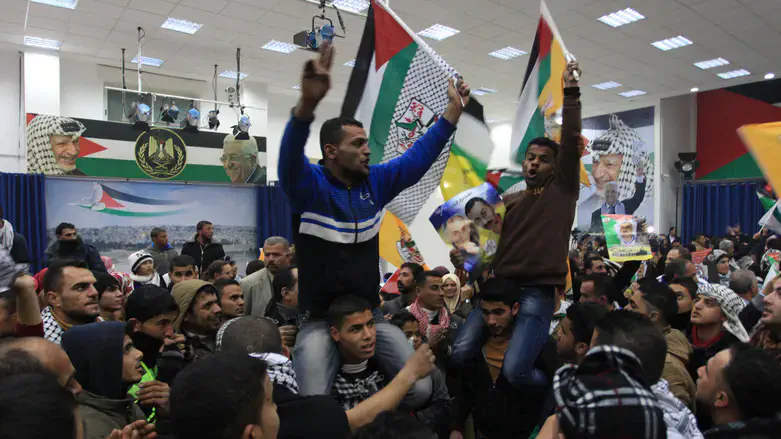
The speed and eagerness with which these deals are carried out send a clear message to the enemy: terrorism pays. When murderers are released and celebrated as national heroes, and the legal system does not allow for meaningful punishment, terror organizations take note. Their mentors tell new recruits that the chance of spending their lives in prison is very low given the strong likelihood that they’ll be released in deals and hailed as heroes.
The greatest concern is that if this model of weakness is fully adopted, it is only a matter of time before similar and even larger abductions take place. Abductions may become an integral part of the Jewish people’s ongoing war for its land, with devastating consequences for the state’s security and its citizens’ resilience.
Standing Firm Against Terror
The call to stand firm against terrorism is a semi-victory in itself. If Israel stops releasing terrorists in deals, it will send a clear message to terrorist groups: abductions will not pay off. This is a paradigm shift that redirects focus from securing hostage releases “at any cost” to dismantling the operational model of terrorism.
In this context, “standing firm” means:
- Avoiding terrorist release deals: Regardless of emotional or public pressure, the principle of not yielding to terrorist extortion must be paramount.
- Pursuing total victory: Emphasis must be placed on destroying terrorist capabilities to prevent future abductions, even if this requires significant military effort.
- Restoring deterrence: If Israel does not pay for abductions, terror groups will realize that the tactic is ineffective. This will reduce their motivation to carry out abductions in the first place.
- Strengthening national resilience: Standing firm reinforces public confidence that the State of Israel is strong, principled, and does not surrender to pressure even under great duress.
For more information, contact: Almagor, Terror Victims Association. victims1@gmail.com.