

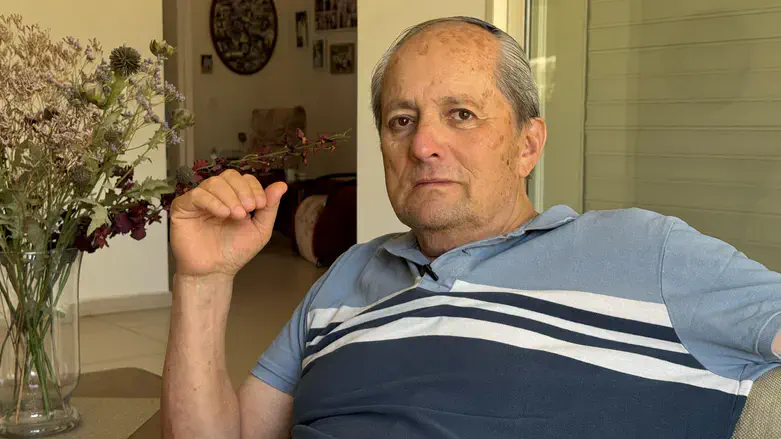
As Israel marks twenty years since the Disengagement from Gush Katif, former Knesset Member and current Head of the Gaza Coast Regional Council, Tzvi Hendel, reflects on the past with a forward-looking perspective. Speaking to Arutz Sheva - Israel National News, Hendel shares that while the trauma of the evacuation still lingers, his focus remains firmly on the future—specifically, on rebuilding what was lost.
“Thank God, I do not remember the evacuation—I remember Gush Katif,” he says. “Gush Katif was filled with beauty, with incredible landscapes and exceptional people. It was a place of goodness. There was a struggle, certainly, but I try to leave that behind.”
Hendel expressed regret over what he described as a key misstep by the national camp: supporting Ariel Sharon’s candidacy for Prime Minister. “The great error of the right was in backing Arik Sharon, of blessed memory. We failed to grasp that he would one day uproot the very communities he helped to build,” he said.
Recounting the days leading up to the Disengagement, Hendel recalls repeated efforts to meet with Sharon—efforts that were rebuffed. “Arik Sharon would often visit my home on Fridays. He would bring guests and proudly show them the value of the communities. But when the Disengagement plan emerged, suddenly I was no longer able to meet him. I was told he refused. At that moment, I understood the truth.”
Reflecting on the October 7 Hamas massacre, Hendel is unequivocal in his belief that the events would not have unfolded had Gush Katif remained in place. “If Gush Katif had not been dismantled, October 7 would not have occurred,” he asserts. “With a permanent Jewish presence, IDF operations and Shin Bet activity would have continued. The only viable solution for Gaza is robust, expansive, and successful settlement—and that will happen. I am confident that we will return to Gush Katif with God’s help. I hope this vision will be realized through national consensus and the understanding of the broader public.”
Concluding his remarks, Hendel adds, “I believe we will persuade some nations to accept those who once lived alongside us, so that we may return to this extraordinary region, which rightfully belongs to us.”