
Israel’s remarkable victory in its complex seven-front war against Iran and its myriad of proxy armies has countries lining up to buy the Jewish state’s state-of-the-art weapons systems.
Israeli defense exports have surged 37 percent since 2021, soaring from $11.4 billion that year to a record-breaking $12.5 billion in 2022, $13 billion in 2023, and an astonishing $14.8 billion in 2024. More than half of these contracts exceed $100 million each. This growth is staggering for an industry that sells highly sophisticated, expensive weaponry.
Some 48 % of 2024 exports were rockets, missiles, and air defense systems; nine percent were armored personnel carriers and vehicles; others included satellites, radar, and electronic warfare systems, all battle-tested.
The Israel Ministry of Defense attributes this boom to the Israel Defense Forces’ (IDF) “operational achievements” across Gaza, Lebanon, Yemen, Iran, and Syria. In plain English, Israel has pummeled its enemies, and the world has taken note.
When Hamas unleashed its October 7, 2023 assault - massacring 1,200 Israelis, raping women, burning families alive, and abducting 250 hostages - Israel responded with extraordinary speed and ferocity. Within two weeks, it had amassed an immense 550,000-strong army, a feat few countries, and none of its size, could match.
However, the military response was only half the story. Israel’s entire defense ecosystem shifted into emergency mode. Factories ran 24/7, engineers and research and development teams pushed innovation at a breakneck pace, and supply chains adapted instantly to new and growing demands. Today, those factories still operate at full throttle, not only supplying the IDF but fulfilling bulging international orders.
Russia’s invasion of Ukraine has rattled Europe’s strategic landscape, prompting countries to rearm at levels unseen since the Cold War. While European states have heavily criticized Israel’ over its war in Gaza, it has not stopped them buying the high-tech kit Israel has been using. Europe accounted for 54 percent of Israel’s arms exports in 2024, up 35 percent from the year before. Asia-Pacific nations bought 23 percent, and the US took nine percent.
Most extraordinary is that arms exports to Israel’s Abraham Accords partners - the United Arab Emirates (UAE), Bahrain, and Morocco - jumped to 12 percent of exports, quadrupling their share since 2023. This is a geopolitical revolution. Israel is now arming Arab states that were once among its sworn enemies.
Beyond Israel being one of only a few suppliers offering battled-proven weapons and system, the speed at which Israel can deliver orders is equally important.
The war proved Israel’s missile defense shield is the world’s best. Its multi-layered architecture - Arrow-3 for high-altitude ballistic missile interception, David’s Sling for midrange threats, and the Iron Dome for close-in rocket defense - intercepts more than 90 percent of incoming rockets, missiles, and drones. By contrast, Israel easily pierced Iran’s predominantly Russian-built air defenses. The contrast could not be sharper, and it has turned Israel’s missile defense systems into coveted exports.
Germany has signed a $3.8 billion deal for the Arrow-3 system in the largest single Israeli defense export ever. Israel Aerospace Industries (IAI) and the US Missile Defense Agency developed Arrow-3 jointly and it can intercept ballistic missiles in space at altitudes above 100 kilometers. Its combat-proven success, especially during Iran’s April 2024 missile barrage, spurred demand across NATO capitals. Alongside Arrow-3, Germany and other European nations upgraded Barak MX air defense systems and adopted David’s Sling. Finland is integrating Israeli systems into its air defense network. Together, these purchases are helping Europe build the comprehensive air defense system it needs in an era of missile proliferation.
Beyond missile defense, Israel’s Elbit Systems has cracked the rocket artillery market with its Precise and Universal Launching System (PULS). This truck-mounted, multi-caliber launcher, with a 300-kilometer (186 miles) range, quickly became Europe’s artillery system of choice when it sent its own artillery to Ukraine to help it fend off Russia’s invasion.
Germany’s initial €65 million order was soon followed by a second $57 million contract, while Greece is negotiating a €500-700 million deal for 40 units and related ammunition. The Netherlands, Denmark, and Serbia have also placed orders.
Morocco, seeking to diversify away from its traditional French suppliers, has turned to Israel for its advanced artillery technology. The kingdom has ordered Elbit’s Autonomous Truck Mounted Howitzer System (ATMOS 2000) with 155-millimeter wheeled howitzers, worth €150 to €200 million. These systems have a 40-kilometer-plus (26 miles) range, automatic loaders, and integrated electronics. Morocco also purchased Barak MX and reconnaissance satellites, signaling a growing strategic relationship that extends beyond arms sales.
Israeli ground weapons are also earning big bucks. Merkava Mk4 tanks have helped Israel flatten Hamas targets in Gaza, prompting the Philippines to order 20 for $400 million, and Croatia 30 for $600 million.
Rafael Advanced Air Defense System’s Trophy Active Protection System (APS), a responsive tank armor that triggers a counterstrike when hit, has been even more in demand as it is the world’s only such system. The US is forking out $2.2 billion for a thousand units, while Britain has ordered 500 for $1.1 billion.
Drone use is the biggest change on today’s battlefields compared to previous ones and Israel, along with Ukraine, is at the forefront. America’s defense behemoths are designed to produce enormous multiyear projects so are too big and unwieldy to produce cheap rapidly upgradable drones as needs and operational feedback demands.
The IDF’s use of Elbit’s Hermes 900 drones to assassinate Hamas commanders sparked a $180 million order from Colombia, a $300 million order from Azerbaijan, while Israel’s new ally India is finalizing a $1 billion deal. The IDF also used IAI’s loitering munitions, Harop and Harpy, to destroy Hezbollah anti-tank squads. South Korea and Morocco immediately placed $200 million and $120 million orders respectively.
Given drones’ proliferation on the modern battlefield, demand for drone defense systems has naturally spiked. Rafael’s Drone Dome, which takes out aerial drones, is the showpiece. Singapore has placed a $150 million order, and the UAE a $100 million one.
There is also demand for Israel’s operational systems that do not get much coverage but have allowed near-seamless interoperability among all Israeli military branches, something only the US military can do as well. These include systems such as Gospel, Lavender, Fire Factory, and Fire Weaver, which synthesize surveillance, intelligence, behavioral data, and human intelligence to recommend targets and the optimal munitions to destroy them. They can make hundreds of recommendations a day with the right input.
Israel is never thought of as a naval power but its Sa’ar 6 corvette has proven its worth in intercepting missiles from Yemen’s Houthis. These are German-made to Israeli specifications. Greece and Vietnam have placed orders for $2 billion and $1bn respectively.
Israel’s Ministry of Defense has not been idle domestically. It invested $275 million with Elbit Systems to expand heavy bomb production and key raw material plants, ensuring Israel can meet its own needs and satisfy growing export orders amid global supply chain strains.
These investments underscore Israel’s strategic priority of maintaining full production capacity during war, while building its industrial base for long-term innovation, production, and export.
Recognizing political sensitivities, Israel has cleverly pursued joint ventures with European defense firms. Elbit’s partnership with Germany’s KNDS integrates PULS launchers into the Bundeswehr arsenal, complete with local manufacturing that creates German jobs.
Barak MX upgrades in Slovakia and Sweden come with local production. Finland’s David’s Sling systems connect to national radar networks, ensuring interoperability and easing political resistance to Israeli purchases.
This local industrial integration is crucial, as many European publics and lawmakers remain wary about the optics of buying Israeli weapons outright. This has allowed Israel to overcome political obstacles such as Spain’s Socialist government suspending purchases from Israel’s IMI Systems, and France unlawfully excluding Israeli companies from certain defense exhibitions. Creating jobs domestically turns that opposition into support.
Battlefield success is a better selling point for Israeli weapons systems than anything a marketing agency could develop, and Israel’s competitors cannot produce them as quickly as Israel. While there is great variance, weapons exporters typically take five to seven years to deliver orders, but Israel has cut this in half, even in the middle of war when they must constantly re-supply the IDF.
Geopolitical crises have created a self-sustaining loop into which Israel’s defense industry has embedded itself. War demands weapons; proven weapons sell; sales fund defense; defense prepares for future conflicts or exports. This brutal logic is the cold truth where countries are thinking about survival as much as trade for the first time in decades.
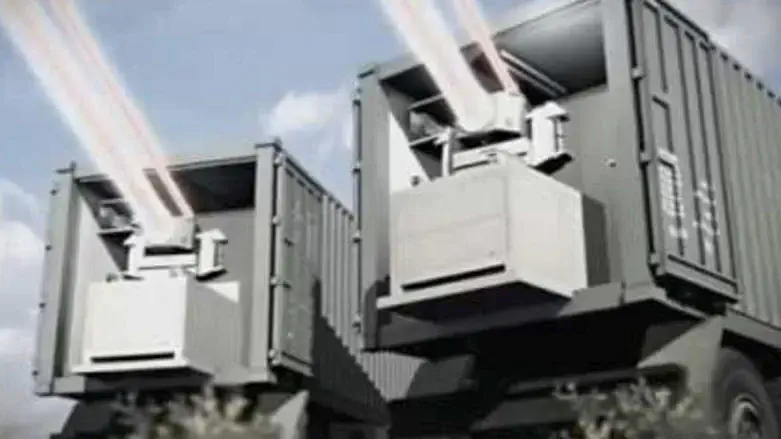
Israel’s weapons pipeline could prove even more lucrative. The game-changer is Rafael’s Iron Beam 450 laser air defense system, which uses lasers to shoot down missiles. It sounds like science fiction, but is very much science fact as Israel used it successfully in Lebanon last years. It can shoot missiles down at just $3 per shot, versus the $100,000 per shot on the Iron Dome system, which it will complement.
Beyond cost, the Iron Beam can intercept close-range rockets incredibly soon after launch because lasers, being light, move at light speed. There is also a Naval Iron Beam variant for maritime defense and a smaller “Lite Beam” version for vehicle protection. Israel is rolling the Iron Beam to its own army over the next few years, but to say other countries are interested after that is an understatement.
IAI is also developing the Arrow-4 missile defense system, which will perform the same function as Arrow-3 interceptors, only at hypersonic speeds.
Israel’s offensive weapon pipeline is bulging, too. Elbit systems and America’s Orbital ATK are developing a Guided Advanced Tactical Rocket (GATR) that will launch laser-guided 70-millimeter munitions, allowing for high-precision strikes. High precision not only minimizes collateral damage, it minimizes the amount of ammunition required, drastically cutting costs.
There is even more at the prototype stage, such as the Carmel armored fighting vehicle that IAI and Israel’s Ministry of Defense is developing. It will integrate artificial intelligence and autonomous capabilities, enhancing the vehicle’s situational awareness.
This is not just an economic boon for Israel, but a strategic one. It aligns Israel’s economic success with its strategic defense needs, and entwines other countries defense needs to Israel’s fortunes. This provides something of a strategic bulwark against diplomatic fallouts in Israel’s foreign relations.
Nachum Kaplanhas 30 years international experience as a journalist, commentator, speaker, and C-suite media strategist to Fortune 500 companies. He has held senior positions and help set the strategic direction in some of the world's leading newsrooms, including Reuters and International Financing Review. He holds a B.A. in Politics and Indonesian from Monash University. He writes about the nexus between media and politics in his Moral Clarity Newsletter at https://moralclaritynewsletter.substack.com/