
With the hubris only the French can impart, President Emmanuel Macron, already an eight-year disaster for France, brushed aside President Donald Trump and Prime Minister Benjamin Netanyahu and declared on July 24, 2025, he will make a “solemn announcement” at the UN in September: “I have decided that France will recognize the State of Palestine.”
Macron’s decision, he said, is based on “commitments” he received from Mahmoud Abbas.
Abbas, elected in 2005 to a four-year term as president of the Palestinian Authority, canceled all future elections and remains in power still.
The world has been here before: a leader of France “solemnly” determining the fate of a democratic nation based on the word of a dictator.
It is just as King Solomon wrote: "What has been will be again; what has been done will be done again."
In September 1938, French Prime Minister Edouard Daladier, along with the UK Prime Minister Neville Chamberlain similarly threw Czechoslovakia under the bus (to use a modern parlance): a bus driven by Adolf Hitler, evil dictator of Germany.
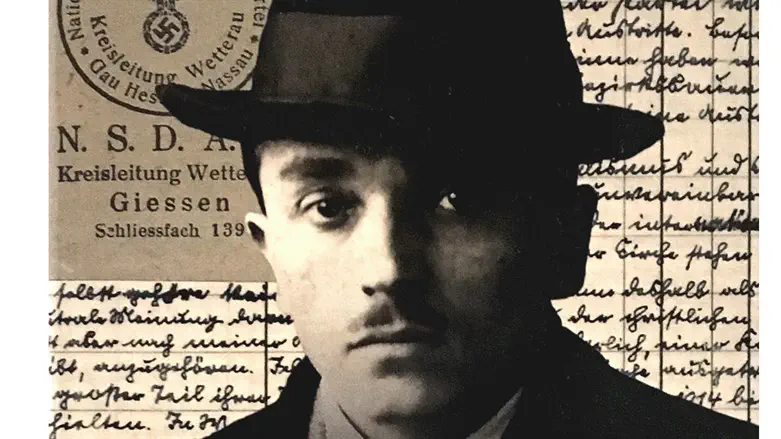
The German justice inspector and diarist Friedrich Kellner considered Daladier and Chamberlain fools for going along with Hitler's artful pledges of peace.
"Where were men who could recognize the reality?" Kellner asked scornfully of the short-sighted democratic leaders and the impotent League of Nations. "Did they not see the tremendous re-arming of Germany when here in Germany every illustrated newspaper had boastful pictures that exposed everything? Every small child here knew at least something about the armament!"
"The French watched calmly as Hitler re-armed Germany without suffering any consequences,” wrote Kellner. “The Western nations will carry the historical guilt for not promptly providing the most intensive preventive measures against Germany.”
Chamberlain returned home from Munich ecstatic and told the crowd waiting for him at the airport, "My good friends, this is the second time in our history that there has come back from Germany to Downing Street peace with honor. I believe it is peace for our time."
Daladier, on the other hand, worried that that it was unwise to have capitulated to Hitler’s aggressiveness. Ceding a portion of Czechoslovakia to Germany was not a real solution but only a temporary reprieve and would likely embolden the dictator to demand more.
According to Daladier’s son, Jean, in response to the crowds cheering him at the airport, Daladier muttered unhappily, “Idiots! They believe that I am bringing them peace."
During their discussions in Munich, Neville Chamberlain and Edouard Daladier avoided the topic of Hitler’s oppression of Jews in Germany.
Three years earlier, in September 1935, Adolf Hitler exposed the world's indifference to the fate of Jews when his Nazi Party passed laws to begin the process of stripping German Jews of citizenship.
“The curse of this evil deed,” wrote Friedrich Kellner, “will indelibly rest on the entire German people."
But the main aspect of the Nuremberg Laws that bothered most of Kellner’s fellow citizens was not that it made their Jewish neighbors aliens in their own country, without rights, but that it might adversely affect the August 1936 Summer Olympics, scheduled to be held in the Nazi capital of Berlin.
Among the forty-nine nations planning to participate, there was some opposition and debate about going, with some calling for a boycott. The decision was left to each individual country. Yet not one withdrew. Instead, they all sent their exuberant young athletes to the Olympic Stadium in Berlin to perform for their preening host, the Führer Hitler.
Daladier was right to worry about what he did in 1938. Six weeks after the Munich agreement, Hitler’s stormtroopers savagely raided Jewish homes and businesses throughout Germany. Ten months later, his air force and armies crushed Poland in a single month. Then began the concerted effort to murder all of Europe’s Jews.
Six years of war and genocide that followed the calamitous partition of Czechoslovakia claimed tens of millions of lives, including many of those who heedlessly reveled in Berlin in the summer of 1936.
Now French President Emmanuel Macron demands the partitioning of democratic Israel.
It is Munich once again. The dictators this time are in the Islamic nations that had allied with Nazi Germany during WWII and participated in the Holocaust.
Like Daladier and Chamberlain, weak leaders like Macron will not avoid war. He will hasten it by bowing to an Arab world that has already flooded Europe (especially France and the U.K.) with Muslims: an invasion without tanks.
"We see this mind-set in France: democracies doing unusually little for their own safety,” wrote Friedrich Kellner in May 1943. “Such iniquity has found a hard and bitter punishment. Weak democracies produce demagogues: like Mussolini and Hitler."
Winston Churchill denounced Chamberlain and Daladier and rightly called WWII “the Unnecessary War.” If ‘good guys’ would finally stop giving in to the ‘bad guys’ and immediately call their bluff, there would be fewer wars—a lesson from the halls of high schools when students stand up to bullies.
Instead of constantly undermining Israel, Macron should follow their example and refuse to bend a knee to the bullies.
In June 1941, when Hitler’s brutal armies had taken control of Europe, Kellner angrily wrote: “I would like to assume at least some men in the world are now energetically working to do for humanity what all the other statesmen--through unbelievable short-sightedness--failed to do. Mankind, awake! Bring together all your might against the destroyers of peace!”
Lucky for the world that the current leader of the United States does not flinch. Friedrich Kellner would have applauded President Donald Trump’s immediate response to the French president’s planned announcement.
"What he says doesn't matter," said Donald Trump. “That statement doesn't carry weight."
Robert Scott Kellner, a navy veteran, is a retired English professor who taught at the University of Massachusetts and Texas A & M University. He is the grandson of the German justice inspector and diarist Friedrich Kellner and is the editor and translator of My Opposition: The Diary of Friedrich Kellner--A German against the Third Reich, Cambridge University Press, United Kingdom, 2020.