

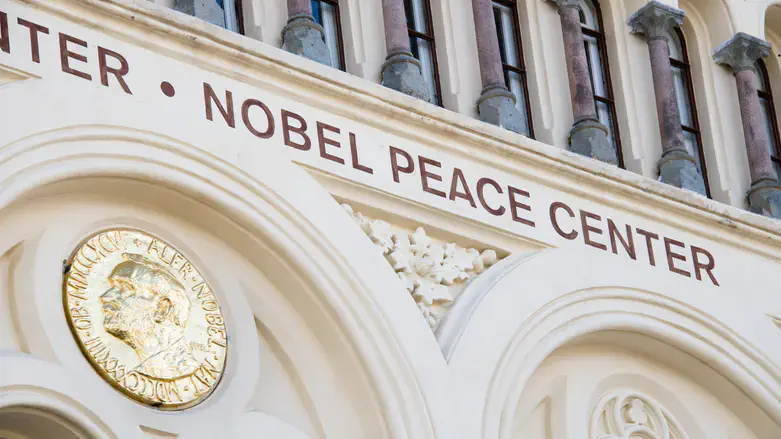
When Prime Minister Netanyahu presented President Trump with the letter Netanyahu sent to the Nobel Peace Prize committee recommending Trump for the 2025 award, the President was genuinely surprised and touched. It was a gracious act on Netanyahu’s part, reflecting Israel’s appreciation for the role the United States played in degrading Iran’s nuclear program as well as playing to Trump’s ego. It was simultaneously sincere and sycophantic. It also might even be dangerous for Israel.
To be sure, it is extremely unlikely that Trump will be awarded a Nobel Peace Prize even if he convinced the world’s rogue nations to beat their swords into plowshares and their spears into pruning hooks. The Nobel Prize Committee skews heavily to the left, where Trump is anathematized and even his accomplishments are dismissed.
More importantly, the Nobel Peace Prize, despite its luster, has often been a poor indicator of true peace and occasionally downright farcical.
Look no further than the 1994 Peace Prize awarded to Yasser Arafat, Yitzchak Rabin, and Shimon Peres for the Oslo Accords. Arafat remained an unrepentant terrorist still plotting Israel’s destruction until his final days. The Oslo Accords themselves - despite their best but foolhardy intentions - led inexorably to Israel’s strategic decline in the 1990’s and 2000’s, the fracture of its society into warring camps, an unprecedented wave of terror that claimed thousands of Israeli dead and wounded and Israel’s surrender of the Gaza Strip, and ultimately to the Hamas massacre of October 7, 2023. That Peace Prize mocks itself and its recipients.
In 1973, Henry Kissinger and North Vietnam’s Prime Minister Le Duc Tho were honored with that year’s Peace Prize for negotiating the Vietnamese cease fire that enabled US troops to withdraw from that conflict. Le Duc Tho had the decency to decline the award, perhaps knowing that within eighteen months North Vietnam would breach the cease fire, assault and conquer South Vietnam, and end the war on its own terms.
At best, the Nobel Peace Prize is aspirational. It suggests fantasies and good intentions but little else. Witness the 1997 award to the International Campaign to Ban Landmines. American troops in Iraq, and Israeli forces in Gaza, certainly wish the campaign had been more successful; alas, it failed to convince the evildoers who still use mines as weapons of war.
Similarly, the 2005 award to the International Atomic Energy and its head, Mohammed ElBaradei, “for their efforts to prevent nuclear energy from being used for military purposes” failed to anticipate how little they did to thwart Iran’s nuclear weapons programs, certainly compared to the dramatic strikes of Israel and the United States.
And perhaps the most risible award, in retrospect, was the 1929 Peace Prize bestowed upon Frank Kellogg who as US Secretary of State negotiated the “Kellogg-Briand Pact” that outlawed all wars between nations. Among the signatories were Germany and Japan. (!) Neither the pact nor the prize averted one of the deadliest and bloodiest centuries in world history.
Undoubtedly, Trump craves the award, but Israel must be wary of succumbing to his entreaties or pressure in order to give him that chance. Trump is attempting to negotiate a series of cease fires across the world, all of which solve nothing.
-The cease fire with the Houthis of Yemen has not stopped them from firing missiles at Israel or pirating Western commercial vessels in the Red Sea.
-The proposed cease fire in Ukraine rewards Russian aggression, kicks the can down the road for another few years - and even so is still rejected by Russia.
-Trump declared a “cease fire” between Iran and Israel, and yet Iran is already rebuilding its air defenses and most probably its nuclear capabilities.
-An imposed cease fire in Gaza - something that Trump has said for the better part of three months is imminent - will make it more difficult for Israel to achieve its goals of defeating Hamas, freeing the hostages, and preventing the reconstruction of an irredentist Gaza.
As currently contemplated, the latest plan literally rewards terror, validates kidnapping civilians as a successful and unstoppable tactic, forces Israel to withdraw from territory already captured multiple times at a high cost in the blood of our soldiers, will exact a higher price if Israel has to fight over the same territory yet again, and prolongs the war through the provision of supplies to the enemy and its population in wartime.
It will almost guarantee that Hamas remains in power, declares victory, rebuilds its power base and terror infrastructure, and plots its next massacre of Jews.
Additionally, expanding the Abraham Accords to countries with an avowed hostility to Israel - and to the United States - serves neither country’s interests. It will invariably lead to the US providing aid to its own adversaries and constraining Israel’s options in order to maintain the illusion of harmony. Accords between nations must be based on mutual respect and shared interests, if not shared values. To think this includes Syria requires a willful suspension of disbelief and unlimited naïveté.
The history of the Nobel Peace Prize and its recipients is a stark reminder that peace does not come through ceremonies, treaties, or awards but only through a transformation of hearts. The alternative - an absence of war - is meaningful in its own rights but is subject to the whims of new leaders.
For sure, by the standards of Nobel Peace Prize, Donald Trump deserves it for at least trying to end conflicts, even though no conflict has been ended except the one between the Democratic Republic of Congo and Rawanda who signed a Peace Agreement after 30 years of hostilities - no mean feat, but not one of Trump's major goals.
But Israel should not allow Trump’s interest in the award to shape its statecraft, limit its freedom of action, or make ill-considered concessions that resuscitate our most vile enemies. Otherwise, the dangers posed by the enmity of our foes will harm us long after the Nobel pomp and ceremony has receded into history. Israel’s security should not be sacrificed on the altar of good intentions or the vanity project which is the Nobel Peace Prize.
Rabbi Steven Pruzanskyis a rabbi and attorney who lives in Israel and serves as the Senior Research Associate at the Jerusalem Center for Applied Policy. He is the author of six books.