

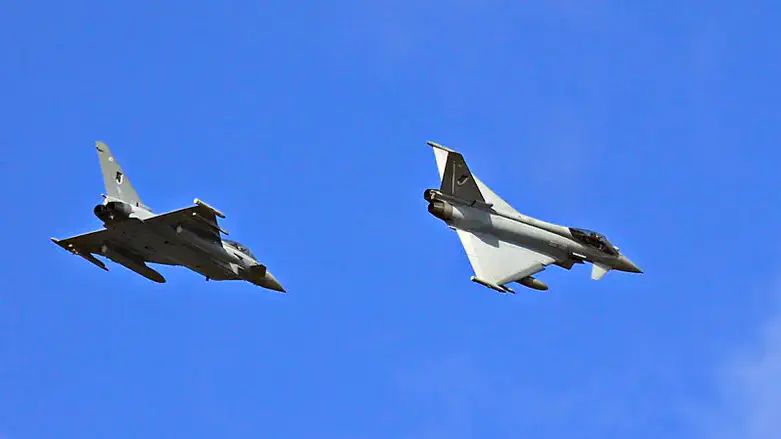
Defence ministers from the United Kingdom and Turkey signed a Memorandum of Understanding (MoU) on Monday at the International Defence Industry Fair in Istanbul, marking a significant step towards the export of UK-manufactured Typhoon fighter jets to Turkey.
The agreement, signed by UK Defence Secretary John Healey and Turkish Defence Minister Yaşar Güler, aims to bolster NATO's collective deterrence and deepen long-standing military and industrial cooperation between the two countries. The deal is expected to secure thousands of jobs in the UK, where the Typhoon program currently supports 20,000 workers.
Negotiations are set to continue in the coming weeks, and if finalized, this would be the first Typhoon export deal secured by the UK since 2017. Final assembly of the jets would take place at BAE Systems’ Warton facility, with key components sourced from Edinburgh and Bristol.
Prime Minister Keir Starmer emphasized the economic impact of the agreement, stating: "Signing a multi-billion export deal with Türkiye will sustain and protect 20,000 UK jobs for future years to come." Defence Secretary Healey added, "It shows this government’s determination to secure new defence deals, building on our relationships abroad to deliver for British working people."
However, the signing of the agreement comes amid growing tensions between Israel and Turkey. Both nations maintain an active military presence in Syria and have seen relations deteriorate sharply over the past years. Turkish President Recep Tayyip Erdogan has repeatedly issued inflammatory statements against Israel, accusing it of committing atrocities and calling for international action against the Jewish state.
Recent examples of this rhetoric include Erdogan's comparison of Israeli leadership to Nazis and his calls for an international boycott. These statements, widely condemned by Israeli officials and international observers, have contributed to the diplomatic strain between the two countries.
The announcement of a potential arms deal between the UK and Turkey raises concerns about the implications for regional stability, particularly as Turkey increases its military capabilities. Despite the friction, the UK has framed the deal as a strategic move to strengthen NATO and support domestic economic growth through defence exports.
The Ministry of Defence is set to take over full responsibility for defence exports on 31st July, part of a broader strategy to consolidate the UK’s position as a global defence exporter. UK defence exports were valued at £14.5 billion over a 12-month period, reflecting the country's emphasis on growing its military-industrial base.
Charles Woodburn, Chief Executive of BAE Systems, hailed the agreement, stating: "This MoU underscores the importance of long-standing defence co-operation through NATO and the critical role Typhoon plays in security and defence in Europe and the Middle East."
The UK continues to invest in its own fleet of Typhoons, with upgrades planned over the next 15 years to ensure its air defence capabilities remain robust until at least the 2040s.