
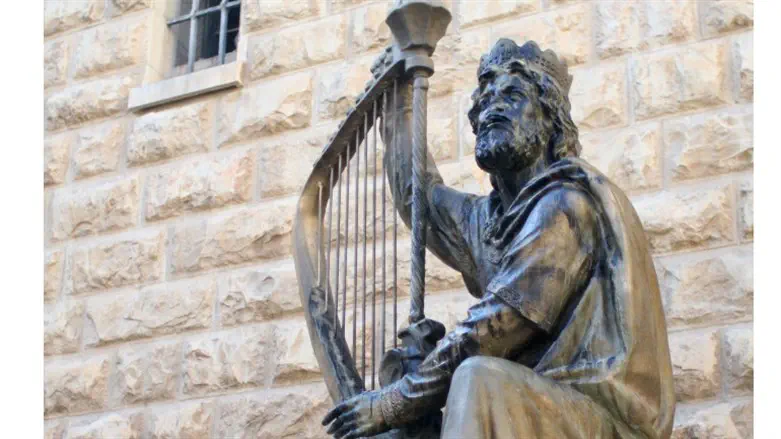
Not long ago a day school teacher asked me how they should teach the biblical story of David and Batsheva to a middle school class. I told him he shouldn't. Plain and simple. Why? Because there are so many other important parts of Navi, we do not teach today's school students with messages and morals that are far less complex than those taught in the story of David and Batsheva. Instead of teachers tripping over themselves trying to convince students of a vague lesson they can learn from the story of David and Batsheva, or why it is that King David was not as guilty as the reading of the Pshat of the Pasuk shows, there are many other stories we simply do not include in the day school curriculum that we should be teaching.
If you are already teaching difficult stories to process in Tanach, it would seem to make much more sense that we teach the morals learned from the horrific story of Pilegesh BaGivah than the story of David and Batsheva. Let me explain.
While there are unquestionably many lessons to be learned from the story of David and Batsheva, such as the importance of Teshuva, accepting responsibility, telling the truth even when it is difficult, and many other lessons the Gemara and commentators emphasize, yet due to the nature of the story, much of it is not something we usually teach to students in high school, never mind in middle school. Having vivid memories of the giggles, the laughter, and the kid who knew too much when my own teachers tried to teach us the lofty lessons to be learned in the aftermath of David and Batsheva, it is clear to me that the lessons educators try to impart to students are hardly remembered.
Tripping on teaching the story itself with all of its disturbing details and parts that we would otherwise not consider appropriate for children leaves teachers with little time and energy to focus on the lessons that are to be learned. By the time one can thoughtfully reflect on possible lessons to be learned from the story, the difficulties and complexities arising from the storyline itself are already weighing in on students and teachers, and there is little room for reflection.
While the story of David and Batsheva is included in the curriculum of most North American Jewish day schools, there’s a different story that isn’t. The story, which is included in Israeli school curricula, is a very difficult story from the book of Judges known as “Pilegesh BaGivah.” While the gory details of this story make it easy to understand why it would be omitted from North American day school curricula, the morals of the story are far more direct and clear than those we attempt to elicit from the David and Batsheva story. Here’s why:
The story of Pilegesh BaGivah, in an age-appropriate fashion, begins with an attempt of a young man to get back together with the woman who broke up with him. After the woman goes to her father’s home in Beit Lechem, the man from Mount Efraim goes to Beit Lechem to reconcile with her. The man stays with the woman’s family for five days, and then, late in the day, the man and the woman get on the road headed back to Mount Efraim. As it starts to get dark, the man and the woman stop in a village in the mountain of Benjamin—Giv’ah—where they seek a place to sleep and no one invites them in. When one old man finally invites the couple to his home, a mob from the town surrounds his house and tortures the young woman to death.
As pointed out by Rabbi Moses Nachmanides (Bereishit 19:8), the story of Pilegesh BaGivah draws near-identical parallels to the story of the city of Sodom. The lack of hospitality, mobbing the home of someone exercising kindness and hospitality, and the mob rule—we see Sedom resurrected in this town of the tribe of Benjamin.
But the story does not end there. Enraged by this abomination, the entire people of Israel gather to war with Benjamin—a civil wasr—demanding justice for the evil that was done to this young woman. The lessons are simple and forthcoming. The people of Israel behaved like the people of Sodom. Many of us were deeply upset about this, and a civil war took place, with all of the danger, pain, and loss that come with a civil war.
We then have the story of the people of Benjamin nearly going extinct and the fact that Bnei Yisrael, despite the huge losses of war, decided it was inconceivable to see one of the tribes of Israel go extinct, and mobilized to make sure that didn’t happen. Despite not teaching the age-inappropriate details of the story, there is a robust story that is true to the main narrative, with many clear moral lessons that can be taught to middle school children. Unlike the story of David and Batsheva, the moral lessons are far more straightforward, clear-cut, and easy to extrapolate from the story that is taught.
And so my message to Jewish day school educators is simple: if you are short on time, skip the story of David and Batsheva; the lessons are difficult to impart, and the storyline will be too much of a distraction to students. If you do have some more time in the year, make sure you teach the general outline of the story of Pilegesh BaGivah in a way that is age-appropriate.
The lessons on distancing ourselves from the ways of Sodom, standing against evil, while understanding the horrifying prices of civil war and the need for us to value the wholeness of the Jewish people are timely and forever needed.