

Israel is waging a war of momentous importance and earthshaking scope. While it keeps finding itself responding to unforeseen challenges, such as the danger to the Druze in Syria, it is also dealing with recurrent challenges and loss, while painstakingly destroying the Hamas network in Gaza, tunnel by tunnel.
The days of sirens, shelters, destruction and tragic deaths during the Iran War left little room for other thoughts and it seemed almost disloyal to talk about anything else when there were 500 kg. missiles launched from Iran, soldiers wounded and killed in Gaza, uncertainty about Syrian involvement, and more. Although that is behind us for now, thank G-d, people’s minds are focused, naturally, on the developments each day to the exclusion of much else.
But for those people who were already weighed down by a problem that accompanies them constantly, one that is part of their every thought and action, it is different. While the war is a general concern shared with all Jews, private suffering does not fade, except that now it is even more private than before. It has no connection to the unfolding events, it is on a nonintersecting plane. But it is always there.
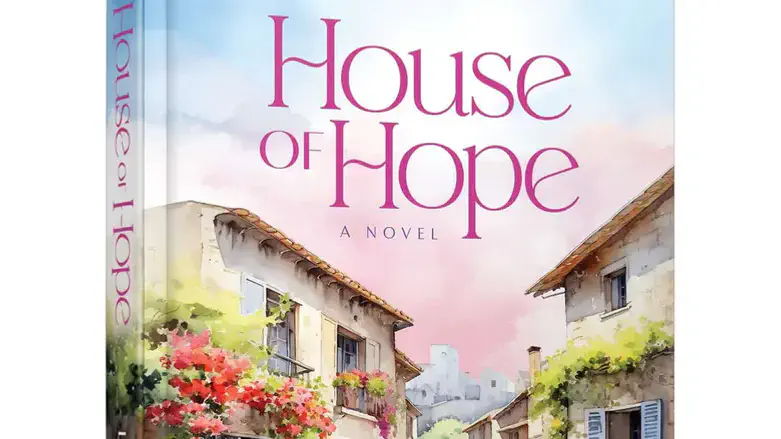
That is why, despite the news and sirens, I was able, during the 12 day Iran War, to become absorbed in a novel given to me recently and titled “House of Hope” by Menucha Chana Levin (Menucha Publishers), about a young, haredi couple’s efforts to have a child.
The main character, Adina, is a haredi photographer, but she doesn’t take baby photos - a most lucrative assignment in that community - because she is positive that she can not handle it emotionally. In contrast, she does photograph weddings, and each one reminds her of how she did not have a moment’s doubt under the wedding canopy that she would have a house full of the noise of happy children within a few years.
That doesn’t happen. Disappointment follows disappointment for seven long years.
“Where are the adorable children who should be here,” she asks herself sadly. “Where are their toys and baby bottles and pacifiers? They’re all in other people’s houses…but not in mine.”
It is heartbreaking to see this young couple, so imbued with faith that prayer is their second nature, for whom consulting their rabbi for advice is perfectly natural, and who bake enough challahs weekly to perform the “taking challah” mitzva in hopes for an answer from heaven. Of course, they are also under a doctor’s care and Adina is in a fertility support group - no stone is left unturned, whether spiritual or medical. (Statistics, btw, show that roughly 12% to 15% of couples are unable to conceive after one year of trying.) And they cope, working on their relationship throughout.
It is hard for any couple who wants children to be childless, and that lack is always accompanied by the longing for parental experiences - pregnancy, birth, nursing as well as the wish to hug one’s own babies and care for them, to feel that the family is now whole and has continuity. But for haredi couples, there is constant heartache, because all haredi families want children and many haredi families are blessed with a large number - ten and eleven children are the not unusual and a couple is always surrounded by happy couples with lots of children. This is especially true when spending Shabbat or holidays with one’s nuclear family, married siblings and the adorable grandchildren.
There are verses in the siddur (prayerbook) and the Bible that give a childless woman a jolt - “joyous mother of sons Halleu-jah”, for example, in the Hallel prayer of praise seems innocuous, but it is not easy for a childless woman to recite it with the congregation. And at the risk of sounding antisemitic, I allege that the haredi community, at least the older women among them, think nothing of asking nosy questions to find out why there are no children yet, or staring pointedly at the wife’s figure to see if there is any change. Even harder to bear, the anticipation of joy from the many grandchildren who will be taught to follow their forebears’ way of life, makes the couples’ parents’ anxiety palpable as well.
Adina has reached the point where she tears up when she sees a twin stroller, her new sister-in-law becoming pregnant right after the wedding fills her with jealous resentment (kept deep inside her under wraps) and her fertility clinic friend’s becoming pregnant and another deciding on adoption all sap her strength. Still, being religious, she continues to try to be a better person, to keep the commandments more carefully, to prepare special food for every Shabbat and to deal with her problem non-stop and with unflinching faith. You cannot help but admire her, suffer with her, root for her to be blessed with a child and wonder at the varied demands on her time that she manages to juggle.
Adina hears about a place in Israel that is associated with the Shunamite woman of yore, featured in the life of Elisha the prophet who promised her a son a year from the time she helped him (there are other biblical stories of barreness but this one stands out), a promise that came to pass (the story can easily be found in the Book of Kings in the Tanach). The Shunamite’s home is believed to be in an Arab village and has a history of childless women who prayed there having had their prayers answered. The book takes on another subplot as Adina finds a way to manage a trip to Israel to her sister (who has a family and lives in a “settlement”), joining a special fertility group there and culminating in prayer at the Shunamite’s home in that Arab town.
Israel is known as a leader in infertility treatment and the world renowned Puah Insititute for Fertility is right in Jerusalem, so that the trip has practical aspects as well as spiritual ones.
While not a literary masterpiece, the book has much charm, not a little because so many other realistic stories of the religious and haredi religious world are interwoven in it, all blending into a picture of how that sector lives: the beloved grandmother’s place in Adina’s life, the unmarried family member who everyone is trying to “set up”, the friend who is becoming religious and going through a messy divorce, the rocky road to helping youngsters-at-risk that Adina’s husband is involved in along with his teaching career, Shabbat obligations, going to the rabbi to help reach a decision on knotty issues, the sister’s life in a settlement in Judea and Samaria, and more.
The author’s writing style is that of the special genre of haredi books in the English language, no grammatical errors, but a slightly yiddishy and folksy syntax, making for a good read with many subplots.
And I won’t divulge the end!