

Stephen Flatow is an attorney and the father of Alisa Flatow, who was murdered in an Iranian-sponsored Palestinian terrorist attack in 1995. He is author of A Father’s Story: My Fight for Justice Against Iranian Terror and is the president of the Religious Zionists of America-Mizrachi.
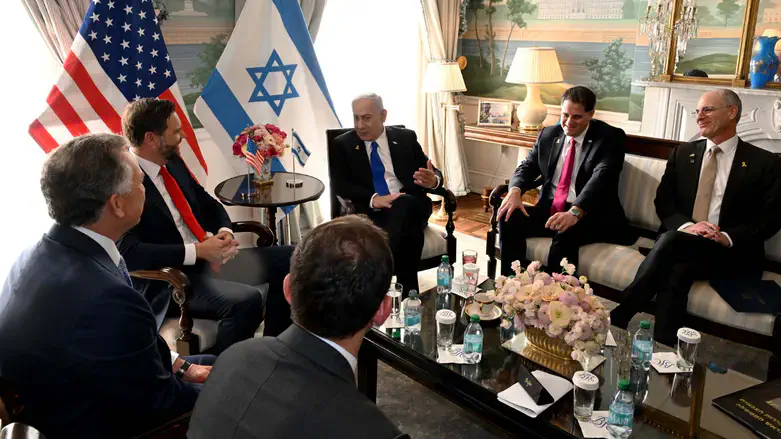
Prime Minister Benjamin Netanyahu’s whirlwind visit to Washington—where he huddled with Donald Trump and top U.S. lawmakers—offered a vivid snapshot of both the promise and peril now defining U.S.-Israel relations. On the surface, handshakes and hopeful talk of ceasefires and new Arab partnerships kindled cautious optimism that the guns in Gaza might soon fall silent and IDF reservists might return home to their families, jobs and businesses after months in the field.
Yet beneath the diplomatic pageantry lies a harsher reality: a war still raging, continuing claims of a “humanitarian crisis” in Gaza, and mounting political pressures in both Jerusalem and Washington that threaten to sacrifice sound strategy for short-term optics. What was billed as a turning point could, if mishandled, deepen old wounds, create new ones, and tarnish the moral standing that underpins Israel’s vital alliance with the United States.
The good news is clear enough. Backed by a reinvigorated U.S. diplomatic push, there is genuine momentum behind proposals for a phased ceasefire in Gaza that would secure the release of hostages and allow partial Israeli withdrawals in exchange for measured security guarantees. Netanyahu and Trump both framed these talks as a potential breakthrough.
Meanwhile, renewed discussions on expanding the Abraham Accords to include Saudi Arabia and even Syria suggest that, despite the wreckage in Gaza, there is still appetite in the Arab world for a broader détente with Israel—an outcome that could reshape the Middle East for a generation.
Just as important for Netanyahu was the symbolic theater: by nominating Trump for the Nobel Peace Prize, he not only offered a personal gesture of gratitude for past U.S. support but also shored up goodwill among influential Republicans. This could prove critical as Congress weighs future security aid and arms replenishments, ensuring that Israel retains both the diplomatic and military backing it needs to confront Iran’s ambitions.
But the visit also laid bare serious hazards.
The controversial idea floated by Trump and echoed in Netanyahu’s camp—that Palestinian Arabs should consider “relocation” as a solution—plays dangerously close to the language of forced displacement, inviting charges of ethnic cleansing that, if not handled carefully, could undermine Israel’s legitimacy on the world stage.
Domestically, Netanyahu’s balancing act is precarious. His coalition partners continue to reject meaningful concessions, demanding nothing short of Hamas’ total destruction and long-term Israeli oversight of Gaza. And Netanyahu’s anti-Bibi critics have the gall to continue to question whether his decisions are guided by national security or by personal political survival.
What comes next is uncertain. Will the promise of regional realignment and an end to the war materialize—or will internal fractures and international backlash steer Israel toward deeper isolation?
In the end, history will judge Trump and Netanyahu not by their handshakes and public camaraderie, or soaring speeches, but by whether they secured Israel’s future while upholding the values that have long defined its alliance with the United States. This moment demands more than clever diplomacy or political spectacle; it calls for the moral courage to dismantle terror networks, protect Israeli lives, and attempt to safeguard innocents caught in the crossfire. Anything less risks not only forfeiting a chance for true and lasting peace but betraying the hard-won principles that have always set Israel apart in a dangerous region.