
A recent article in The Jewish Chronicle revealed that rapper Azealia Banks was asked by concert promoters in the UK to shout “Free Palestine” during her set. She refused. As a result, she didn’t perform at the festival.
Banks should be praised for her moral conscience and courage. In an entertainment world where pro-Palestinian Arab slogans have become a ticket to social approval, her choice not to cave to political pressure was an act of rare integrity.
But this story is not just about her. It’s about us. It is a reflection of just how deeply the anti-Israel narrative has infiltrated popular culture — and how far behind we’ve fallen in telling our own story. An independent commission should be established to investigate this result, following the Israeli model of similar commissions formed in the past to deal with other events
Let’s try a simple thought experiment: Replace “Free Palestine” with “Free Israel.” Imagine if artists, influencers, and students shouted “Save the Jews,” “Protect Israel,” or “Zionism is liberation” The image is almost absurd. Unimaginable. That’s the point.
And here’s the uncomfortable truth: they — the enemies of the Jewish people — have succeeded in making their cause not only visible, but cool. They have made their narrative ubiquitous and, the Jewish community, across generations and sectors, allowed this to happen. Because they stopped telling their story — to their children, to their friends, to the world.
It’s as if, after the fall of the Soviet Union and the end of the great 20th-century Jewish struggles, they assumed the story was over. Of course it was not- but American Jewry acted like it.
If you’re under the age of 45 today, and your understanding of Jewish identity starts in the early 1990s, what do you see? You see a story of Jewish success — lawyers, doctors, scientists, entertainers, technologists thriving at the top of their fields. You see the State of Israel becoming a tech superpower, a thriving liberal democracy with a powerful army and a high standard of living. You haven’t seen antisemitism as overt or systemic.
Meanwhile, you’ve seen Palestinian Arabs portrayed as victims — endlessly, artistically, emotionally. You see protests, hashtags, and celebrities calling for their “freedom,” with no one telling you that they were never a nation, never had a state and that despite that, Israel offered them one several times. And if you were never taught the Jewish backstory — the thousands of years of exile, persecution, genocide, and finally the Jewish return — how could you not see Israel as the villain?
There has been a willful neglect; an abdication of responsibility not just in communal organizations or synagogues, but in everyday life. Too many Jewish people have stopped telling the Jewish story — not just to the world, but even to their own children. And perhaps equally as tragic, they’ve stopped telling it to their colleagues and neighbors, — the people with whom they share their daily lives.
There is a duality of responsibility that exists between the individual and the community. Each individual bears responsibility for what they’ve done and what they’ve not done. But it is the leadership, both religiously and organizationally. that bears the most responsibility. It was up to them to steer and educate the community; for it is leadership that is supposed to be wise and whose job it is to pay attention to the direction that things are going. The individual is bogged down by life’s daily challenges, it is the institutions that have really let us down.
This is what happens when a people stops telling its story. Our enemies picked up the narrative where we left it. They filled the silence. And the world listened.
Now we find ourselves caught off guard. Just like Israel on Yom Kippur in 1973, or again on October 7, 2023. But the signs were always there.
This didn’t come from nowhere. It was a slow, creeping assault — and we weren’t watching. The Jewish people in the West experienced a cultural sneak attack. Now, like Israel, we must reassess, reconfigure, realign, and fight back.
That fight starts with truth. And it starts with acknowledging our mistakes.
An independent commission must be established — a serious, third-party analysis of how the Jewish community both religiously and organizationally, failed to understand the necessity for ongoing education about OUR story and in many cases championed other people’s struggles. They failed to safeguard our narrative, our dignity, and our moral standing.
The Jewish Diaspora could use the help of a state sponsor like Israel to advise in the formation of the commission. A commission not to assign blame, but to deliver a roadmap. Because without understanding what went wrong, we cannot fix it. And we must fix it.
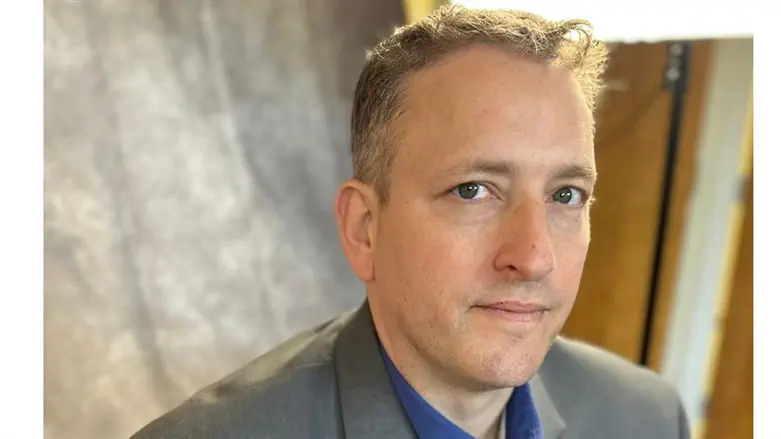
Daniel Rosenis the Co-founder of a Non-profit Technology company called Emissary4all which is an app to organize people on social media by ideology not geography . He is the Co-host of the podcast "Recalibration". You can reach him at drosen@emissary4all.org