

“Deterrence is not just a matter of military capabilities. It has a great deal to do with perceptions of credibility.” - Herman Kahn, Thinking About the Unthinkable in the 1980s (1984)
For the moment, at least, it seems that the Iranian nuclear threat to Israel has been degraded. Though likely not “obliterated” (a word never used in professional military assessments), Iran’s prospects for achieving independent nuclear capacity should now take more time than would have been required before the recent war. But what ought Israel to do to further extend this time?
Carefully crafted Israeli and American preemptions seemingly ensured a preliminary benefit for the Jewish State, but for how long? Although a meaningfully precise answer will be indecipherable, an all-important objective for Israel must be viable nuclear deterrence. More than anything else, the credibility of this core security posture will depend on Jerusalem’s presumed willingness to replace “deliberate nuclear ambiguity” with “selective nuclear disclosure.”
There will be multiple issues to consider. In all world politics, but especially in the Middle East, it is illogical to expect future successes from past successes. By definition, the adversarial future of Israel-Iran relations must remain uncertain and unpredictable. Correspondingly, the future of these belligerent relations could best be discovered by dispassionate and systematic inquiry. “Whether we are awake or asleep,” cautions philosopher René Descartes in Discourse on Method (1637), “we should never let ourselves be persuaded except on the evidence of our Reason.”
On questions concerning the next round of Israel-Iran war, Reason dictates that Israel does have a “bomb in the basement” (i.e., an operational nuclear military capacity), but that this deliberately ambiguous nuclear deterrent must inevitably fail. The strategic purpose of any more intentionally conspicuous nuclear deterrent should not be to underscore the obvious (i.e., that Israel merely has nuclear weapons), but to emphasize that these weapons are operationally usable at all levels of hostile military engagement.
It would be unreasonable for Jerusalem to assume that “deliberate nuclear ambiguity” could work indefinitely. At some not yet determinable point, Iran’s recently-degraded potential to acquire functional nuclear forces could return to status quo ante bellum and thereafter advance beyond that earlier stage - whether in calibrated increments or all-at-once. By correctly anticipating such peril, the Jewish State could understand that Iranian perceptions of Israeli nuclear credibility will require more rather than less nuclear disclosure.
At first, this argument may sound naïve or counter-intuitive. Nonetheless, meaningful strategic realities in the Middle East should never be extrapolated from banal narratives or empty witticisms. To correctly identify and calculate these realities is preeminently an intellectual task. To survive, even with already-acknowledged nuclear ordinance, a country less than half the size of America’s Lake Michigan will need extraordinary strategic minds more than courageous military warriors. Going forward, Israel’s always- capable warfighters will remain necessary but insufficient.
There will be additional details. Prima facie, Iran’s leaders function with a different concept of time than do Israel’s pertinent decision-makers. The Iranian side has openly subordinated “clock time” (i.e. “profane time”) to “sacred time.” On variously critical matters of strategic doctrine, this means that Iran maintains a “higher law” obligation never to capitulate to secular enemies. Leaders in Tehran will never succumb to any American president’s demand for “unconditional surrender.” These leaders are prepared to “wait.”
For Israel, Israel’s overall stance requires a timely loosening of “deliberate nuclear ambiguity.” Even if Iran’s developing nuclear potentialities were set back by Israeli and American bombardments, there would be other enemy states for Jerusalem to consider. These prospective adversaries could be already-nuclear, pre-nuclear or “merely” non-nuclear. Plausible examples would be certain Sunni Arab states (e.g., Saudi Arabia, Egypt), Turkey, or Pakistan.
After the just-halted Israel-Iran war, Pakistan reaffirmed “complete solidarity” with Iran. This explicit confirmation included threats of direct nuclear retaliation against Israel if Iran were to face a nuclear attack from Jerusalem.
Another nuclear state ally of Iran is increasingly worrisome. North Korea, a geographically distant and non-Islamic state, still has a documented history of belligerent interactions with Israel. This history includes building a nuclear reactor for Syria (one subsequently destroyed by Israel’s 2007 preemptive “Operation Orchard”). In principle, at least, a temporarily defanged Iran could identify an already-nuclear proxy in Pyongyang and Israel’s survival could then depend on the enhanced credibility of its nuclear deterrent.
How do matters stand at present, in the aftermath of a temporarily-halted Israel-Iran war?
Using Reason as sole decisional standard, Israel should update its national strategic posture (doctrine and strategy) by shifting from “deliberate nuclear ambiguity” to “selective nuclear disclosure.” Though a resumed war with Iran could become nuclear even while Iran remained non-nuclear, that war would be “asymmetrical” and favor Israel ipso facto.
In the future, if Israel were still committed to its “bomb in the basement” nuclear posture, the country’s intra-war opportunities to achieve “escalation dominance” would be sorely problematic. Even if Tehran fully accepted the reality of Israel’s nuclear options, it might still not believe that Jerusalem would be willing to exercise these military options. As a result, a tit-for-tat dynamic of conventional warfare could proceed unabated and Israel could need to face the exhausting prospect of interminable attrition warfare.
There will be many complex and intersecting issues. Only “selective nuclear disclosure” in Jerusalem could help keep Iran non-nuclear. Unless Israel had somehow managed to persuade Iran that its operational nuclear forces were tactically usable (ironically, in part, this means weapons that are not presumed “too destructive”), Israel’s determined adversary could remain committed to unceasing military struggle.
A core query re-surfaces: How should Jerusalem proceed?
Very soon, if not immediately, Israel’s only rational alternative to facing recurrent conventional harms will be to initiate transformative changes of its strategic nuclear posture. Though there could be no guaranteed outcomes in such literally unprecedented circumstances, a clarifying shift from “deliberate nuclear ambiguity” would represent Israel’s best plan to avoid recurrent conventional wars with Iran and a patiently-assembled “Iranian Bomb.”
Antecedent reasoning warrants clarification. Harboring alternative hopes for regime change in Tehran would be futile and self-deceiving. Among other assorted shortcomings, Iranian regime transformations would be subject to prompt or incremental reversals.
Hope is never a strategy. Israel cannot rely forever on an implicit nuclear deterrence posture. Regarding future war with Iran, it is necessary for Israel to consider once speculative but no longer inconceivable scenarios. Among other narrative prospects, North Korea and/or Pakistan could sometime become nuclear proxies for a still non-nuclear Iran. At that stage, any Israeli continuance of “deliberate nuclear ambiguity” would be self-destructive.
There are additional observations. Until now, Iran’s hyperbolic threats against Israel have been contrived (pretended irrationality). How else should a reason-directed strategist explain a non-nuclear state’s threats against a nuclear state? In principle, Israel could always “call Iran’s bluff,” but only if its non-nuclear forces were recognizably superior to those of Iran; and/or Jerusalem had previously made more explicit Israel’s plausible nuclear options.
Israel will need to ensure “escalation dominance” in all realistic conflict scenarios. Ultimately, this means keeping Iran non-nuclear. To be sure, there will be many technical questions concerning optimal levels and times regarding “selective nuclear disclosure,” but this is not yet the moment for publicly raising such details.
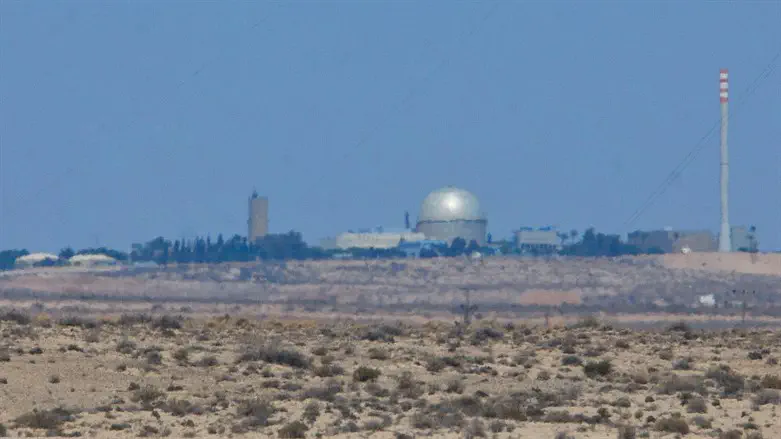
Some final clarifications are in order. Even a pre-nuclear Iran could make combat use of radiation dispersal weapons and/or conventional missiles/drones launched against Israel’s Dimona nuclear reactor. In a worst case scenario, Iranian ally North Korea would place nuclear assets at Tehran’s operational disposal. North Korea has a tangible history of involvement in Middle Eastern military matters. To wit, Pyongyang built a nuclear reactor for Syria at Al Kibar that was subsequently destroyed by Israel’s Operation Orchard on September 6, 2007.
For Israel, the time for “deliberate nuclear ambiguity” is coming to an end. Failure to recognize this crucial inflection point could ensure intermittent or near-continuous warfare with Iran. Though currently less than existential, such conflict would be persistently injurious. And while it is uncertain that “selective nuclear disclosure” could bring a conclusive end to Iran’s designs against Israel, a more selectively explicit Israeli deterrence posture represents Jerusalem’s only rational choice.
In nuclear strategic thinking, all basic truths center on deterrence.
“Deterrence,” Israel should recall from seminal American nuclear strategist Herman Kahn, “is not just a matter of military capabilities.”
It depends on “perceptions of credibility.”
Louis René Beres was educated at Princeton (Ph.D., 1971) and is the author of many books, monographs, and scholarly articles dealing with military nuclear strategy. In Israel, he was Chair of Project Daniel (PM Sharon, 2003). Over many years, he has published on nuclear warfare matters in Harvard National Security Journal (Harvard Law School); Bulletin of the Atomic Scientists; International Journal of Intelligence and Counterintelligence; Israel Journal of Foreign Affairs and more. His twelfth book, published in 2016 (2nd ed., 2018) by Rowman & Littlefield, is Surviving Amid Chaos: Israel's Nuclear Strategy. A monograph on this subject was published with a special post-script by retired USA General Barry R. McCaffrey at Tel Aviv University in December 2016. Professor Louis René Beres was born in Zürich at the end of World War II.