
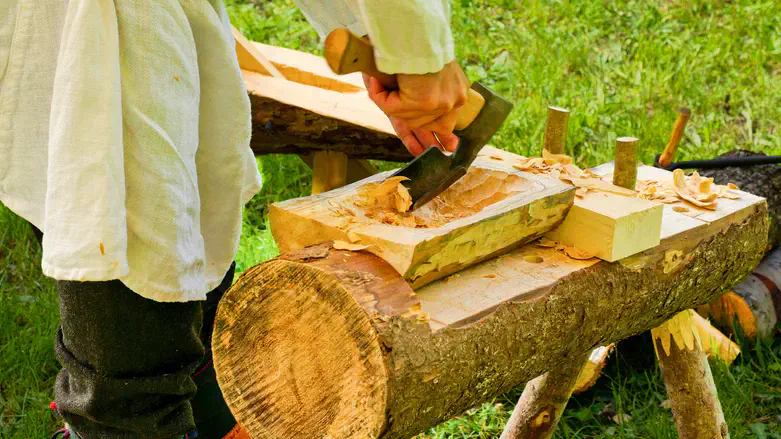
An adze is an essential tool for those who work with wood by hand. Its shape and structure give you specific control while processing wood, especially when chopping curved forms, planning, and coarsely shaping the primary one.
In this guide, we will examine the main adze types, benefits, and suggestions on how to use them and what safety requirements they meet.
Types of Adzes and Their Uses
Here are the main types of adze tools to consider:
- Flat Adze
The flat adze level edge is used for leveling, beam smoothing, and board smoothing. This adze woodworking tool is essential when constructing frames, reducing logs, and creating rough wooden frames.
Use a flat tool adze to quickly remove excess material from a flat surface. It is ideal for large workpieces and allows you to achieve smooth geometry by hand without power tools.
- Curved Adze
The curved shape allows you to bite into the wood, creating indentations and smooth shapes. It is used for carving bowls, spoons, and decorative work.
A curved adze tool is useful when working from the inside, whether on a bowl, spoon, or other curved surface. It provides good control when carving with limited depth.
- Small and Large Adzes
Small adzes are ideal for delicate work and flexibility, while large adze tools are ideal for removing a lot of wood in a short time.
If a task requires strength and speed, use a large adze. The fine adjustments and polishing, especially in hard-to-reach places, use a small adze.
Why Use an Adze?
- Absolute control when shaping a surface
A hand adze allows you to feel the material, control the angle of attack, and remove wood layer by layer - this is especially important when working with wood with a complex structure or grain.
A carving adze gives precise feedback - you immediately feel where there is too much and where you can go deeper. This sets it apart from mechanical planners and grinders.
- Ideal for roughing out large wood projects
The carpenter's adze easily handles the initial shaping of a log or board, allowing you to quickly prepare the workpiece for further processing.
This is especially useful when giving the wood the desired shape before sanding or finishing.
- No electricity required - completely manual work
An adze can be used in any condition without connecting to the mains, making it indispensable for mobile or autonomous workshops.
If you work outdoors, away from a workshop or an electrical outlet, a wood carving adze will give you the freedom and autonomy to work.
Practical Projects You Can Tackle
The adze is ideal for shaping rustic furniture's legs, seats, and backs. Give rough wood shape and character - a wood adze will highlight the natural structure and create a unique rustic style.
An Adze permits you to hollow out the general shape of a bowl or spoon quickly, preparing it for more detailed refinement. This is a significant phase in the production of kitchen tools: the hand adze tool accelerates the process and makes the recess more natural.
When building a traditional frame house or bathhouse, the adze helps to precisely fit the joints and remove chamfers. This is a classic carpentry tool, without which it is difficult to imagine processing heavy wooden elements by hand.
Adze Technique: Tips for Safe and Effective Use
The correct stance ensures stability and safety. With one leg forward and the body inclined, you can manage each blow. A firm stance and grip on the handle reduce the risk of slipping and injury. Cut with the grain, changing the depth of the cut by tilting the tool.
Always keep an eye on the angle—too sharp an angle will cause the blade to get stuck, and too blunt will not provide the desired material removal.
How to avoid wrist fatigue or kickback
Don't grip the handle too tightly. Make smooth, controlled movements with your body, not your hand.
Work with rhythm and take breaks - this will reduce the strain on your wrists and increase the duration of the session without discomfort.
A woodworking adze is an ancient but still relevant tool that allows freedom, control, and creativity when working with wood. Once you master its technique and choose the right shape, you can create rough blanks and fine artistic carvings.