
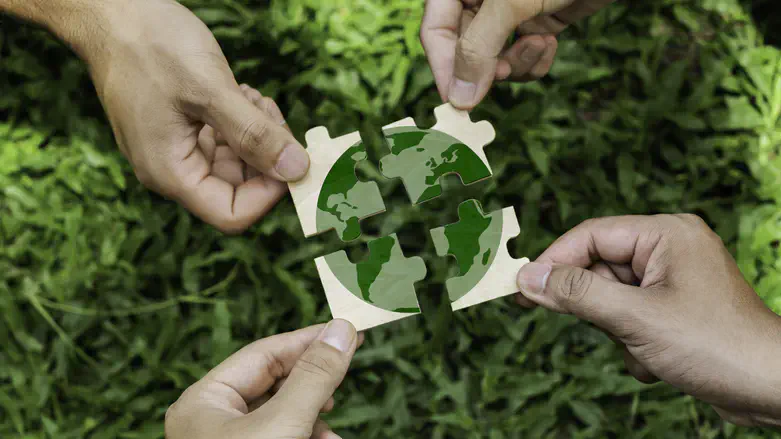
There is a paradigm shift that has defined, in recent times, what the world practices towards climate change; it is the change to green cooking. It has become the battleground strategy in the war on waste by every one of us.
Food remains - cut, rice, coffee - are supposed to amount to many more tons every day than food is added to waste material. This waste ends up in the dumps, where it rots in the absence of oxygen. It is worth mentioning that this breakdown releases huge amounts of a detrimental gas known as methane.
This gas is produced in large quantities and is considered 25 times more dangerous than carbon (IV) oxide in terms of global warming. At the moment, a particular appliance, the food waste recycler, invented to tackle the issue directly, is causing a stir in private households. This device converts all the remains of organic waste from food to leave hardly any environmental footprint, whilst they are in the comfort of their homes.
Such love for these machines springs purely from the need to simplify the process of handling food waste. Contrary to popular belief, recycling of biodegradable materials does not always entail bulky landscapes, constant heating, and other manipulations. A simple and most efficient way to do this is to use a countertop composter. They cook and grind the waste, dramatically decreasing its mass and drying it to such a degree that it becomes rich in macro nutrients. All is done in a flash, thus there is no garbage to stink the house, no garbage to take outside, and above all, there is that 'I am willing to contribute to the best' feeling.
The benefits of having a food waste recycler at home are holistic and limitless. To begin with, it cuts off methane gas production.
By removing food leftovers from the block, these devices eliminate the generation of this destructive gas from the block through anaerobic digestion. This in-house intervention helps significantly in addressing climate change. The demand of most people is around the ending product, also known as Foodilizer or similar substances, in this case.
It is not compost already, but it can be added easily to garden soil, mixed with potting soil, and used in indoor plants as well as directly in a composting pit in order to hasten the process of composting other organic waste. This results in enriched soil, minimized use of chemical fertilizers, leading to improved plant health and promoting a closed-loop system of restoring nutrients back to nature.
Going beyond the reduction of greenhouse gas emissions, food waste recyclers maintain certain other resources as well. The less food wastes are sent to landfills, the less these wastes have to be collected and transported, less energy is consumed, and less air pollution is released as a result.
It also helps in alleviating the problem of landfill space, which is a critical problem for many urban areas. These products target the management of food scraps for kitchen and garden purposes, rather than adding to food spoilage or preparing industrial land conditioners.
Additionally, the introduction of a food waste recycler in a kitchen encourages a certain kind of conscious consumerism. Seeing how all the waste turns into compost, shrinks them down, seems to make the users better understand meal management, serving sizes, and ways of eliminating waste in general. This shift in attitude is ever more necessary to enhance sustainability because utilizing resources (eat what is bought, prepare the right portions, etc.) within the first stage of the system is the best way to conserve resources.
All in all, a food waste recycler is not a typical kitchen helper; it is an effective means of environmental care. This equipment provides odor-free and convenient means of disposing of organic substances, thus enabling people to engage positively in the reduction of methane gas emissions, preservation of natural resources, as well as improvement of soil without any trouble.
They show how inventively using green technologies in everyday use can bring about positive changes in people as a result of having a planet useful for future generations.