
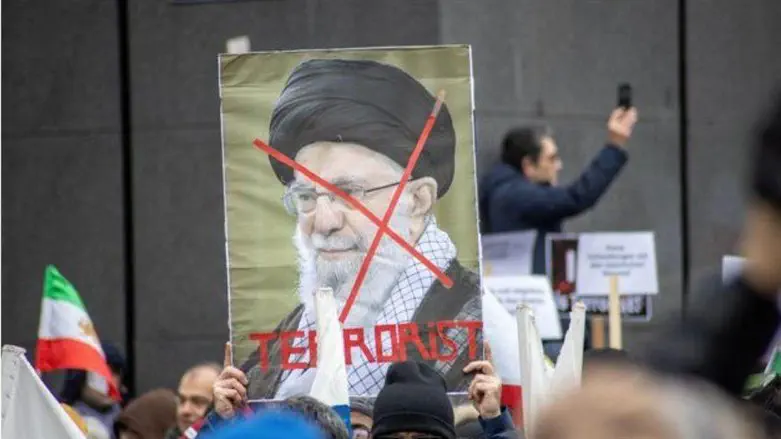
This isn’t a surprise. It’s a culmination.
Iran didn’t just wake up this year and decide to build a nuclear bomb.
They’ve been working toward it for decades—funding terror, building proxies, burying centrifuges, and laughing at Western diplomats who believed that handshakes and press conferences could tame genocidal ambition.
One man saw it for what it was from the beginning.
Prime Minister Benjamin Netanyahu has spent the better part of the last 15 years warning anyone who would listen: If we don’t stop Iran now, we’ll be forced to deal with a nuclear-armed terror regime later.
He’s been mocked. Dismissed. Painted as alarmist. But now we’re here—exactly where he said we’d be.
Iran is on the cusp of nuclear capability. Enriching uranium to weapons-grade levels. Stockpiling missiles. Building out its proxy network like a snake wrapping tighter around Israel’s borders. Meanwhile, Tehran is threatening American bases and promising retaliation if it’s challenged.
And yet, there are still those who ask for more talks. More time. More concessions. As if this is a misunderstanding instead of a mission.
Let’s be clear: Iran’s goal is not stability. It’s supremacy.
Its proxies—Hamas, Hezbollah, the Houthis—are not accidents of chaos. They are weapons. Each rocket from Gaza, each drone from Yemen, each attack in the north is a calculated distraction, designed to wear down Israel’s defenses while Iran races toward the real weapon: the bomb.
This isn’t a border dispute. This is a strategic countdown. And if we keep treating it like a regional inconvenience instead of an existential threat, we are sleepwalking into disaster.
President Trump sees it. Secretary of Defense Pete Hegseth sees it. The decision to evacuate U.S. personnel from Iraq and the Gulf is not symbolic—it’s preparation. Contingency.
Because the moment is close, and the consequences are real.
The choice we face is not between diplomacy and war. The choice is between stopping Iran now—or dealing with a nuclear Iran later. And make no mistake: a nuclear Iran will not behave like a responsible actor. It will not be restrained by treaties or Western logic. It will be emboldened, untouchable, and deadly.
This is not just an Israeli problem. Iran doesn’t just chant Death to Israel. It chants Death to America. It funds militias that kill U.S. soldiers. It plots assassinations on European soil. The nuclear threat is not theoretical. It’s aimed at all of us.
And that’s why Netanyahu’s message matters more now than ever: We must stop Iran. Not contain it. Not delay it. Stop it. Now.
That means drawing clear red lines. Enforcing them. Demanding full dismantlement of enrichment sites, not just inspections. It means understanding that there is no path forward that includes Iran having the capacity to wipe out a country with one launch. And it means admitting that diplomacy—if it is to work—must come from strength, not appeasement.
But we’ve been here before.
From Pharaoh to Haman, from Caesar to Hitler—history is littered with the bones of those who tried to erase the Jewish people. They had empires. They had armies. They had propaganda. They had allies.
And yet—we’re still here.
You’d think by now they’d learn:
You don’t come for the children of Israel and walk away standing.
Don’t believe me?
Read a history book. Or better yet—a Bible.
Iran can build missiles. It can fund terror. It can scream threats from the rooftops of Qom. But it’s playing a rigged game. The Jewish story is not about survival. It’s about divine defiance. Eternal return.
We don’t just endure—we bury empires.
Netanyahu wasn’t paranoid. He was prophetic.
And while the world may finally be waking up to the Iranian threat, the time for hesitation is over. Every day we delay gives them more time. Every false hope of moderation brings us closer to catastrophe.
So what does it mean to “stop Iran”?
It means we stop pretending they can be reasoned with. It means we pressure our allies to isolate the regime financially, diplomatically, and—if needed—militarily. It means we accept that preventing a nuclear Holocaust is more important than preserving diplomatic niceties.
The proxies may light fires. But the match is in Tehran.
And we know how this story ends.
We’ve seen it before.
Spoiler alert:
It ends with us—standing.
Again.