
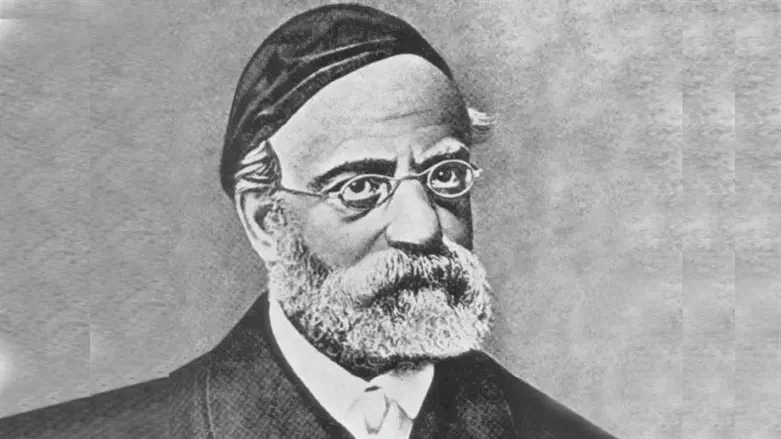
Hashem tells Moshe: Gather 70 elders to the Mishkan and “have them stand there with you.” After that, “I will come down…and keep back some of the [prophetic] spirit that comes over you and I will place it on them” (Numbers 11:16-17).
Rav Samson Raphael Hirsch points out that the prophetic spirit uniquely rests on a person. Other divine powers reside within him. For example, the “spirit of G-d was in” Yosef (Genesis 41:38); Hashem “filled [Bezalel] with a G-dly spirit” (Exodus 31:3); Yehoshua was “filled with the spirit of wisdom” (Deuteronomy 34:9); and Hashem “placed His holy spirit in [the Jewish people’s] midst” (Isaiah 63:11).
With this divine spirit, man can potentially deliver brilliant speeches and do great deeds, but they remain “human words and human acts” (even if they are “borne and elevated by special gifts and inspiration from G-d”).
Prophecy is something entirely different. The words a prophet speaks are not his own. He is not merely an inspired poet. The “spirit of prophecy does not proceed from within,” writes Rav Hirsch. It “comes to him from without, from above…on him” and “raises him above the level surface of normal human beings.”
Thus, G-d’s prophetic spirit “passed over [Saul]” (I Samuel 10:10), was “upon [Isaiah]” (Isaiah 61:1), “fell upon [Ezekiel]” (Ezekiel 11:5), and “came over Azariah” (II Chronicles 15:1).
What a prophet “says and…does is G-d’s word and G-d’s doing.” He is “merely His conveyer and His agent.”
Rav Samson Raphael Hirsch (1808-1888) - head of the Jewish community in Frankfurt, Germany for over 35 years - was a prolific writer whose ideas, passion, and brilliance helped save German Jewry from the onslaught of modernity.
Elliot Resnick, PhD, is the host of “The Elliot Resnick Show” and the editor of “The Rav Samson Raphael Hirsch Dictionary.”