


Israel is one of the few places where modern institutions operate next to some of the world’s oldest cities. It’s a small country, but its universities are well-connected to global research and innovation networks. Around 280,000 students are enrolled in higher education in Israel, with many choosing science, engineering, and international studies.
This article is for anyone considering studying in Israel. It covers how the education system works, what programs are available, how to apply, and what kind of visa you’ll need. It also looks at daily life — from the cost of housing to public transport and language — and includes practical tips on scholarships and support tools for students.
Past and Present Shape Student Life
Academic life in Israel asks a lot from students. Courses focus on research, direct analysis, and independent thinking. Lecturers often give a clear goal but leave students to figure out the steps. This method matches the broader culture of Israel, where fast decision-making and responsibility are common in both education and work. It creates a system where students move at their pace but must meet high expectations.
Not everyone adjusts right away. Some students investigate how to handle tasks more efficiently or check answers before submission. One option that supports this process is custom essay help. It’s an AI-based tool that responds to photos of school tasks, helps check solutions, and keeps track of progress. Students who search for online writing help often mention its speed and ease of use. While the site doesn’t rely on top writers, it provides fast, clear support when something feels unclear. This form of online help fits the pace and structure of academic life in Israel, where tech and personal effort often go side by side.
Where to Study and What to Expect
Higher education in Israel covers universities, colleges, and research institutes. The Hebrew University of Jerusalem, Tel Aviv University, and the Technion in Haifa are among the main choices. These campuses work with hospitals, labs, and companies in science and technology.
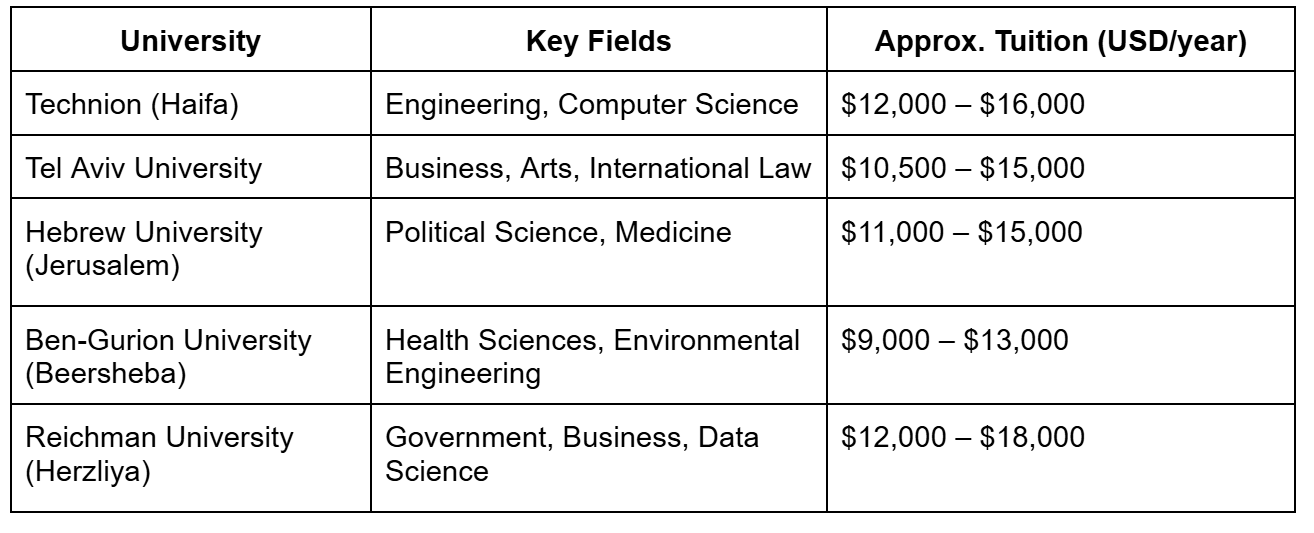
Students can study for bachelor’s, master’s, or PhD degrees. Many international students enroll in engineering, medicine, international relations, or business programs. Graduate courses are offered in English; some campuses run semester exchanges or summer sessions. There are also Hebrew and Arabic language courses through intensive tracks. Below is a quick overview of major universities and what they offer:
Admission and Visa Process
Each Israel school sets its deadlines and admission rules, but the steps look similar across most universities. Students usually apply through an online portal. Deadlines often fall between January and July. Applying early helps avoid delays, especially for visa documents. To complete the application, most schools ask for:
- Transcripts: Grades from high school or a previous degree. These should include all subjects and final results.
- Diploma: A scanned copy of your graduation certificate.
- Proof of English: Accepted tests include TOEFL, IELTS, or C1 Advanced. Some schools accept proof that your last degree was taught in English.
- Passport: A copy that stays valid for at least 12 months.
- Personal statement: A short text that explains your goals and interest in the subject.
- Letters of recommendation: Usually from teachers or academic staff.
- Application fee: Most schools charge $50 to $100.
Some programs ask for an entrance exam, such as the NITE test in Israel. If your grades or scores do not meet the level, a one-year prep course may be an option before full admission. After you receive an offer, you must apply for an A/2 student visa. This visa allows a stay of up to one year and can be renewed. You will need proof of funds, insurance, an acceptance letter, and a fee (about $60). Check with the nearest Israeli embassy for exact steps.
Daily Life and Cost of Living
Students in Israel cover basic housing, food, transport, and insurance costs. On average, monthly living expenses range from $850 to $1,200. This depends on where you live and whether you stay in a dorm or rent a private place. Tel Aviv and Jerusalem cost more than cities like Beersheba or Haifa. Dorm rooms are cheaper and usually located near campus, but they fill up fast. A shared apartment gives more space but comes with a higher price. Food and public transport are affordable, and students get discounts on bus and train passes. Here’s a breakdown of common monthly costs:
Expense
Estimated Monthly Cost (USD)
Dormitory (shared room)
$300 - $500
Private apartment share
$500 - $800
Food and groceries
$250 - $400
Public transport pass
$50 - $70
Health insurance
$60 - $100
Getting around is simple. Buses and trains often run in most cities. Sheruts — shared vans — are useful for longer trips and airport rides. Most campuses have student unions and clubs where you can meet others. These offer trips, workshops, and events throughout the year.
Language and Cultural Landscape
Most universities teach international programs in English, especially at the graduate level. Students can complete their courses without speaking Hebrew, but daily life outside campus mostly runs in Hebrew. Arabic is also widely used. Signs, public offices, and local conversations often rely on these two languages.
Many students join Ulpan courses to participate in more than just academics. These are short Hebrew language programs offered by universities. They focus on practical use, like reading signs or speaking in shops. One reason why studying in Israel for international students works well is the mix of people on campus. Students come from different countries and backgrounds. Some are religious, others not. While parts of the culture may feel unfamiliar, most university staff members and students speak enough English to help with daily tasks.
Financial Aid and Campus Support
The cost of study in Israel depends on the program and location, but scholarships can reduce the financial pressure. The government funds some, others come from universities or outside programs. Eligibility usually depends on country of origin, academic records, or study area. Some funding options also support students with specific cultural or religious backgrounds. Main scholarship types include:
- Government scholarships: Managed by the Ministry of Foreign Affairs. Available to students from countries with official exchange agreements
- University grants: Based on academic records or financial need. Some are automatic; others require an application.
- Cultural or heritage-based aid: Open to students with Jewish background or those enrolled in Israel-focused programs.
- Short-term program support: For Ulpan courses, summer schools, or one-semester programs.
Most universities also offer basic support services. New students attend orientation sessions. Some departments provide mentors. Campuses usually have writing labs, tutoring, and academic resource centers. These services help students follow course expectations and stay on track. It’s useful to check what each university includes before applying.
Final Thoughts: Who Should Study in Israel?
Studying in Israel works well for students who want a mix of research, independence, and real-world learning. The academic system focuses on analysis, group work, and direct problem-solving. It suits people who prefer to ask questions, work on projects, and take responsibility for their progress. Most universities have strong fields like science, engineering, social studies, and regional politics.
This path makes sense for students who are open to a different pace of life. The culture, schedule, and public environment may take time to get used to, but campuses offer structure and support. For those interested in modern research and historical context, Israel offers access to both—often in the same place. It’s not for everyone, but it can be the right fit for those who want something clear, focused, and tied to the real world.