
IPT Senior Fellow Hany Ghoraba is an Egyptian writer, political and counter-terrorism analyst at Al Ahram Weekly and a regular contributor the BBC. He is the author of Egypt's Arab Spring: The Long and Winding Road to Democracy He is a writer and contributor for over a dozen international outlets, periodicals and networks including Newsmax, OANN, BBC Radio, CSP, MEF, American Spectator, American Thinker, Arab Weekly and Al Arabiya News.
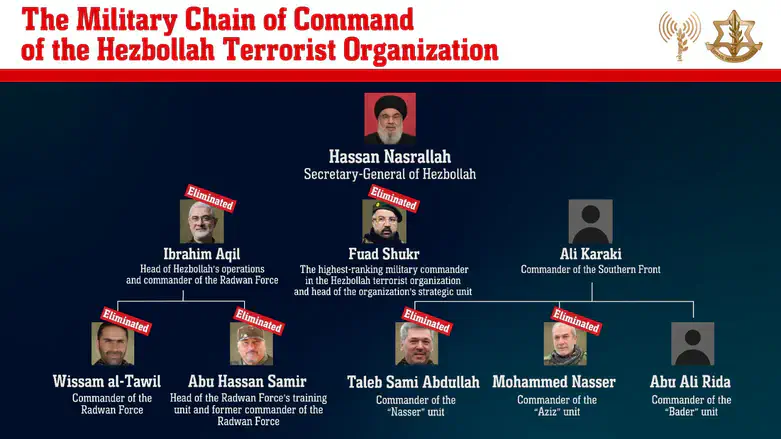
Hezbollah is still attempting to recoup its losses following the Israeli targeting of its leaders including the terrorist group's iconic leader, Hassan Nasrallah, who was eliminated in an Israeli airstrike on his hideout in Beirut on September 27th. Hezbollah's heavily reduced surviving leadership, under the strict guidance of Iran, didn't have an abundance of choice between politicians to lead.
Accordingly, the election this week of Shia cleric Naim Qassem, the longstanding deputy of Nasrallah, became a natural choice for the Iranians and Hezbollah given the dwindling numbers of eligible loyal political figures to run Iran's terrorist crown jewel in Lebanon.
Qassem is endorsed by the powers that be in Tehran including the newly elected so called 'Reformist President' Masoud Pezeshkian, who stated the following in an official letter to Qassem:
"I am confident that the presence of a brilliant personality and a mujahid (Jihadist) with a bright past like Your Eminence at the head of Hezbollah will strengthen the will in the field of resistance and also continue the bright path of the lofty martyrs of this front."
Qassem Vows to Destroy Israel
Naim Qassem, who was born in 1953 in the southern Lebanon village of Kfarkela, has been the Deputy Secretary General of Hezbollah since 1991 and was a co-founder of the terrorist group along with Nasrallah in 1982. His radicalism and extremist views as Shia Cleric are known in the group's circles and he has remained a loyal servant of Iran for over four decades. Despite being a chemist, he is considered to be the ideologue of the terrorist group, writing over a dozen books on jurisprudence and chronicling the terrorist group history in some books.
While lacking the leadership charisma of his predecessor Nasrallah, he masks his grim nature and exuberant radicalism with fiery speeches of resistance and obliterating the enemy - which remains Israel in all cases.
"You will die of terror, your economy will collapse, you will not achieve your goals, and you will transform the resistance in Palestine into a global movement" said Qassem in a speech on September 22nd threatening Israel.
"Israel became weaker to us than a spider's web. We look upon it that it will be perished and if it assaults us, we will answer back" said Qassem in an old speech that went viral online on September 21st.
He continued his threatening messages in a speech on October 15th commemorating Nasrallah's death and urging stronger resistance. "Your order is our command (addressing Nasrallah's spirit), we will defeat them and extract them from our lands," said Qassem. "We can't separate Lebanon from Palestine or the region from Palestine," added Qassem, insisting that Hezbollah will keep the fight as a front to back Gaza's Hamas.
Qassem the Perfect Iranian Stooge
While his stance on eliminating Israel and rejecting any peaceful resolutions for the Palestinian – Israeli conflict are well known, Qassem shows steadfast loyalty to Iran, as he has been a deputy since 1991, even before Nasrallah became the General Secretary of Hezbollah.
"The new [step] of appointing him (Qassem) as a General Secretary was the most logical since he was the Deputy General Secretary since 1991 which means that he was the most loyal to Iran and most trus (sic) t by them" said Lebanese journalist and political analyst Mohamed Kawas to Deutsche Welle Arabic TV "He appeared three times to deliver speeches after Nasrallah's death to elaborate on the stances of Hezbollah. In each time, I noticed he was reading the speeches word by word. After, we all felt that the whole situation is now in Tehran's hands."
When asked if his appointment will mean more subordination by Hezbollah to Iran under his leadership, Kawas replied "I think so, he is very close to Iran and frequently visited there. He was always one of the ideologues of Hezbollah."
Moreover, media reports over the past two weeks have indicated that he may have travelled secretly to Iran for security reasons and is leading the group from there.
Someone Should Tell Qassem that Hezbollah is Becoming a Corpse
The subordination to Iran and pushing the Iranian regime agenda is not a novelty as it has been a staple of Hezbollah since its inception. Members of the terrorist group took unbashful pride in being the agents of Iran for decades. But now they are finally paying a price for allowing themselves to become a clone of the Islamist regime of Iran operating as a dictatorial state within the country of Lebanon.
Qassem and his puppeteers in Teheran are now issuing new threats against Israel. But considering Israel's early retirement of Qassem's two predecessors and the Israeli devastation of the Iranian defensive system, these boasts betray a real vulnerability to a knockout punch by the IDF.
Hezbollah is now in Chapter 11 thanks to rigorous Israeli real estate construction, i.e. the destruction of Hezbollah's bank and other terrorist-controlled institutions in Beirut valued at more than $3 billion. Hezbollah has lost 70% of its commandos, killed or captured. Israel estimates that only 20% of Hezbollah's missiles remain and are disappearing fast. Unless Qassem wants to join his compatriots "on the road to Jerusalem," it's likely we may never see a live shot of the new Hezbollah leader.
The article above is reposted from the Investigative Project on Terrorism.
Who is Sheikh Naim Qassem, Hezbollah’s new leader?
By Tal Be'eri, Alma Research and Education Center
Naim Qassem was born in 1953 in Beirut. His family originated from Kafr Fila in the Tufah district of southern Lebanon. He is married and has six children.
Qasim has a degree in chemistry and worked as a teacher for many years. In addition to the natural sciences, he continued his religious studies at the Seminar for the Study of Shi’ite Islamic Religion and the training of clerics in Iran, and received a degree in Islamic jurisprudence and its foundations. He attended a seminar that has a number of institutions in cities across Iran, the oldest and largest of which are in the cities of Najaf and Qum, from which some of the leading ayatollahs and Shi’ite clerics emerged.
Naim Qassem began his political activity in the Amal movement, founded in 1974. He left Amal in 1979 and participated in the meetings that led to the establishment of Hezbollah in 1982. He is considered one of the central figures from Hezbollah’s founding generation.
Qassem was elected three times to Hezbollah’s Shura Council. During the 1980s he was responsible for Hezbollah educational activities and scouts in Beirut, deputy head of the executive council and head of the executive council.
In 1991 he was appointed deputy secretary general of Hezbollah, replacing Abbas al-Moussawi, who was elected secretary general and eliminated in 1992. Qassem continued in his position continuously, as Nasrallah’s deputy from 1992 until his election as Hezbollah’s current secretary general, after Nasrallah’s elimination.
In his capacity as Hezbollah’s deputy secretary general, he was in charge of the Supreme Court and supervisor of parliamentarians and the Hezbollah Parliamentary Labor Council in the Lebanese parliament. He also served as Hezbollah’s general coordinator for parliamentary elections.
Qassem wrote several books. The most important of these is his 2014 book on Hezbollah’s political and military experience (Hezbollah – The Curriculum – The Experiment – The Future – Naim Qassem – 2014). He also wrote books on topics such as family, marriage and the Shiite religion in 2010 and 2013.
We do not know how long Naim Qassem will hold his position. Naim Qasim is a definitely a default choice. Neither the Iranians nor within Hezbollah imagined a scenario in which Qassem would be appointed leader of Hezbollah. Qassem is the opposite of the extroverted figure of the popular, charismatic and authoritative Nasrallah.
We estimate that, in light of the circumstances of the results of the war, and the character and image of Naim Kasem the Iranians will be far more involved in all spheres about what is occurring in Hezbollah than during Nasrallah’s lifetime.