

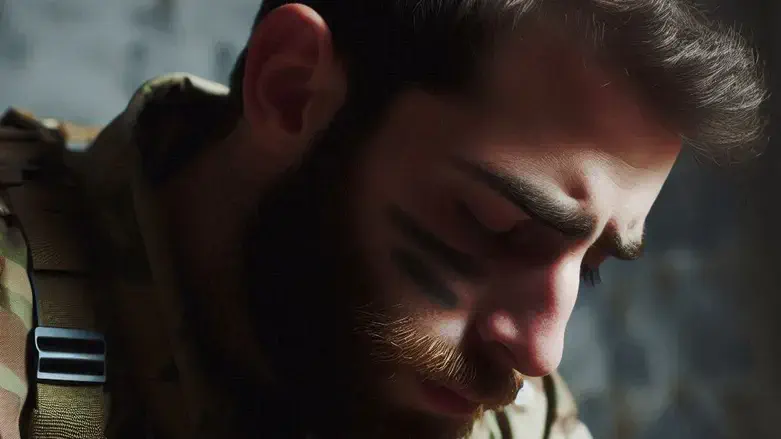
The warfare in Gaza leaves deep scars not only on the bodies of the soldiers but also on their souls. Soldiers returning from battle often struggle to reintegrate into the normalcy of civilian life.
Post-Traumatic Stress Disorder (PTSD) is a severe and tragic condition, where soldiers find it difficult to process the horrors of war they have experienced and live in a reality completely different from the one they knew before they went into battle.
During the fighting in Gaza, soldiers are exposed to unimaginable violence, death, loss, and fear. Even those who survive the battle are often left with a profound sense of guilt for those who did not return.
These traumatic experiences can manifest as recurring nightmares, flashbacks, and anxiety attacks, severely impairing their daily functioning.
In many cases, these soldiers struggle to adapt back to civilian life and are forced to confront issues of depression, uncontrollable anger, and emotional detachment.
The devastating effects of PTSD are not limited to the soldiers themselves. Their families find themselves facing a person who has fundamentally changed.
The soldier who was once a brother, spouse, father, or friend becomes distant, irritable, and sometimes even violent. These dramatic changes in behavior, coupled with emotional and psychological challenges, create enormous stress within the family.
Parents, spouses, and children must cope with someone they barely recognize, watching as their family life crumbles before their eyes.
Rehabilitation for soldiers returning from combat with PTSD is a long and complex process. In many cases, these soldiers require prolonged psychological treatment, including both medication and extensive family and social support.
This process can take years, during which professional assistance from psychologists, psychiatrists, and social workers is essential.
During this period, these soldiers often find themselves without a source of income, and even extended family members struggle to maintain their regular work schedules due to the need to support them, stay with them in rehabilitation wards, and accompany them to treatments intensively.
Unfortunately, due to the overwhelming burden on the medical system, some soldiers fall through the cracks, not receiving the full or appropriate treatment they need. They find themselves in such a severe mental state that they are at risk of spending the rest of their lives in psychiatric hospitals or in wards for the chronically mentally ill. These individuals require a different kind of support, which comes at a very high cost.
As a society that cherishes life, we bear a heavy responsibility towards these soldiers and their families. We cannot accept a situation where those who gave everything for the security of the nation end their lives in social isolation and mental anguish, becoming the forgotten ones of our country. The Netzach Israel organization has taken upon itself the mission to ensure that all soldiers receive the support they need, and to provide assistance to their families, who are also suffering greatly alongside them.
We must not allow a situation where soldiers who fought in Gaza find themselves in closed institutions, far from the public eye and memory. We must remember our debt to them, continue to fight for them even in times of peace, and ensure that they and their families have the opportunity to live healthy and fulfilling lives.
All donations are tax-deductible under 501c3.