
Even though we may not be on the front lines, we all have a crucial role to play in supporting our country and our people during times of war. The Torah offers valuable lessons on the responsibilities of non-soldiers in such circumstances. In Bamidbar 31:4, when Moses assembled an army to combat Midian, he instructed that one thousand men from each tribe be sent to the battlefield, while another one thousand men remained behind to pray for their success. This teaches us that even those unable to fight can make valuable contributions to the war effort by supporting those who are.
In the Torah portion Bereishis, following the tragic incident where Cain kills Abel, God asks him, "Where is your brother Abel?" (Bereishis 4:9). Rav Meir Shapiro, the Rosh Yeshiva of Yeshivas Chachmei Lublin, explains this question as a reminder of our duty to care for our fellow human beings. Cain's response, "Am I my brother's keeper?" (Bereishis 4:9), reflects an individualistic mindset, one that perceives oneself as separate and independent from others. However, God marked Cain with the letter "vav" (ו) - the letter that indicates connection - to teach us that we are all interconnected, underscoring our responsibility to one another.
We all have a role to play in supporting our country and our people, especially during times of war. Our involvement should be as unwavering as that of the enlisted soldier, extending throughout the day and night (24/7). Just as the soldier on the front lines is wholly committed, so too must we be totally committed 24/7 to our duties of Torah, avodah (service of G-d), and gemillat chasodim (acts of kindness). When we live for one another, we bring blessings upon ourselves. "The Torah begins with the letter bet, not aleph, the first letter of the alphabet. The Midrash suggests that this is because aleph represents a curse. The idea is that if we all see ourselves as aleph (א) individuals, it is a curse. The first lesson of the Torah is that we must live for one another."
Today, this message holds particular relevance as Israel finds itself entangled in a conflict with those who seek to harm, kill, and destroy the Jewish people. The Torah reminds us of our interconnectedness and the shared responsibility we hold toward one another.
We must always remember the words of our sages, as stated in Shir HaShirim Rabbah, Parsha Aleph, Siman Lamed Tet, "The Holy One, blessed be He, does not desire those who speak negatively about Israel." These words underscore the importance of unity and mutual support within the Jewish community, especially when confronting formidable adversaries.
As Rabbi Abba Bar Kahana's teachings reveal (Yerushalmi Peah), "Rabbi Abba bar Kahana said, the generation of David were all just, but because there were informers who found fault in those among them, they went to war and were falling. The generation of Ahab were idolaters, but since there was no informing among them, they went to war and were victorious."
Let us refrain from seeking fault among our own ranks. Instead, let us focus on the good in one another, let us do good through Torah, avodah, and gemillat chasodim, and always emphasize the goodness in each other. Let us carry these teachings forward, striving for unity, mutual support, and a positive outlook, and in doing so, we can effectively confront the challenges we face, secure in the knowledge that together, we are stronger, and with God's help, we will achieve success, even in the face of adversity.
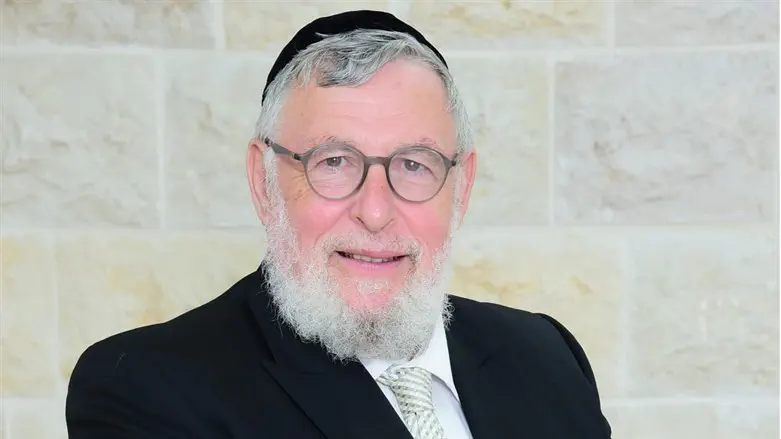
The author, Rabbi Eliezer Simcha Weisz, is a member of the Chief Rabbinate Council of Israel.