

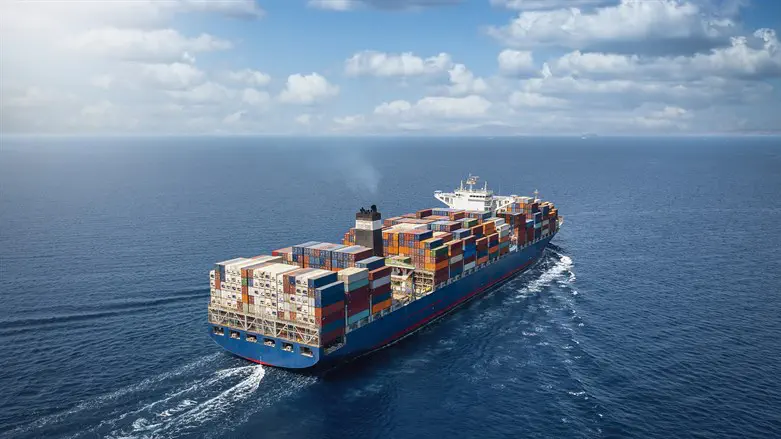
Shipping containers are the ones that carry cargo from one place to another over both short and long distances. Many companies in a niche like Pelican Containers provide the best shipping containers Greensboro with different parameters to meet the requirements.
Some containers can be custom-made based on the needs. They may cost more than the standard ones. Therefore, you can find different parameters. Whatever shipping container you are looking for, let’s check the container’s main types first. Here is a list with the main types of shipping containers and some tips on how to decide which one you need.
Basics of shipping containers
Let us show you some great facts about the shipping industry. It has been projected that about 16b would be the size of the global shipping industry by 2028. The current global rate is 3.1k USD.
Yes, it is known to everyone that a shipping container is a basic 4-sided container to store things. What you did not know is that their strength is not the same. It is made to withstand the weight of the things put inside.
The main aim of a shipping container is to ship the things intact without any damage or loss. The road is not always smooth, therefore, the containers are equipped with shock absorbers to resist any bump or hole in the way. They can be simple steel boxes or corrugated boxes. In freight terms, these containers are called intermodal freight containers.
Types of containers
There are several classifications of shipping containers based on doors, height of container, chassis and other features. Following are the main types of containers:
1. Open doors
This is the ordinary container when the doors open behind. Both the doors can be comfortably closed or opened. In case, the cargo is protruding out, the doors can be left open. Some of the containers have sliding doors instead of the ones that fling open.
2. Open-sided option
This one helps to transport things which are bigger than the container because the sides are open. Instead of getting a bigger container, the open sided container is a better option sometimes. This is good for those cargos where you do not need any special temperature requirements.
3. Open-top
There are also standard containers with open tops. Again, this is helpful with things that are tall. It might be difficult to get taller containers, therefore, getting open-top containers could be useful. Also, uneven cargoes or things with shapes other than a rectangle, square or round are better transported by an open-top container.
4. Flat-rack
Flat-rack is the type of freight carrier which only has the base. It does not have three walls. It is suitable for heavy merchandise with a wider breadth. Something that is abnormal is shape is best carried by flat-rack.
5. Reefer (refrigerated container)
The next type is the refrigerated container which is suitable for carrying temperature sensitive material like meat, fish and other edibles. Also, pharmaceuticals, fruits and vegetables are best carried by a reefer. These are more expensive than the other ones because of the constant temperature control.
6. Standard
There is the standard 45-inch container which is suitable for most cargo which is not abnormally high or wide and which does not need temperature control. The standard container is good for carrying:
- dry cargo like boxes,
- specific things like designer clothes,
- pellets or sacks, etc.
7. High cube container
This is another container that can replace the open-top. Light cargo with a lot of volume can be carried by this one. Also, over height cargoes with a maximum of 2.70 m can be comfortably transported by high cube containers.
Types of chassis
It is a metal frame that forms the framework for the entire container. It is the foundation of the vehicle. We suggest that the chassis must have good quality. There are 2 types of chassis based on the size. The quality is top-notch:
20 feet chassis
The smaller framework is available in 20 feet. It is good for smaller sized containers. Smaller cargoes like reefers with a small volume of fruits and vegetables are mounted on the 20 feet chassis.
40 feet chassis
This chassis is for the 45 inches container. This is the biggest framework available for the containers. Usually the 40-inch chassis is preferred over the smaller one. Bigger cargos are the most often moved transport.
Types of genset
Some containers like Reefer require generators for electricity. There are two types of generation sets available. Following are the types:
- Clip-on ─ this type can be bought separately and clipped separately; it is usually attached to the front of the container and is equipped with enough power to provide electricity for the entire duration of the trip.
- Undermount ─ this one is attached to the top-front part of the container; when you use this undermount generator, you don’t have to think about foods or other vegetables from being perished.
How to buy a shipping container?
Now that you know all the types of shipping containers, you need to know how to buy a shipping container. It is crucial to select the perfect container because that will lead to a successful freight transportation.
To prevent perishing of fresh fruits and vegetables and prevent changes in shape or damage to goods, it is essential to get the correct type. Here is a brief guide:
Know the type and size of freight container you need
Select a reputed company to supply the parts
Pay the amount and sign the contract
Get your container ready
Final thoughts
In short, buying a shipping container is not an easy task. There is a lot of research and effort that goes into the search. Now that you know there are diverse types, shapes and sizes of shipping containers, it would be easier for you to find one. You can use these basic knowledge and terminologies for contacting the support team of the international logistics area to find out more details and get the right types of a container.
