
The Edythe Benjamin חיה בת שלמה, beloved mother of Barbara Hanus, Rosh Hodesh Tevet Torah Essay
On the cusp of the national transition into Israel, Moshe imparts his final words to Bnei Yisrael as he bids them farewell. He instructs them to take the Torah scroll and place it inside the ark as an eternal reminder to follow the path of Moshe then declares that he is certain that after his death, the nation will lose sight of Hashem and stray:
For I know that after my death, you will surely become corrupted, and deviate from the way which I had commanded you, and evil will befall you in the end of days because you did evil in the eyes of Hashem, to provoke Him to anger through the work of your hands.
Upon careful reading of the verse, there is a seeming dissonance between Moshe’s prediction and what actually occurs right after Moshe’s death -- Bnei Yisrael wholeheartedly worship Hashem after Moshe dies!
We are compelled to resolve the contradiction by clarifying the time period to which the words מותי אחרי ,after my death, refer. Is Moshe talking about the time immediately following his death, another specific time period, or just the general future?
Rashi there explicitly notes this contradiction and eloquently asks: והרי כל ימי יהושע לא השחיתו, שנאמר (יהושע כד, לא) ויעבדו בני ישראל את ה' כל ימי יהושע But actually, throughout all the days of Yehoshua, they [the Jews] did not become corrupt, for the verse states (in Judges 2:7), “And the people served Hashem all the days of Yehoshua”
In Rashi’s signature style, his answer not only resolves the textual problem, but highlights the beauty and depth the contradiction connotes: מכאן שתלמידו של אדם חביב עליו כגופו, שכל זמן שיהושע חי נראה למשה כאלו הוא חי We learn from here that a person’s disciple is as dear to him as his own self, for as long as Yehoshua was alive [even after Moshes’ passing], it was as if, to Moshe, he himself was still alive. According to Rashi, Moshe and Yehoshua are so inextricably linked that Yehoshua is considered to be an extension of Moshe himself. Thus, through their teacher-student bond, Moshe’s Torah was transfused into Yehoshua, eternally impressing upon him Moshe’s teachings and dedication for Am Yisrael.
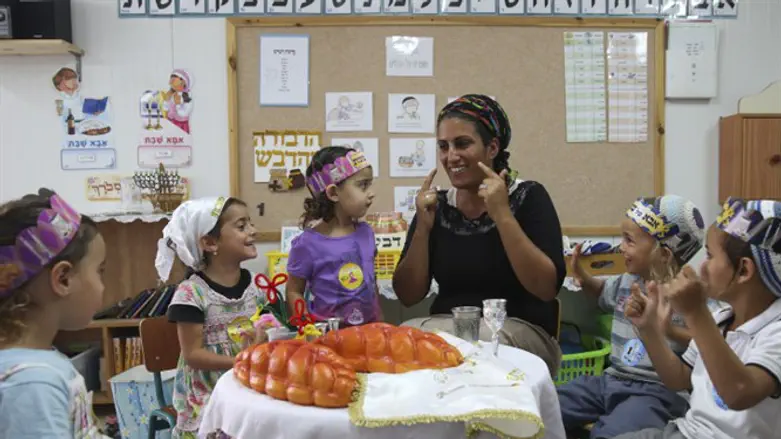
This idea resonates personally as an ideal of a teacher- student bond. Imagine a classroom that buzzes not only with the voice of learning Torah, but of the soft whispers of destiny transmitted--where each student feels accounted for, invested in, and sincerely valued. Imagine if students truly felt the touch of mesorah imprinted on their hearts, so that they breathed the teachings of their mentors.
This type of a respect and value a teacher must have for his or her students is echoed in the aphorism of Rebbi Elazar ben Shamuah. יהי כבוד תלמידך חביב עליך כשלך(פרקי אבות ד:יב) The honor of your student should be as dear to you as your own honor The Midrash elaborates upon this aspect, drawing reference to the thoughtful words of Moshe: ויאמר משה ליהושע בחר לנו אנשים מכאן שהיה משה עושה אותו כמותו. ילמדו כל העולם ממשה דרך ארץ שלא אמר ליהושע בחר לי אנשים אלא בחר לנו אנשים מכאן שעשאו כמותו. (מכילתא על שמות יז) And Moshe said to Yehoshua: “Choose for us men.” From here we see Moshe made Yehoshua like himself. The whole world should learn from Moshe the proper way to act, that he didn’t say “Choose for me men,” rather “Choose for us men.” From here we see that he made Yehoshua like himself.
Moshe’s deliberate choice of words reflects a model of relating to our students with dignity and sensitivity. Moshe did not patronize Yehoshua or arrogantly look down upon him as a mere apprentice. He included him as part of his ideology and vision.
Interestingly, Rebbi Elazar ben Shamuah , the one who espouses this ideal, epitomizes the quality of treating other human beings with unwavering respect. Midrash Kohelet Rabbah 1:11 describes Rebbi Elazar taking care of a poor and disheveled man turned away by everyone else. It is therefore no coincidence that he speaks of holding a student in high regard, through the prism of treating all people this way.
Further, the bond of a teacher and student has the potential to run even more profoundly deep. Learning Torah connects individuals on such a level that the Torah likens the teacher-student relationship to that of a parent and child. Rashi teaches this concept from the words of Shema: לבניך ושננתם ,and you shall teach your children. אילו תלמידיך, וכן אתה מוצא בכל מקום שהתלמידים קרויים בנים, שנאמר בנים אתם לה' אלקיכם ... (רש''י דברים ו:ז) ו These are your students.
We find everywhere that students are termed “sons,” as it is said: “You are children to Hashem your God” In this vein, Moshe is considered to be like the father of Aharon’s children, because he taught them Torah. As Rashi notes: ונקראו תולדות משה לפי שלמדן תורה מלמד שכל המלמד את בן חבירו תורה מעלה עליו הכתוב כאלו ילדו (רש''י במדבר ג:א) And they are called the children of Moshe because he taught them Torah. This teaches that anyone who teaches his friend’s son Torah, the Torah considers him to have given birth to him.
The best proof to support this Rashi is from the classroom itself. How many times do students accidentally call a teacher “Mommy!” and then blush? The connection is real and exists; the undercurrents can be tangibly felt throughout the classroom.
With this in mind, we now have a further appreciation for what the Talmud teaches: אדם בכל ותלמידו מבנו חוץ מתקנא ,a man can be jealous of any other man, except for his son and student (Sanhedrin 105b). This is because both of these are relationships in which the giver is a fountain of continuous giving, with the goal of the receiver absorbing and internalizing enough to rise above the giver.
The successes of the child and student are welcomed by the parent and teacher. The connections are not only premised on biology or arbitrary classroom placement, rather extends far beyond. In this regard, a teacher is constantly giving--constantly reassessing how to best reach her students, sharpen their academic minds, enhance their social skills, and keep a pulse on their overall well-being.
However, at the end of the day, when the bell rings, chairs are tucked in, lockers slammed shut, and the yellow buses loaded, a teacher might pack her bags and contemplate just how much her students gave her that day, and acknowledge... הרבה למדתי מרבותי, ומחבירי – יותר מרבותי, ומתלמידי – יותר מכולן (תענית ז) I learned a lot from my teachers, and from my friends- more than from my teachers, and from my students- more than from anyone. ...
Because a relationship defined by genuine respect, sensitivity, and a sense of shared destiny can leave untold impressions upon the hearts and minds of our students...and our teachers.