
In memory of חיה בת שלמה Edythe Benjamin, beloved mother of Barbara Hanus.
Tu B'Shvat is a strange holiday in the Jewish calendar. Unlike other holidays that have a clear and timeless definition - Pesach is the holiday of freedom, Sukkot is the holiday of thanksgiving – Tu B'Shvat’s meaning changes based on the era in which it was celebrated. There are no clear laws or customs connected to the day and so it evolves according to the needs of the times.
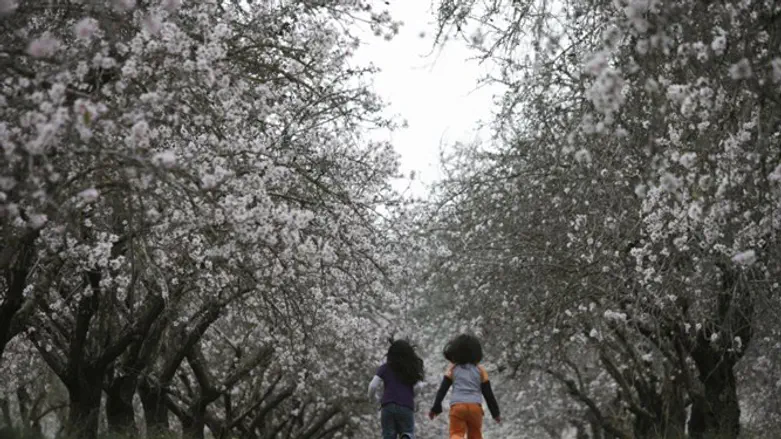
We first hear of Tu B'Shvat in the Mishnah as a purely technical date: the new year for trees, necessary for the agricultural commandments of Shmittah and Orlah. The reason Tu B'Shvat is chosen is because it is the end of the winter and most of the rain has fallen for the season. The trees begin to flower and to bud, leading to the new fruit of the season.
From this technical, clerical reason for marking the day, we jump to the time of the Geonim. There Tu B'Shvat takes on more of a spiritual aspect and becomes “judgment day for fruit,” almost a parallel to Rosh HaShanah for humans. A special Piyut was written to pray for a good growing season.
The focus shifts again in the sixteenth century, in the Kabbalistic world of Tsfat. Now fruit and trees are seen as a metaphor for humans in their relationship to God. The new institution of the Tu B'Shvat seder compares people to fruit and discusses how we can reach our full potential in spirituality. The natural world on earth reflects the heavens above and helps us understand how to best serve God.
In the long years of exile after the bright light of Tsfat died out, Tu B'Shvat became the holiday where Jews connected to the Land of Israel. While Israel is at the heart of the Jewish yearly cycle, Tu B'Shvat was the one opportunity for people to actually enjoy the physical fruits of the land, if they could get them. The European writer, Mendele Mocher Seforim, describes how once on Tu B'Shvat the people in the Russian shtetl obtained a date from the Land of Israel. They lovingly passed it around, conjuring up images of Israel: here we are crossing the Jordan! Here is the Kotel!
When we were fortunate enough to return to our land, the holiday took on a new guise: the ultimate celebration of the land and Zionism. Planting trees and going out into nature became the way to commemorate the day and were seen as one of the highest goals of the Zionist enterprise. Rabbi Avraham Yitzchak HaCohen Kook wrote about planting a tree with his own hands: “planting a tree in the Land of Israel is a way to emulate the attributes of God, Who also was occupied with planting the land.“
Today Tu B'Shvat has become a holiday that puts the environment and nature at center stage. What its next evolution will be is hard to say, but each one of these transformations reflects the words of Warsaw ghetto victime, Rabbi Kalonymus Kalman Shapira, the Esh Kodesh, Hy"d: “When you look out at the world around you, you are looking at God and He is looking back at you.”