
The story of the plagues, described in the Torah portion of Va’era, is so much more than a display of miraculous events. Throughout the entire process, we are witness to the dialogue between Moshe (Moses) and Pharaoh, an epic dual in philosophy, while simultaneously the idea of God as the sole power in the universe is demonstrated again and again.
What is astonishing is Pharaoh’s resilience, his nearly fanatical attachment to forbidding the Jewish people to leave. The second encounter between Moshe) and Pharaoh serves as the catalyst to this “hardening of heart” exhibited by Pharaoh. As we will see, it is critical for us to understand Pharaoh’s state of mind prior to the implementation of the plagues.
The Torah presents the second encounter between Pharaoh and Moshe & Aharon (Shemot 7:8-13):
“The Lord spoke to Moses and Aaron, saying, "When Pharaoh speaks to you, saying, 'Provide a sign for yourselves,' you shall say to Aaron, 'Take your staff, [and] cast [it] before Pharaoh; it will become a serpent.' "Moses and Aaron came to Pharaoh, and they did so, as the Lord had commanded; Aaron cast his staff before Pharaoh and before his servants, and it became a serpent. Pharaoh too summoned the wise men and the magicians, and the necromancers of Egypt also did likewise with their magic. Each one of them cast down his staff, and they became serpents; but Aaron's staff swallowed their staffs. But Pharaoh's heart remained steadfast (vyechezak), and he did not hearken to them, as the Lord had spoken.”
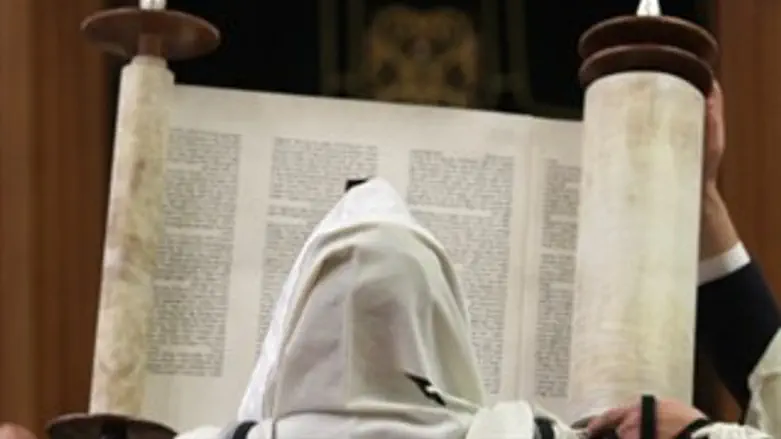
When looking at a Torah scroll, one can see the next verse is separated from the previous one, indicating the beginning of a new theme. In this case, this initial verse introduces the first of the ten plagues (ibid 14):
“The Lord said to Moses, "Pharaoh's heart is heavy (kaved lev); he has refused to let the people out.”
Taking a wide view and observing the arc of the story line, the placement of this encounter is difficult to understand. The Torah portion of Shemot ends with Pharaoh rejecting the rational arguments for the existence of God. He chooses to further the enslavement of the Jews, leading to Moshe’s questioning of the unfolding of God’s plan. The successive Torah portion of Va’era begins with a condensed review of the recent events, followed by a review of the genealogy of Moshe and Aharon. After one more clarification of Moshe’s mission, God reveals to Moshe and Aharon how Pharaoh will ask for the sign mentioned in the above verses. In truth, one could argue that the placement of this second encounter should have been right after the first encounter at the end of Shemot. Pharaoh would be offered another opportunity to extricate himself from a potentially disastrous situation which is the direct result of the first attempts by Moshe and Aharon. Once this plan fails, God would then move to the plague option. In other words, the above encounter would appear to be more of a postscript to the first encounter, belonging at the end of Shemot, rather than immediately preceding the onset of the plagues.
A more detailed view reveals two momentous shifts concerning Pharaoh. The first is the hardening of Pharaoh’s heart. The second is the reference to his heart being “heavy”. It would appear that this state was necessary to bring about the plagues. Why? What was going through Pharaoh’s head? We also see a strange Midrashic interpretation regarding the “heavy heart” of Pharaoh. The word “kaved” also means a liver. Thus, the Midrash explains that just like the liver lacks any ability of comprehension and insight, Pharaoh’s “heart” (read – mind) lacked the same qualities. What is this Midrash teaching us?
A closer look at the incident and Pharaoh’s subsequent reaction to the event will help clarify this significant change. Pharaoh requested a sign, a method to ascertain if the God that Moshe and Aharon spoke of was truly powerful. Aharon’s first act was not very impressive, as the magicians were able to duplicate it. Yet the second act was of a different nature. Rashi notes that the Torah refers to Aharon’s “staff” swallowing the other staffs. It would appear that a greater miracle occurred here, where the serpents reverted back to staffs, only to have the lifeless inanimate staff of Aharon acquire the power to swallow.
Upon seeing this, Pharaoh hardens his heart. The Ibn Ezra notes that this occurred after seeing the duplication of Aharon’s first act, as if the second act did not even register with Pharaoh. In the following verse, where Pharaoh is described as having a heavy heart, the Sforno points out that this occurred even though he had seen the clear difference between the duplication of the snakes and the swallowing of the staffs. All of these explanations point to one critical concept concerning Pharaoh. God presented Pharaoh with a final opportunity to exercise his freewill. The evidence undoubtedly indicated that his worldview, predicated on his synonymy with a deity, required, at the very least, some degree of modification. Clearly, there was a force that could breach the laws of nature outright.
A reasonable person should have been willing to submit to this reality. It was at this moment that Pharaoh chose to exit the world of reason and cling to his belief, at all costs. He could not even “see” the miracle performed by Aharon. It did not register at all in his framework. He retreated to the security of his irrational beliefs, rejecting reality in order to preserve his worldview. There was no longer a normative rational method to convince Pharaoh of what was really happening. It was in this very state of mind that the first attempt at releasing the Jews from bondage concludes. Pharaoh was afforded multiple opportunities to accept the truth of God, and willingly chose to reject this clear truth for the sake of his warped belief. Now, the plan of the plagues was to be implemented.
The Midrash can be understood quite well with this explanation. Pharaoh chose to exit the world of reason. He shut his mind off from the surrounding reality. His mind became equivalent to the liver – once he suspended his faculty of reason, his mind became functionless. In one sense, Pharaoh can be viewed as the exact opposite of Avraham Avinu. Avraham was raised in a world of idolatry, his reality one of illusion and projection. He thirsted for truth, and ultimately accepted the ultimate reality of God. He was willing to forego his system of belief as it did not conform to reality. Pharaoh was the exact opposite. Faced with clear evidence of the fallacy of his approach, he chose to cling to the torn fabric of his philosophy, watching the destruction of Egypt occur before his very eyes.
The message here is a pivotal one. Judaism is a religion rooted in rational thinking. We are not asked to enter into a pact of blind faith. We are not instructed to just believe for the sake of belief. As we see in the works of luminaires such as Saadya Gaon, Bachya Ibn Pekudah, Rambam, and others, we must use our faculty of reason first and foremost. Religious dogmas that profess a belief at the expense of rational thinking are in complete contradiction to what Judaism stands for. If a person is presented with a clear and cogent demonstration of reality, yet chooses to reject it for the comfort of his belief, rather than expressing some paradigm of religiosity, he is a fool. The Jewish people separate themselves from the Pharaoh’s of the world in their pursuit of truth for the sake of truth.