
We are in the thick of the "Three Weeks" as I write this article – a time known as "Ben Hametzarim", translated as "between the straits, the difficulties", which was historically and is until today a time of great calamity for the Jewish people and the world as a whole. Volumes can be written on the tragic events that occurred at this time from the sin of the spies to the destruction of our holy Temple over 2000 years ago, the Spanish Inquisition and the start of World War I climaxing in the Holocaust, and more recently, the capture of Gilad Shalit and the expulsion of thousands of Jewish from their homes in Gush Katif.
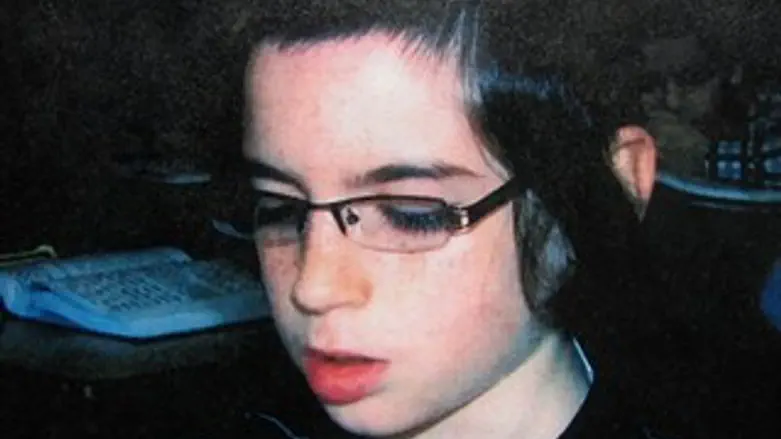
There are many, many more events over which we have poured soul-drenching tears until we thought there was no more room for one more tear, but then, as we have bitterly learned for the last 2000 years, there is always room for one more tear – as little Leiby Kletzky so humbly reminded us this year - a nine year boy from Boro Park that got lost on the way home and ended up in the hands of a Jewish butcher.
I have been thinking a lot about the time "between the straits" and its message – why do the calamities continue? What are we missing, as a nation, as individuals that these events continue to shock us, but don't change us? After all, as the Baal Shem Tov wrote, a leaf doesn't blow unless decreed from Above. So what is the message in these dreadful, horrific decrees.
And then I thought about little Leiby Kletzky. One of the most frightening and gruesome details of the entire tragedy was that the perpetrator in this case was a Jew, and not just any Jew, but a "religious" Jew living next door. This heart-breaking fact seemed to be the most inexplicable piece of the entire puzzle. None of us will ever really be able to understand this event – there is no logical human rationale, but since it occurred at the dawn of the Three Weeks, it seems that there must be something that this innocent child's death could teach us as a nation.
In all the commentary over the ugly, baffling details, it emerged that Jews – EVERYWHERE – from every type of background searched and searched and prayed and prayed and provided supplies, money, food and more to locate this little boy – it was in those thirty, long grueling hours that Jews collectively came together and forgot about our internal differences – even if for a moment - to find one lost little boy because we all know that each Jewish soul is an entire world – utterly precious to the Jewish nation and to H-shem.
Since this tragedy happened so close to "Ben Hametzarim", it seems that we should look to the messages underlying these "Three Weeks" to learn what we can correct to prevent further sorrows from befalling us. Chazal have taught us that the Second Temple was destroyed over Sinat Chinam – baseless hatred. Jews were observant on the outside, kept the mitzvoth, learned Torah and performed acts of Chesed, but still, the Temple couldn't stand. Why? Because we divided ourselves into groups and one group could not co-exist with another, and one group would not perform Chesed for another group.
It seems that in some ways the facts surrounding this senseless murder of this innocent, beautiful child paralleled the sins of Am Yisrael at the time the Second Temple was destroyed (and which we have not been able to correct until this day) and at the same time, this sorrow also brought the tikkun to rectify them.
The murderer, a "religious" Jew on the outside committed the most barbaric act imaginable and when asked his motive, it was widely reported that he had confessed that he really didn't know why he had done it – in short, simple baseless hatred (albeit twisted and morbid).
Isn't this a physical manifestation of what Am Yisrael does in a spiritual sense if we dislike another Jew (or group of Jews) for no valid reason - only because their customs, background or religious levels are different – and then we act on that hatred by excluding him/them from our social circles, our schools, our communities – on baseless grounds we are spiritually causing the demise of another Jew.
And, yet, at the same time, when we come together in a thirty hour search for one Jewish soul, we demonstrate what we really know as truth, at the core, that all of this bickering is worthless.
We learn from Pirkei Avot that all Jews are righteous, but over thousands of years of Diaspora, we have become clouded in recognizing that there are many paths to H-shem, and Ha K-dosh Baruch Hu loves them all because He created them all. The greatest tikkun we can do for ourselves as a nation is to reach out across that ridiculous, thick but imaginary curtain that divides us to another Jewish soul who is extremely different from us and to see the good in that soul – and that is exactly what the thirty hour search for Leiby Kletzky showed us.
Rebbe Nachman, z"tl, wrote that if a person focuses on the good in another individual, he actually strengthens that other person's soul connection to H-shem so that he is elevated and thereby elevates Am Yisrael. It is not a simple matter, as we are always more comfortable "with our own," but if we only knew the damage that is caused on an exponentially magnified spiritual level by excluding one child from a cheder or Jewish day school because his mother came from a different place, we would usher that child into our arms with warmth and wisdom.
If anything, Leiby Kletzky's murder should prompt each of us should to search within ourselves to see what we can correct individually to make a difference. As we know intrinsically, each one of our acts can and does make an immeasurable difference both for the good or the other way chas v shalom. If we could only truly understand that it really doesn't matter whether you eat cholent or "shchina" on Shabbat, or which nusach you pray, but that each person has his own wisdom and pathway to connect to the Al-ighty, which is, according to the Baal HaTanya, the reason why each person has a different face construction.
Am Yisrael is a nation – a unit – but we are not all the same. We are not supposed to be. This is why, in the desert, we each gave a half shekel and were counted by our family names, not numbers, to value our individuality, but the half shekel taught us that we are not complete unless we are a nation.
So what can we learn in the messages between the straits? If we reach out to that neighbor that came from Northern Africa, or the Chasid that wears the streimel, or the secular Jew that fights in the Israeli army – if we could make a step to try and understand him just a little bit, we would surely find a great love because at the end of the day, as we saw so clearly in our thirty hour search for one precious Jew, there really are no boundaries.
May we merit to be the generation to correct this baseless, blinding hatred so we can, with great unity and love, rebuild our Temple speedily and in our days, Amen.
In memory of my father, Yaakov ben Yehuda Leib
Editor's Note: This article was sent to Arutz Sheva before the shocking murder by stabbing of the Torah scholar and mystic, Rabbi Elazar Abuhatzeira, zts"l.