

It’s not supposed to be a comfortable trip from Princeton, New Jersey, to Hevron, Israel.
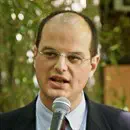
Michael Walzer, the internationally renowned philosopher and public intellectual, who has written dozens of books on peace and war, last week visited the city of the Jewish Patriarchs. And he wrote a dispatch for the leftist magazine Dissent.
Walzer was taken to Hebron by the leaders of Breaking the Silence, a group that the US professor describes as “the organization of ex-soldiers that aims to educate Israelis about the meaning and character of the Occupation”.
Despite its name, this NGO funded by Europe to boycott the Jewish State, has no “silence” to break.
Israel is a democracy in which prime ministers in office are investigated on corruption charges, a Supreme Court daily rules against the Israeli government and a strong press routinely criticizes the same army that forcefully expelled some brave Jewish citizens from “The Peace House” in Hevron.
Walzer ignores the fact that if the biggest threat that "Breaking the Silence" activists are facing is a sunburn from their long meetings at Tel Aviv cafes, the Hebron Jews are risking their own lives.
“Settler kids warned us not to sit there; the owner wasn’t a Jew”, writes professor Walzer. “Hebron is a wasteland, a ghost city, with shops on the main market street boarded up and apartments deserted”, goes on the famous intellectual. “The settler kids harass the Arabs, encouraged by their parents and are rarely stopped by the army”.
“Settlers kids” is the demonizing expression used by Walzer to describe the scores of Jewish children scampering over their playground in Hebron, tucked inside the crumbling ruins of the Jewish Quarter dating back to the 16th century. Boys with sidelocks and pregnant young women with kerchiefs on their heads, who have been used as targets for the terrorist shootings.
Overwhelmingly, the Western media and intellectuals ignored and downplayed the terrorist atrocities suffered by the Jews of Hevron (especially in comparison with tons of pages dedicated to Baruch Goldstein).
Or worse, the media blamed the Jewish victims for bringing it on themselves, describing them as “hard-line settlers”, “extremists” and, as Walzer does, “settler kids”.
Ground zero in the Middle East conflict is Hevron and what Walzer writes shows how sterile the enlightened retoric of our world’s leading experts on the rules of warfare is when they get in touch with the Jewish reality.
That the Tomb of the Patriarchs is located in Hevron, or that a vibrant Jewish community lived there for an uninterrupted millenium until 1929, is irrelevant to Walzer.
He came from New Jersey to describe an Arab city in which a small, fanatic Jewish minority has settled for egoistic reasons. Walzer isn't touched by the fact that just like Arabs have the right to live in Israel among a Jewish majority, Jews should have the right to live in any area they please, even if those areas have an Arab majority.
Walzer doesn’t get that without the presence of the settlers, and the massive military support required to defend them, it’s doubtful whether even the Breaking the Silence's Jews would feel relatively safe enough to come to Hevron at all.
It is a safe bet that roughly half the Israeli population will say that given a choice between a Jewish presence in Hevron and peace, they would, with little hesitation, choose the latter.
But the story of Hevron itself provides proof that no such choice exists. It’s an illusion. The simple fact is that the Arab population does not want a Jewish presence in the entire area.
In 1997 the immediate Arab response to the Hevron accord was an eruption of terror. Dov Drivan, Rabbi Shlomo Ra’anan and Danny Vargas were all killed after the “peace agreement”.
And the homes of the Jewish community in Hevron, dominated by terrorists from the overlooking hills, became round-the-clock targets of barrages of shooting and sniper fire.
This fierce intolerance of Jewish presence has nothing to do with claims of “Arab dispossession”. The land of Kiryat Arba was a barren hill before it was settled, and most of the property now in Jewish hands in Hevron city was owned by Jews before the 1929 massacre.
But the Arabs consider everything in and around Hevron, as indeed they do everything in the land of Israel, to be Arab land. Walzer ignores that Jews had lived there as “dhimmis”, second-class residents, forbidden to pray in the Machpela and humiliatingly confined to the seventh step leading into the building.
Hevron’s Jews are the Jews whom legions of enlightened Western intellectuals like Michael Walzer love to hate.
I am still waiting for the day when a really honest public intellectual, who publishes books in New York and essays in the maintream media outlets, will travel to Hevron to testify on the life of a few hundred Jewish heroes who have always had to live with sandbags in their homes.
And sometimes to bury their own parents, as the six children of Yitzhak and Talia Imes did last year. Talia was pregnant and the seventh Imes was buried with her.
That's the silence that should be broken.