

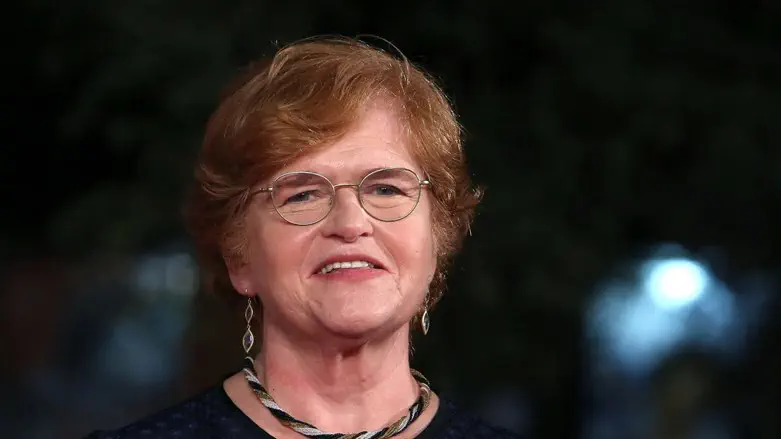
Dr. Deborah Lipstadt, US President Joe Biden’s nominee to be the State Department special envoy to monitor and combat antisemitism abroad, is urging American Jews to go to synagogue following the attack on Congregation Beth El in Texas this past Shabbat.
“Another tragedy had been averted. But the scars remain. They will take a long time to heal. I thought of the Beth Israel rabbi’s two daughters who waited all day to hear of their father’s fate. One rabbi recently told me that some of her colleagues’ children don’t want them to be congregational rabbis anymore. ‘It’s too dangerous.’ They don’t want to have to worry every time their parent goes to the office. The parent’s office is the synagogue,” Lipstadt wrote in an op-ed published Tuesday in The New York Times.
“My rabbi, Adam Starr, posted to Facebook that on Sunday morning, when he went into synagogue for daily prayer, it felt like ‘an act of courage, defiance and faith.’ Another friend told me that whenever she walks into a synagogue she makes a mental check of the nearest exit and figures out where the safest place to hide is. Under a pew? In a storage closet? Behind the ark, which holds the sacred Torah scrolls? She was shocked when I said I don’t do that. Yet,” she added.
“Jews have learned to be afraid beyond the synagogue. In May during the Gaza conflagration, people eating at a kosher restaurant in Los Angeles were beaten up by a mob. In London, a phalanx of cars moved through Jewish neighborhoods chanting ‘Kill Jews, rape their daughters.’ In Times Square in New York, a Jew wearing a kipa, or skullcap, was punched and pepper-sprayed.”
She pointed out that “Jews have long thought of their synagogues as both a place to pray and a place to find community. As Rabbi Charlie Cytron-Walker noted after his heroic escape from the gunman in Colleyville, a synagogue is called a beit knesset, a house of gathering. That is why, when traveling abroad, even Jews who are not regular synagogue attendees often seek out the local synagogue.”
She noted the increased security measures at synagogues, not just in the US but around the world, in the wake of recent attacks.
“We are shaken. We are not OK. But we will bounce back. We are resilient because we cannot afford not to be. That resiliency is part of the Jewish DNA. Without it, we would have disappeared centuries ago. We refuse to go away. But we are exhausted,” added Lipstadt.
“It is not radical to say that going to services, whether to converse with God or with the neighbors you see only once a week, should not be an act of courage. And yet this weekend we were once again reminded that it can be precisely that.”
“Among those morning blessings that are part of Blessings of the Dawn is one that thanks God for opening up the eyes of the blind. Jewish eyes did not need to be opened. But this week we wonder if the eyes of our non-Jewish friends and neighbors, particularly the ones who didn’t call to see if we were OK, have been opened just a bit,” she wrote.
“There is an additional blessing during these early prayers that thanks God for allowing us to stand tall and straight. We are standing tall and we are standing straight. But we are checking for the exits,” concluded Lipstadt.