


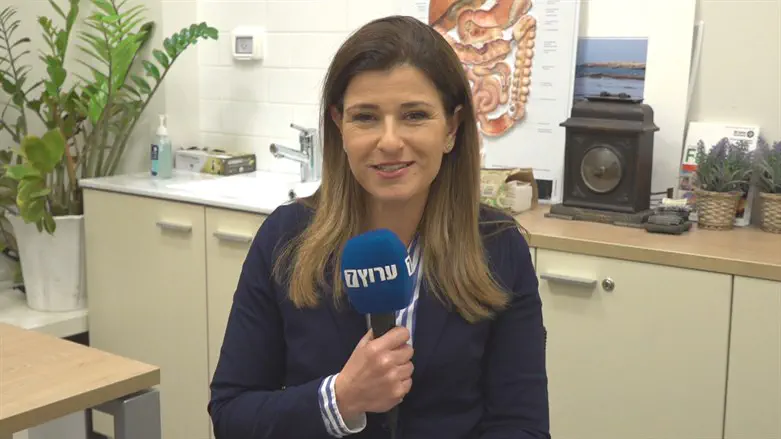
Dr. Orly Greenfeld, Deputy Head of the Medical Division at Maccabi Health care Services and medical director at the national coronavirus headquarters, spoke with Israel National News - Arutz Sheva about the effects of the Omicron variant of COVID-19, as compared to previous strains.
According to Dr. Greenfeld, "From data coming in from around the world, we know a few things about this strain: First, it causes an illness which is lighter than the previous variants, and is less likely to develop into serious illness. We see mostly unvaccinated and people at high risk, who even with Omicron may develop severe illness, but in smaller numbers than in the past."
"In addition, we see that the variant attacks the upper respiratory system more, and [affects] the lower respiratory system less, and there is definitely a difference between the current variant and its predecessors," she added.
Regarding Professor Idit Matot's statements criticizing the government's management of the Omicron wave, Dr. Greenfeld said, "I am very in favor of doctors who have professional knowledge expressing their personal and professional opinions, and we hear everyone's opinions. At the same time, we need to take into consideration the effects of expressing an opinion on the public."
"At the end of the day we are managing the risk in a very cautious fashion. We are always weighing what the risks of making a decision are, versus the benefits, and even when we don't decide, that's also a decision. I agree that there are many consequences to quarantines and harming the economy. But on the other hand, there are very high rates of infection, development of severe illness, people who we know that if they are sick they might develop ongoing illness and complications. It might be smaller numbers, but we must protect these people."
"Coronavirus and those hospitalized burden the healthcare system and the hospitals," she said. "We see hospitals beginning to take redirect staff, and there are things which are not urgent which are pushed off, and we don't want to reach that situation. Therefore, we must gain control of the pandemic as much as possible, and we cannot do that entirely, but at the same time we must continue to run the economy."
Regarding claims that most of the seriously ill patients are not hospitalized due to coronavirus, Dr. Greenfeld said, "The Health Ministry gathers the data from the hospitals and examines which patients are seriously ill and which of them are in that situation because of coronavirus. Most of the seriously ill and intubated patients are that way because of coronavirus and the Omicron strain."
When asked about whether antigen tests are reliable, she said, "The advantages of the antigen [test] are the fast result and the ease of testing at home. At the same time, we know that it is less sensitive than the PCR. It's not correct to say that the test is not reliable or good. You need to know how to increase its reliability and efficacy."
"In order for that to happen, we need to test not just the nose, but the mouth as well. Therefore we need to take a sample from the pharynx and then from the nose, in order to increase efficacy. In addition, even if you were exposed, there is no reason to test a few hours after exposure. It takes three days for the antigen test to be able to identify the infection, and until then you should remain in quarantine. We don't have 100% in this pandemic, but we are always managing the risks."
When asked whether Omicron would bring the end of the pandemic, Dr. Greenfeld said, "We all hope so, but we don't know. We really hope that another unknown variant won't develop, but we all have faith and hope that this will be the last wave."