
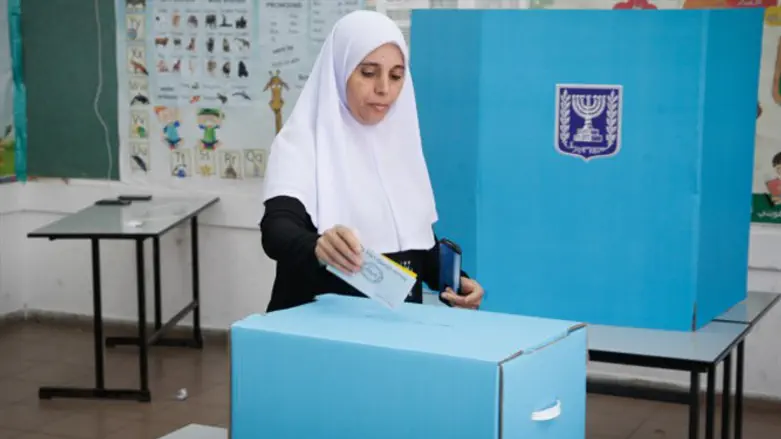
The Israeli Arab population is in the midst of a political sea change, argues Israeli Arab journalist Suleiman Maswadeh, marked by an increased willingness to work from within the political system and to cooperate even with leaders on the Right in order to achieve their goals.
The Likud won upwards of two of its 30 seats from Arab voters, according to election estimates, while the Joint Arab List plummeted from 15 seats to just six, with total representation for Arab factions falling to just 10 seats in the 24th Knesset.
More surprisingly, one of the two Arab factions – the United Arab List (Ra’am), which represents the southern branch of the Islamic Movement and is backed heavily by Bedouin voters – has expressed a willingness to support a new Likud-led coalition government, marking a dramatic shift for the UAL, which had previously endorsed only left-wing candidates for the premiership.
Maswadeh, a reporter for Israel’s Kan, explained that the change is part of a deep shift in the mentality and political behavior of Israeli Arabs, telling Kikar Hashabbat in an interview published Friday morning that a growing number of Israeli Arab voters have given up on the Arab sector’s traditional approach towards politics, believing that it leaves them unable to address core concerns.
“On the Arab street there is a desire to influence,” said Maswadeh, citing frustration within the Arab sector over high crime rates, the cost of housing, and other issues impacting day-to-day life.
“They are saying ‘Enough, no more sitting on the sidelines, we need to get in the game.’ What has brought Arabs to this conclusion in recent years is the surge in crime, or when the young Arab man or woman who wants to build a family can’t build a home. The people responsible for finding solutions to this are their representatives in the Knesset, but it is hard to do that when you’re sitting in the opposition.”
“As far as an Arab family is concerned, if the mother can’t feel safe about sending her son to the store and having him come back alive, so what’s left?”