
Tomer Lotan, head of the Magen Israel vaccination project discussed the Coronavirus Cabinet's decision to begin reopening the economy next week in an interview with Arutz Sheva.
"We have worked very hard over the last few weeks with the government in trying to produce a plan that balances the very great difficulty we are in in terms of morbidity numbers that are very high and obviously requires a lot of caution and on the other hand the understanding that we are after prolonged lockdown and the vaccination program is very advanced," says Lotan.
"We have put it all together and created a three-point plan - the first has been done, the second will be this coming Sunday - and we hope this plan will strike an balance between caution on the one hand and the possibility of opening large sections of the economy that were hitherto closed on the other," he says.
Lotan was asked about the refusal of Coronavirus Czar Prof. Nachman Ash to rule out yet another lockdown.
"The test is to successfully maintain the outline we built without expanding it, changing it or anticipating some of the beats. The coronavirus taught us that we are excellent at writing and planning but the test is in the reality. In the end there is an Israeli community that has been together with the rest ofthe world for about a year in this event. It's harder to maintain patience and restraint, it's harder to maintain the guidelines and this is our moment of truth. The czar's message was: We are opening carefully to bring a lot of oxygen to the economy, education and families, but still great concern hovers over everything and the responsibility lies with us," he replies.
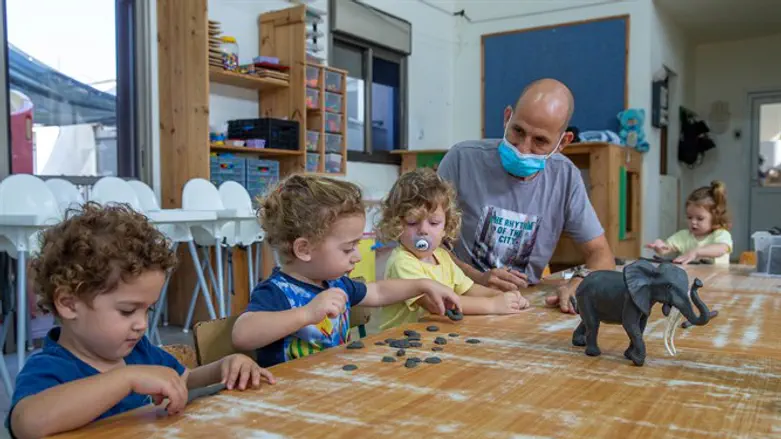
Lotan also refers to the return to schools which raises concerns in light of the growing morbidity among children and the effects of the British mutation. "Of all the industries we are opening now, education is the hardest nut to crack. Because it has great value for families and children but on the other hand it is the most risky activity - both because children are not being vaccinated and because of the British mutation which we are aware of its effects on children."
"Therefore, when we considered the issue of opening up education we decided to do so with double caution. To open in a gradual manner and integrate with the traffic light program so that studies will be opened in localities with lower morbidity," he says.
"We are happy that the plan we have prepared and worked on has been fully accepted by the government. It makes us happy and gives us room for optimism. We also see good data about the vaccines. However everything is mixed with a lot of apprehension and concern. We continue to look at the data very closely, especially when it comes to patients and the seriously ill in hospitals. There are currently more than 900 patients and that is much more than we want. The very next few weeks are crucial in being able to say in the direction we are headed," Lotan adds.
And what about the future? Will the vaccines lead us to a relatively open summer? "The closer we get to the maximum immunity in Israel, the better our summer will look. We have a crucial gap for children under the age of 16 who do not get vaccinated. Epidemiologically we cannot achieve herd immunity without vaccinating children. The question of the children is very dramatic in being able to predict the future."
''We are following the activities of the various companies that are conducting trials to test the effect of the vaccine in children and we hope that there will be good results within the next weeks or months. This is what makes the ability to look ahead complex. Because even if we manage to vaccinate everyone possible, there will still be no small layer that will be unprotected. In our opinion, this summer will be better than its predecessor, but in the coming months we will still have to be careful. "