
The National Security Cabinet this evening (Sunday) approved for the Ministry of Defense and the IDF a long-term plan for financing a substantial procurement for the Air Force. The outline will include a long-term loan and will include the purchase of fighter jets, heavy transport helicopters and advanced armaments worth billions of dollars.
The Ministry of Finance lost the battle when the Ministry of Defense and the IDF won the approval of the Cabinet to close the deal. The dispute between them included the Ministry of Defense insisting on financing the deal through a long-term loan deferred to the end of the decade, including high interest rates.
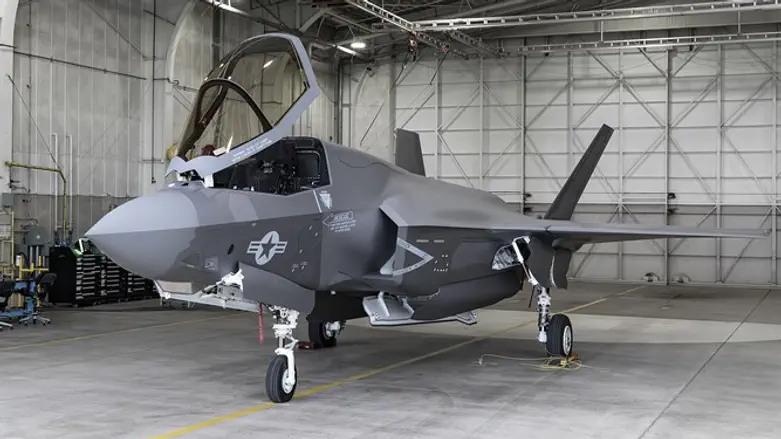
After the approval of Attorney General Avichai Mandelblit and the national security cabinet, the army was given the green light to choose the future heavy transport helicopter between the Chinook and the CH53K helicopter. Defense Minister Bnei Gantz demanded that the Air Force present him with the possibility of including the V-22 aircraft in the mix. According to security sources, the Air Force will present the recommendations next week. It was also decided that as part of the financing, the Air Force would purchase another squadron of F-35 JSFs, as well as advanced armaments.
The deal, which includes the purchase of F-35 and F-15 fighter squadrons, KC-46 refueling aircraft, unidentified heavy transport helicopters and advanced armaments, has gained momentum from the Ministry of Defense in recent weeks. The ministry sought to defer repayment of a previous loan from 2021 to 2028 - but the Treasury objected, arguing that the move could lead to billions of dollars in debt exceeding the budget available to the Ministry of Defense.
In 2014, the Department of Defense was forced to apply for an external loan to realize the a new air squadron at the cost of future U.S. aid, and has since suffered an acute funding problem. The Ministry of Finance then approved the loan and gave guarantees, but after the Ministry of Defense remodeled the agreement, which would increase the existing loan, the Ministry of Finance decided to strongly oppose it.
The opposition stemmed from the fact that in 2028, the $ 3.8 billion-a-year US security assistance contract would end. The Treasury feared that if the US administration decided to cut the budget, Israel would have to bridge the financial gaps and realize the guarantee in billions of dollars, in excess of the budget for the entire state, but the plan was approved nonetheless.