

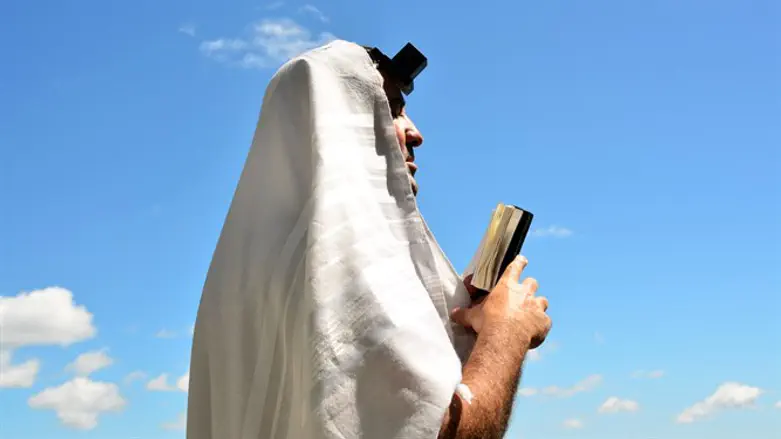
In the petition, Sharifi claims that according to emergency regulations in wake of the coronavirus, the government "has a clear preference for freedom of demonstration over prayer in the public sphere."
Attorney Dr. Nissan Sharifi, chairman of Be'er Hanna, which operates, among other things, a synagogue in Netanya, petitioned the High Court on Sunday against the Prime Minister and the Minister of Health.
The lawyer asks the High Court to rule that just as protests can be conducted during the Corona pandemic, so too can prayer services.
In the petition, Sharifi argues that within the current government emergency regulations, "there is a clear preference for freedom of demonstration over prayer in the public sphere, which, as we know, is a fundamental pillar of freedom of worship, and religious freedom (including freedom of worship) is a fundamental individual right."
Dr. Sharifi also stated in his petition that freedom of worship is an unrevocable basic right of every citizen in the State of Israel: "In the State of Israel, freedom of worship constitutes a basic right in the absence of a sermon and as a rule as done in the regulations. In this regard, the High Court's statement in HC 10356/02 Yoav Hess v. Commander of IDF Forces in Judea and Samaria: The freedom of worship in the expression of religious freedom is one of the fundamental rights of man. It extends to the liberty of the individual to believe and act according to his beliefs while exercising his beliefs and religious customs…This freedom is related to the realization of one's self-identity."
"The longing of the believer to pray holy places is well established. And Israel, as we know, happens to be a Jewish and democratic state," He adds.
Dr. Sharifi insists on the implementation of a probation and interim injunction against measure prohibiting prayer services because, he says, "there is no room for preference of freedom of demonstration over freedom of worship. It is certainly possible to limit the freedom of worship in the light of the coronavirus, but don't prevent it by force. 'Privileged' groups on well-known sites should not be preferred over other worshipers."