
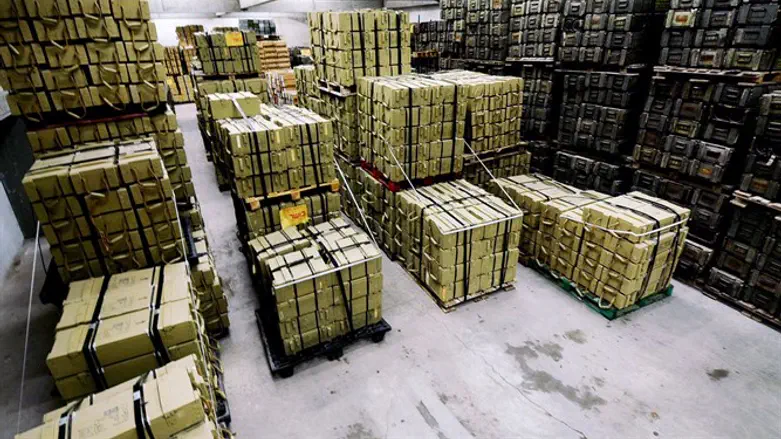
On Sunday, the Procurement Department at the Defense Ministry, through the Deputy Land Purchase Unit announced the completion of the purchase deal with Elbit Systems of IMI Systems from the State of Israel.
Until now, Israel Military Industries Ltd (IMI) was owed by the State of Israel. According to their website, IMI Systems specializes in developing and manufacturing of comprehensive combat proven solutions and technologies for the land, air, naval and cyber and homeland security requirements of modern battlefield.
In the new deal to privatize the company, the Ministry of Defense will purchase approximately 1.25 billion NIS worth of ammunition for the IDF. Included in the deal will be the multi-year agreement signed by the Ministry of Defense with IMI Systems back in 2016.
The two orders will be deployed over a decade, from 2020 to 2030. During that time the company will supply various types of ammunition to the various infantry units of the IDF.
This purchase will enable the IDF to complete the replenishment and ensure continuity of supplies and support for the next decade. It is expected to ensure economic certainty for the successful transfer of the industrial plants from Ramat Hasharon complex to Ramat Baka in the South.
According to the government decision, the privatization of IMI will transfer its plant to the southern part of Israel. The ammunition supplied to the IDF will be produced in the new factories in the South.
According to Avi Dadon, head of the Defense Ministry’s procurement department, “The purchase agreement is a Win-Win for the defense establishment as well as the State of Israel.
“First and foremost, it ensures the supply of ammunition and a chain of supply to all ground forces units for many years ahead. In addition, the purchase was intended to support the national move to transfer IMI’s factories from Ramat Hasharon to Ramat Baka in the South. It will evacuate expensive areas for construction in the center of the country and create thousands of new jobs placings in the periphery.”