
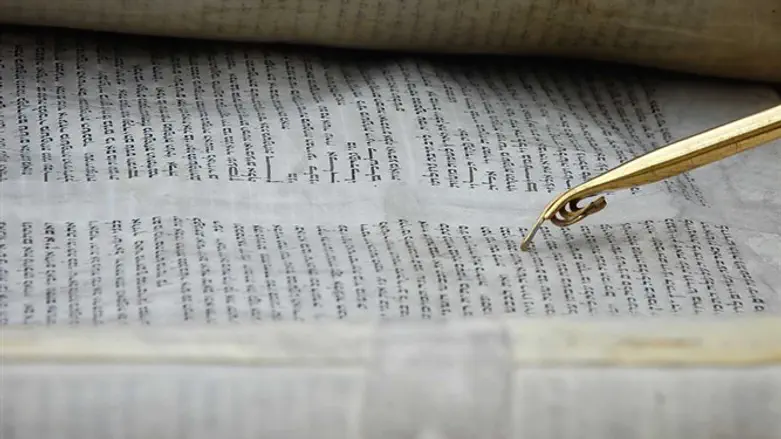
Shavei Shomron Rabbi and Yeshiva Head Rabbi Yehoshua Schmidt wrote to Commander of Prison Services Lieutenant General Ofra Klinger yesterday asking her to allow his son-in-law Yinon Reuveni and other Jewish prisoners to hear the Torah reading of Parshat Zachor that precedes Purim. The reading contains G-d's command to eradicate the Amalekite nation and hearing it yearly is a Torah-mandated obligation (D'orayta in Hebrew, ed.).
The rabbi's son-in-law, Reuveni, is currently serving a four-year sentence for setting fire to the Church of the Multiplication of Loaves and Fish on the shores of Lake Kinneret.
Reuveni, like several other Jewish security prisoners, is being held in harsh prison conditions. They are in secluded wings with no telephone access, without a minyan prayer quorum, and are deprived of many services that are accessible in the rest of the prison service facilities.
In anticipation of Shabbat Zachor, the Rabbi asked they be allowed to hear the Torah reading with a minyan.
"The next Shabbat is Shabbat Parashat Zachor, which belongs to the four Torah sections that the Jewish people read during these days in addition to the week's Torah portion. I ask that my son-in-law Yinon Elia Reuveni, who is in Hasharon Prison, may be allowed to read Parshat Zachor together with millions of Jews all over the world. There is no reason you should prevent someone who is a religious person from fulfilling the commandments," he wrote the Prison Commander.
In his letter to the Commander, the rabbi detailed the halakhic obligation, while citing sources for the ruling. "Parashat Zachor is special as the Torah mandated its reading, as brought in the Code of Jewish Law ... Parashat Zachor should be read from a kosher Torah scroll ... Parashat Zachor should be read in a quorum of ten men. Therefore, I will again request that my son-in-law Yinon Elia Reuveni and the other Jewish prisoners who wish to fulfill this commandment be able to do so in all Jewish prisons in the Land of Israel. I see this as your halakhic, moral, and human obligation to ensure that all those interested can fulfill this great and important mitzvah," the rabbi concluded.
The Honenu legal aid organization which represents Reuveni and other prisoners, notes that the Prison Service, as a rule, allows prisoners to participate in prayers with a minyan, and only a few Jewish security prisoners are prevented from doing so. The organization notes that the Prison Service, for unclear reasons, is very harsh when in comes to the incarceration conditions of Jewish prisoners.