
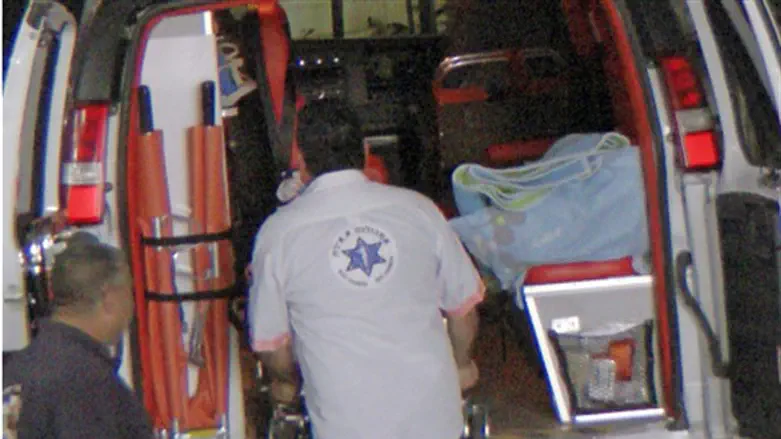
Over the past few months tensions have been on the rise between EMS organizations United Hatzalah and Magen David Adom (MDA). With matters most recently being brought to the Knesset floor for arbitration, it’s hard to see clearly what really happens on the scene: brotherhood.
The raison d'etre behind United Hatzalah is to be the first responders on the scene, providing initial and what could be life-saving support, before MDA, the national ambulance service can arrive.
Training everyday civilians to be EMS responders, provides these EMS providers to arrive on scene quickly. When your neighbor across the street or the shop owner next door has EMS training, emergency medical equipment and knows about the incident, it’s obvious that they’re going to arrive faster during those first crucial moments.
While the relationship behind the scenes may be a bit heated, what’s really going on when an emergency occurs is a different matter completely. At the end of the day, the intention of both EMS organizations is to provide the best possible care for the patient regardless of who they are, or whatever else may be going on.
The EMS responders of Magen David Adom and United Hatzalah don their respective vests, and join together at the scene with only one thing in mind; saving the patient. What develops between the volunteers of the two organizations is comradery and a brotherhood.
This ethos was reflected during the events of Sunday night, when United Hatzalah Raphael Poch and his brother Avi Poch, an Magen David Adom EMT, were celebrating their cousin’s Bar Mitzvah in Ramat Bet Shemesh together.
Always being prepared for a situation and willing to sacrifice their time, the Poch brothers brought their respective equipment with them, even to the Bar Mitzvah. Raphael, with a geographic locating app on his phone, and a radio, responded to a life-threatening call that he received from United Hatzalah’s dispatch center. The brothers donned their jackets, Raphael with his United Hatzalah jacket, and Avi with his Magen David Adom vest and left immediately to Beit Shemesh.
The two set out to save a life that night in literal brotherhood.
After arriving at the scene and administering aid where it was needed, they left to return to the Bar Mitzvah. However, on the return drive, they received another emergency call, this time in Ramat Bet Shemesh. Without hesitation the brothers responded to that call as well, and urgently made their way over, staying until the patient had been treated, bandaged, and transported to the hospital via ambulance. Once the situation came to an end, they left, again to return to the Bar Mitzvah, making it back just in time for the last dance of the night.
On being asked how the experience felt that night, Raphael responded, “One thing that is truly inspiring for me to see as a responder is the brotherhood of responders in the field. When we receive a call it doesn’t matter what organization you’re from or who shows up first at the scene.
“What we experienced last night, during both calls we went to, was the actualization of the importance of saving the patient. All of the responders who arrived at the scenes, from both organizations provided the patients with the best treatment possible, regardless of the vests we were wearing.
“Both my brother and I saw the importance of helping others as paramount to whatever we were doing at the time. We both rushed out to the scenes and worked together to provide treatment for the patient. Of course, we respect each other. In the field, almost all of the responders do, regardless of party lines.”
Raphael added that the emergencies added to the sense of specialty of the evening.
“Thankfully we were able to return to the celebration of Bar Mitzvah for the last dance, and dance together with our cousin, each one wearing their own vest and celebrating the lives that we had just saved,” Raphael said.
The story of the Poch brothers is just one example of the camaraderie that is shared between the volunteers and the brotherhood that develops between both EMS organizations. A band of brotherhood develops at the scenes of emergencies, and these volunteers do what they do each and every day, and sacrifice what they sacrifice. They do all of this to save the patients in need of assistance, and more often than not, they do it together.